A Practical Gateway to Volcanoes, Coffee Country, and the Central Valley
Most travelers technically begin their Costa Rica journey in Alajuela — even if they don’t realize it. Juan Santamaría International Airport (SJO) is located here, not in downtown San José. Yet Alajuela is far more than an airport stopover.
Set in the fertile Central Valley beneath Poás Volcano, Alajuela offers coffee plantations, historic parks, local markets, and quick access to some of Costa Rica’s most iconic landscapes. It is practical, authentic, and often overlooked.
If you’re researching airport hotels in Alajuela, Costa Rica, planning a short stay before heading to La Fortuna, or considering a Central Valley base, here’s what to know.
Overview of Alajuela & Surrounding Areas
Alajuela is one of Costa Rica’s major provincial capitals, located about 20 km northwest of downtown San José. It feels more local and less corporate than Escazú or Santa Ana, with a traditional town center anchored by a central park and cathedral.
Surrounding areas include:
- Poás Volcano National Park in the highlands
- Coffee-growing communities like Sarchí and Grecia
- Waterfalls and forest reserves in Bajos del Toro
- Quick highway access to La Fortuna and the Northern Plains
Alajuela’s appeal lies in its location: it’s a strategic launch point for exploring Costa Rica’s interior.
The Basics: What Everyday Life Looks Like
Downtown Layout
Downtown Alajuela is organized around Parque Central Tomás Guardia, a leafy square surrounded by the cathedral, banks, cafés, and shops. Streets are busier and more traditional than in Escazú.
You’ll find:
- Grocery stores, including Walmart and local markets
- Pharmacies throughout the downtown grid
- Hardware stores and practical services
- Bus terminals connecting to the surrounding towns
Alajuela is functional rather than polished — more everyday Costa Rica than curated suburb.
Nightlife
Nightlife is modest. Expect casual bars, local restaurants, and family-style dining rather than upscale lounges.
If you’re seeking high-end nightlife, Escazú or San José’s Barrio Escalante are stronger options.
How to Get to Alajuela
International flights from the US, Canada, and Europe arrive at SJO, which is located in Alajuela province.
From the airport:
- Many airport hotels are within 5–10 minutes of the airport.
- Downtown Alajuela is about 10 minutes by taxi or Uber.
- Rental car agencies are located directly at or near the airport.
For travelers landing late at night, staying in Alajuela often makes logistical sense before continuing onward.
Where to Stay in Alajuela
Alajuela offers some of the most convenient airport hotels near SJO in Costa Rica.
Airport Hotels
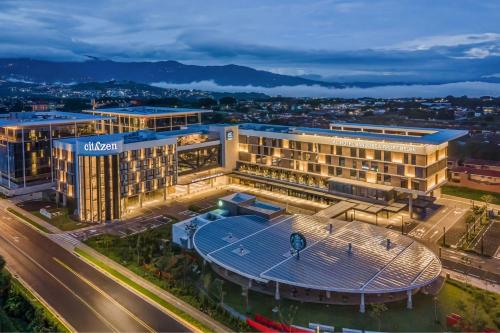
- Courtyard by Marriott San Jose Airport Alajuela – Walkable from the airport, reliable, and modern
- Hampton by Hilton San Jose Airport – Popular for short overnight stays
Best for: Early flights, late arrivals, business travel.
Boutique & Garden Hotels
- Hotel Buena Vista del Rincón (outside central Alajuela) – Mountain views and eco-activities
- Smaller colonial-style guesthouses near downtown
Best for: Travelers wanting more character than a chain hotel.
Budget & Vacation Rentals
Alajuela has a wide range of affordable guesthouses and short-term rentals, especially suitable for one-night stays before driving to La Fortuna.
Where to Eat in Alajuela
Alajuela’s dining scene is grounded in local tradition.
Central Market
The Mercado Central de Alajuela offers casual sodas serving gallo pinto, casados, and fresh juices.
Local Sodas
Family-run restaurants provide affordable Costa Rican meals.
Coffee & Casual Cafés
Being in coffee country, quality coffee is easy to find. Many small cafés serve strong Costa Rican brews with pastries.
Alajuela is not a fine-dining destination — it’s about authenticity and value.
What to Do in Alajuela
Alajuela is ideally positioned for day trips.
Poás Volcano National Park
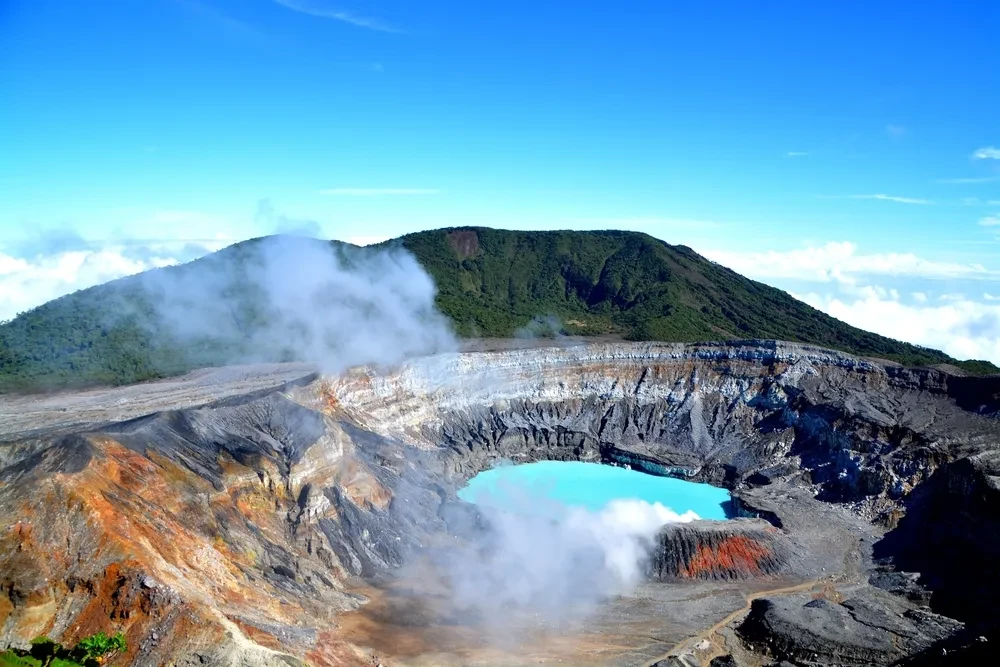
One of Costa Rica’s most accessible volcanoes, Poás Volcano National Park, is about an hour’s drive into the highlands. Early morning visits are best for clear crater views.
Coffee Tours
Nearby estates such as Doka Estate Coffee Tour offer insight into Costa Rica’s coffee culture.
Bajos del Toro Waterfalls
Hidden waterfalls and cloud forest hikes await in the mountains northwest of town.
City Parks & History
Parque Central and local museums offer low-key cultural exploration.
How to Get Around
Alajuela is easy to navigate.
- Uber operates reliably
- Red taxis are common.
- Public buses connect to the surrounding towns.
- Rental cars are convenient for volcano and waterfall excursions.
If you plan to drive to La Fortuna, Alajuela is a logical overnight stop.
When to Visit Alajuela
Alajuela’s Central Valley climate is mild year-round.
- Dry season (December–April): Clearer skies, warmer afternoons
- Rainy season (May–November): Afternoon showers, lush green hills
Morning activities are recommended during rainy months due to typical afternoon storms.
Because Alajuela sits at a moderate elevation, temperatures are more comfortable than in coastal regions.
Pace & Lifestyle
Alajuela moves at a steady, local pace. It feels more traditional and less internationally oriented than Escazú.
You’ll see:
- Families gathering in the park
- Schoolchildren in uniform
- Small businesses operate daily routines.
It is practical rather than aspirational — a place people live, not just visit.
Things to Be Cautious Of
Like any Central Valley city:
- Watch belongings in busy market areas.
- Avoid leaving valuables in cars.
- Use Uber or registered taxis at night.
- Stay aware in less-lit streets after dark.
Alajuela is generally safe for short stays, but it lacks the same private security infrastructure as Escazú.
Who Alajuela Is Best For
Alajuela works well for:
- Travelers needing airport hotels near SJO
- One-night stopovers before heading to La Fortuna
- Budget-conscious visitors
- Coffee and volcano enthusiasts
- Those wanting a more authentic Central Valley experience
It may not suit travelers seeking luxury shopping or nightlife.
Final Thoughts
Alajuela is often treated as a transit point — but it deserves more attention. Positioned at the crossroads of volcanoes, coffee farms, and northern rainforest routes, it offers convenience and cultural grounding.
If you use it intentionally — whether for a night near the airport or as a base for exploring Poás and the Central Valley — Alajuela becomes more than a gateway.
It becomes a practical, authentic introduction to Costa Rica.
Related Posts

Coffee Tours in Alajuela, Costa Rica
A Complete Visitor Guide from the Heart of the Central…
Poás Volcano from Alajuela: Complete Visitor Guide
Just 45 minutes from downtown Alajuela, Poás Volcano National Park…
Best Hotels Near San José Airport (SJO) in Alajuela
For many travelers to Costa Rica, Alajuela is the first…