If you’re searching for “how to get to Poás Volcano from San José” or “best way to visit Poás Volcano from Alajuela,” the good news is this: it’s one of the most accessible active volcanoes in the world.
Located just 45–90 minutes from the capital region, Poás Volcano National Park sits at 8,885 feet (2,708 meters) in Costa Rica’s Central Valley highlands. The drive climbs through coffee farms, strawberry fields, and cloud forest before reaching the crater overlook.
But accessibility doesn’t mean you should arrive unprepared. Timing, weather, and reservations matter — especially for travelers coming from the U.S., Canada, and Europe who may be adjusting to altitude and mountain driving.
Here’s exactly what to expect.
Where Poás Volcano Is Located
Poás Volcano is northwest of San José and north of Alajuela, perched above the Central Valley.
From:
- Alajuela (near SJO Airport): 45–60 minutes
- San José downtown: 1.5 hours (depending on traffic)
Its location makes it one of the most practical day trips from San José, and an easy addition before continuing toward destinations like La Fortuna or the Pacific Coast.
Driving to Poás Volcano
For independent travelers, renting a car offers the most flexibility.
The primary access route from Alajuela follows Route 712 into the mountains. The road is paved and generally in good condition, winding through small agricultural towns before entering the cloud forest near the park boundary.
The climb is steady but not extreme. Elevation gain is noticeable, and temperatures drop significantly as you ascend.
From San José, you’ll first navigate Central Valley traffic before connecting toward Alajuela and beginning the mountain ascent.
Road Conditions and What to Expect
The route is fully paved, but conditions vary by season.
During the dry season (December–April), visibility is typically excellent in the early morning. This is the easiest time to drive.
In the green season (May–November), afternoon rains and mountain fog are common. Visibility can drop quickly, especially above 7,000 feet. September and October are the wettest months.
Regardless of the season, plan to arrive early. Not just for road conditions — but for crater visibility.
Rental Car vs. Guided Tour
Both options are viable. The right choice depends on comfort level and itinerary structure.
Rental Car
A rental car works well for:
- Travelers staying in Alajuela.
- Families combining Poás with coffee tours
- Visitors continuing to La Fortuna.
- Independent explorers are comfortable with mountain driving.
Estimated cost:
- $60–$120 per day vehicle rental
- Mandatory liability insurance required
- The park entrance fee is separate.
Driving yourself allows flexibility to stop at roadside cafés or viewpoints on descent.
Guided Tour
Guided tours typically depart from San José or Alajuela hotels and include transportation, coordination of park entry, and a bilingual guide.
Estimated cost:
- $90–$160 per person, depending on inclusions
Guided tours are ideal for:
- Travelers who prefer not to drive
- Visitors short on time
- Those interested in geological interpretation
- Older travelers who prefer structured logistics
For many Baby Boomers and wellness travelers, the convenience of not navigating mountain roads outweighs the added cost.
Estimated Travel Times and Cost Comparison
From Alajuela:
- Rental car drive time: 45–60 minutes
- Guided tour pickup: similar transit time, plus multiple hotel stops
From San José:
- Rental car drive time: 1–1.5 hours
- Guided tour: often 4–6 hours total, including pickups and stops
If you are staying near SJO, driving is often more time-efficient than joining a large group tour.
Ticket Reservations and Entry Timing (Important)
You must reserve Poás Volcano tickets online in advance through Costa Rica’s national park system. Walk-in entry is not permitted.
Tickets require:
- Passport number
- Selected time slot
- Fixed entry window
Visitors are allowed a limited amount of time at the crater viewpoint due to safety protocols.
Morning slots (8:00–10:00 AM) offer the highest chance of clear views before cloud cover builds.
For detailed instructions, see the dedicated Poás Volcano Tickets and Reservations Guide within this content cluster.
Seasonal Driving Considerations
Mountain weather shifts quickly at nearly 9,000 feet.
In the dry season, mornings are crisp and cool. Bring a light jacket, even if San José feels warm.
In the green season, rain typically arrives in the afternoon. Plan to descend before heavy downpours begin.
Fog can form rapidly near the summit. If visibility becomes limited, reduce speed and use headlights.
Night driving is not recommended on this route, particularly for first-time visitors unfamiliar with Costa Rican road signage.
Safety Considerations at the Volcano
Poás is an active volcano. Park authorities monitor gas emissions and seismic activity daily.
Occasional temporary closures occur due to:
- Increased volcanic activity
- Gas emissions
- Weather-related safety concerns
Always check the official park status the morning of your visit.
At altitude, some travelers experience mild shortness of breath. The walk to the crater is paved and short, but the air is cooler and thinner than in the Central Valley.
Visitors with respiratory sensitivities should consult medical advice before visiting.
The Experience: What It Feels Like
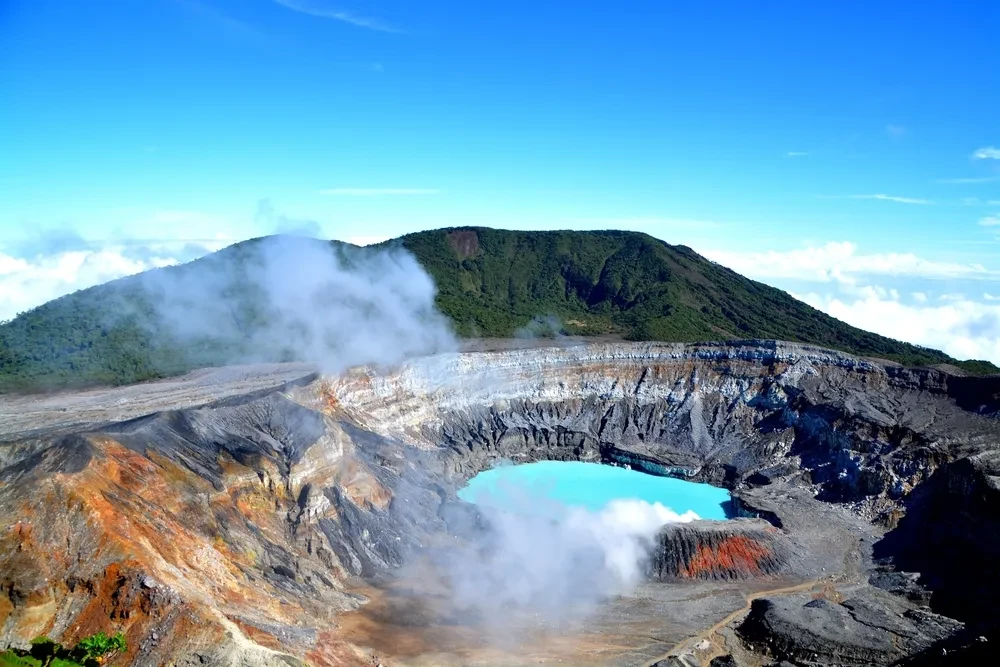
One of the reasons Poás is so popular among international travelers is its accessibility. Within an hour of landing in Costa Rica, you can be standing at the rim of a massive, steaming crater lake.
The experience is structured and time-controlled — not a wilderness trek, but a dramatic and efficient encounter with geological power.
For travelers continuing north afterward, many combine a morning visit to Poás with a scenic drive to La Fortuna or Lake Arenal.
Final Thoughts
Getting to Poás Volcano from San José or Alajuela is straightforward — but timing, reservations, and seasonal awareness make all the difference.
If you’re based near SJO or in Alajuela, a rental car offers maximum flexibility. If you prefer seamless coordination, a guided tour removes logistical stress.
Either way, arrive early, dress in layers, and manage expectations around cloud cover.
Few places in Costa Rica offer such high-impact scenery with so little physical effort. And for many travelers, Poás becomes the moment they truly feel the power of this volcanic country.
Related Posts
Poás Volcano vs Arenal Volcano: Which Should You Visit?
Volcanoes define Costa Rica — but not all volcano experiences…
Poás Volcano National Park: The Complete Visitor Guide
Few places in Costa Rica deliver such an immediate, dramatic…
Poás Volcano Tickets & Reservation Guide
If you’re planning to visit Poás Volcano National Park, securing…