San José is Costa Rica’s political, cultural, and economic center — and for most international travelers, it is the first introduction to the country via Juan Santamaría International Airport (SJO).
Like any capital city, San José requires urban awareness. It is not a beach town, nor is it a gated resort environment. But for informed travelers who take standard precautions, San José is generally safe — particularly in the neighborhoods where most visitors stay.
Understanding how the city functions, where to base yourself, and how to move around safely will make your experience smooth and confident.
Understanding San José’s Urban Landscape
San José sits in the Central Valley at roughly 3,800 feet (1,170 meters) above sea level. The metropolitan area includes Escazú, Santa Ana, Rohrmoser, and Alajuela near the airport.
Downtown San José is dense and busy. It has pedestrian zones, museums, historic buildings, and government offices — but also traffic congestion and typical urban petty crime risks.
Escazú and Santa Ana feel more suburban and upscale, with modern shopping centers and private hospitals. Rohrmoser borders La Sabana Metropolitan Park and offers a quieter residential feel while remaining central.
Most safety concerns for travelers relate to opportunistic petty theft, not violent crime.
Crime in San José: Realistic Perspective
Costa Rica consistently ranks among the safest countries in Central America. However, San José is a working city of over one million people in the greater metro area.
The most common issues affecting tourists include:
- Pickpocketing in crowded areas
- Bag snatching
- Theft from unattended vehicles
- Opportunistic phone theft
Violent crime targeting tourists is uncommon, but not impossible. The key is situational awareness.
If you follow the same precautions you would in any large North American or European city, your risk remains low.
Safest Areas to Stay in San José
Choosing the right neighborhood significantly improves your experience.
Escazú
Often considered the safest and most polished district. Home to embassies, international schools, and private hospitals, hotels such as InterContinental Costa Rica at Multiplaza Mall offer controlled access and strong security infrastructure.
Santa Ana
Residential, quieter, and popular with expats. A good option for families and longer stays.
Rohrmoser
Close to La Sabana Park, calm and centrally located.
Barrio Amón
Historic and charming. Boutique properties like Hotel Grano de Oro offer secure, walkable access to downtown cultural attractions.
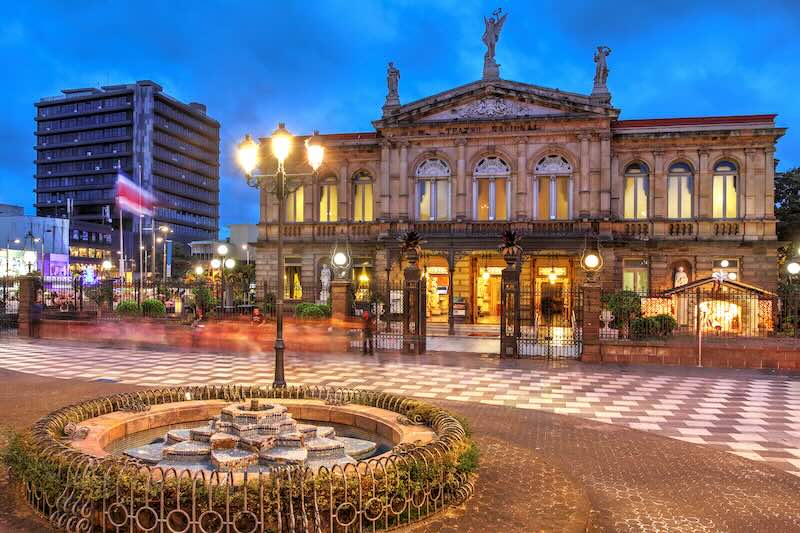
Downtown can be safe during daylight hours, especially near Avenida Central and the National Theater. At night, it’s best to use Uber or taxis rather than walking long distances.
What to Avoid
- Walking alone late at night in isolated areas
- Displaying expensive jewelry or electronics
- Leaving bags unattended in cafés or markets
- Accepting unofficial taxi services
The bus terminals in downtown San José can feel chaotic and are not ideal for first-time visitors unfamiliar with the city.
Enjoying San José Safely: What to Do
San José’s cultural attractions are concentrated in well-trafficked areas.
Visit the National Theater of Costa Rica and the Pre-Columbian Gold Museum during the day when pedestrian activity is highest.
Explore Barrio Escalante for dining — it’s lively, well-lit, and popular in the evenings.
Spend time at La Sabana Metropolitan Park, especially in the morning when locals jog and gather.
For guided experiences, organized city walking tours provide local context while adding another layer of security.
Transportation Safety Tips
From the Airport (SJO)
Official orange airport taxis are regulated. Uber operates widely and is typically more affordable.
Pre-arranged hotel transfers offer added convenience, particularly for late arrivals.
Getting Around the City
- Uber is widely used and generally safe.
- Red taxis are metered; ensure the meter (maría) is running.
- Avoid unlicensed drivers offering rides.
Traffic congestion is common during rush hour (7–9 a.m. and 4–6 p.m.), but this is more of an inconvenience than a safety risk.
Health and Medical Infrastructure
San José has some of the best healthcare facilities in Central America.
Private hospitals such as CIMA in Escazú are internationally accredited. Pharmacies are abundant and well-stocked.
For US, Canadian, and EU travelers, comprehensive travel insurance is recommended, as quality medical care is readily available in the city.
Safety for Families and Older Travelers
Families and baby boomers often find Escazú and Santa Ana particularly comfortable. These areas offer modern infrastructure, reliable transportation, and access to high-quality medical facilities.
If traveling with children, choose accommodations with a 24-hour reception and controlled entry.
When Safety Perception Becomes Misinformation
San José is sometimes unfairly described as dangerous simply because it is urban and lacks beach-town aesthetics.
The reality is more nuanced. It is a functional Latin American capital with busy streets, commercial zones, and neighborhoods that vary in atmosphere.
Understanding where you are staying and how you are moving around makes all the difference.
Practical Safety Checklist
- Use Uber or registered taxis.
- Keep valuables discreet
- Stay in well-reviewed neighborhoods.
- Avoid isolated streets late at night.
- Carry copies of important documents.
- Monitor your belongings in crowded markets.
Final Assessment: Is San José Safe?
Yes — for travelers who approach it with realistic expectations and basic urban awareness.
San José is not a resort enclave, but it is not inherently dangerous. In fact, for many visitors, it serves as a comfortable gateway to Costa Rican culture.
Stay in reputable neighborhoods, use trusted transportation, and move through the city with confidence — not fear. With informed planning, San José offers museums, gastronomy, coffee culture, and day-trip access without significant safety concerns.
Urban, vibrant, and evolving — San José rewards travelers who understand it.
Related Posts

Coffee Tours in San José, Costa Rica
Discovering the Heart of Costa Rican Coffee Culture in the…
San José, Costa Rica: The Complete Travel Guide to the Capital
San José is often treated as a gateway — the…
How to Spend 2 Days in San José, Costa Rica
San José is often treated as a layover city —…