The Ultimate Travel Guide to Arenal Volcano National Park & the Surrounding Region
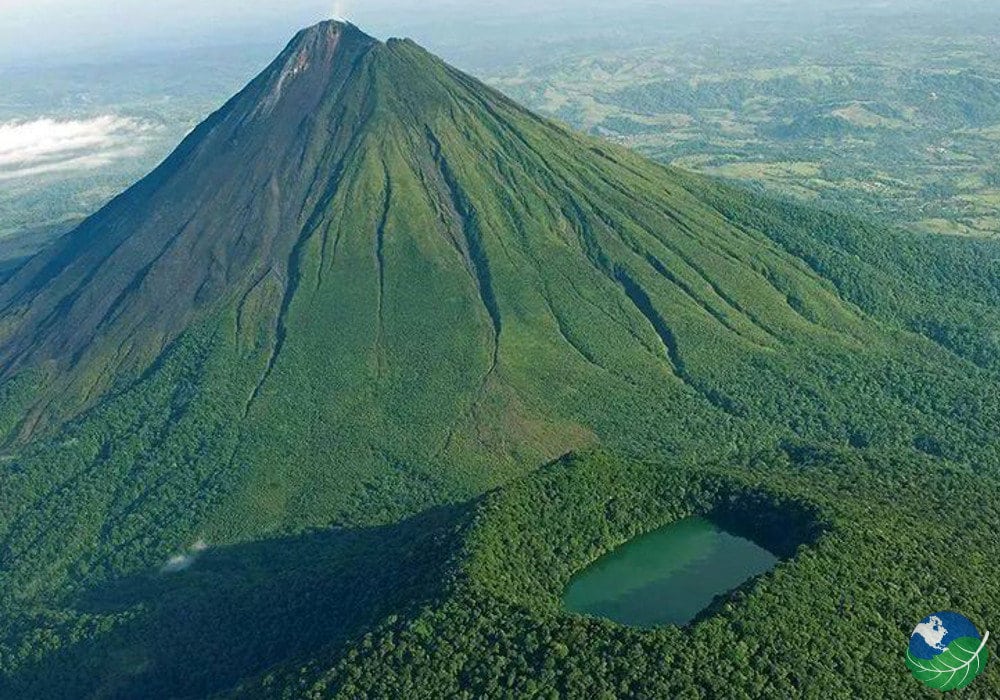
Few landscapes in Central America are as instantly recognizable as Arenal Volcano rising above rainforest and farmland in northern Costa Rica. For many travelers from the United States, Canada, and Europe, Arenal is the image that defines the country: a near-perfect volcanic cone framed by mist and jungle.
But visiting Arenal Volcano is about far more than taking a photo.
It is about walking across hardened lava fields from past eruptions, hiking well-maintained rainforest trails, soaking in geothermal hot springs, and watching wildlife thrive in a landscape shaped by fire and regeneration.
This pillar guide covers everything you need to know about visiting Arenal Volcano National Park, including geological history, how to get there, where to stay, what to do, and when to visit. It also connects to more in-depth resources within our Arenal content cluster.
Overview: Arenal Volcano & the Surrounding Region
Arenal Volcano sits in Costa Rica’s Northern Plains near the town of La Fortuna, approximately:
- 2.5–3.5 hours from San José (SJO)
- 2.5–3 hours from Liberia (LIR)
At 1,670 meters (5,479 feet), Arenal was one of the most active volcanoes in the Americas from 1968 until 2010. Today, it remains in a resting phase — but its presence dominates the region.
The broader Arenal area includes:
- Arenal Volcano National Park
- Lake Arenal
- La Fortuna Waterfall
- Mistico Hanging Bridges
- Thermal hot spring resorts
- Private rainforest reserves
Because attractions are clustered within a short driving radius, Arenal is one of the most accessible and well-developed nature destinations in Costa Rica.
The Basics: Geological & Eruption History of Arenal Volcano
Understanding Arenal’s history deepens the experience.
Geological Formation
Arenal is a stratovolcano formed by layers of lava, ash, and volcanic rock. It lies along the Central American Volcanic Arc, where subduction of tectonic plates fuels volcanic activity.
The 1968 Eruption
On July 29, 1968, Arenal violently erupted after centuries of dormancy, destroying nearby villages and reshaping the landscape. Lava flows from this eruption created many of the hardened fields you walk across today.
For a detailed historical account, see our in-depth guide to the History of the 1968 Arenal Eruption.
Is Arenal Volcano Active?
While currently in a resting phase, Arenal is still classified as an active volcano. For current status updates and what “active” means in practical terms, see our guide: Is Arenal Volcano Active?
How to Get to Arenal Volcano (From the US, Canada & Europe)
Most international travelers fly into:
- Juan Santamaría International Airport (SJO) – San José
- Daniel Oduber Quirós International Airport (LIR) – Liberia
Both offer direct flights from major North American hubs and seasonal routes from Europe.
From San José (SJO)
Travel time: 2.5–3.5 hours
Options include:
- Private shuttle (most convenient)
- Shared shuttle
- Rental car
- Public bus
For detailed route options and comparisons, see:
How to Get to Arenal Volcano from San José
From Liberia (LIR)
Travel time: 2.5–3 hours
Often preferred when combining Arenal with Guanacaste beaches.
Rental cars offer the most flexibility for visiting viewpoints and hot springs outside town.
Where to Stay Near Arenal Volcano
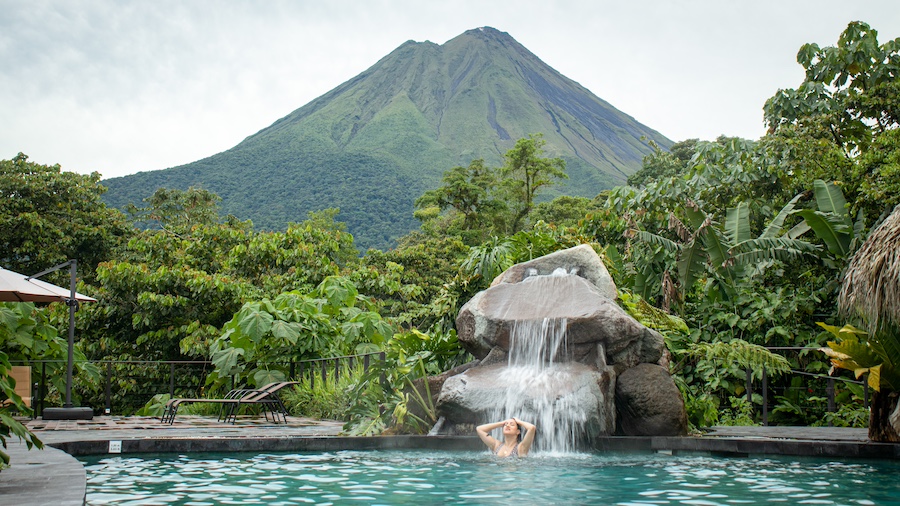
Accommodation options range from luxury eco-resorts with private hot springs to intimate jungle lodges.
Luxury Eco-Resorts with Volcano Views
Ideal for baby boomers, affluent families, and wellness travelers:
- Nayara Springs
- Nayara Gardens
- Nayara Tented Camp
- The Springs Resort & Spa
- Tabacón Thermal Resort & Spa
These properties offer:
- Direct volcano sightlines
- On-site thermal pools
- Spa services
- High-end dining
For curated recommendations, see our guide to the Best Hotels with Arenal Volcano Views.
Boutique Jungle Lodges
Nature-forward and quieter:
- Arenal Observatory Lodge
- Smaller eco-lodges on private reserves
Excellent for birdwatchers and independent travelers.
Vacation Rentals
Private homes near La Fortuna offer space for families and longer stays but typically require a rental car.
Where to Eat Near Arenal Volcano
Most dining is centered in La Fortuna, about 10–20 minutes from the main park entrance.
Options include:
- Traditional Costa Rican sodas (casados, gallo pinto)
- International cuisine (Italian, Argentine, sushi)
- Fine dining at luxury resorts
Many high-end resorts maintain strong culinary programs, making it easy to dine on property after a day of hiking.
What to Do at Arenal Volcano
The volcano is the anchor — but the experience extends far beyond viewing it.
Arenal Volcano National Park Hiking Trails
The official park features:
- Sendero Las Coladas (lava flow trail)
- Sendero El Ceibo (forest trail)
- Peninsula sector trails (lake views)
These trails are moderate and accessible, offering lava fields, rainforest sections, and volcano viewpoints.
For trail details, distances, and difficulty levels, see our complete Arenal Volcano National Park Hiking Guide.
Best Viewpoints of Arenal Volcano
For photography and clear sightlines, visit:
- Lava flow viewpoints inside the park
- Lake Arenal shorelines
- Elevated resort terraces
For exact locations and timing tips, read:
Best Viewpoints of Arenal Volcano
Wildlife & Nature Experiences
Common sightings include:
- Howler monkeys
- Toucans
- Coatis
- Sloths
Guided naturalist tours significantly increase the likelihood of wildlife spotting.
Hot Springs
Geothermal soaking is integral to the Arenal experience. Many hot springs are located along the road between La Fortuna and the park.
How to Visit Arenal Volcano National Park
Entrance Information
The park has designated sectors with controlled entry.
Expect:
- Clearly marked trails
- Park rangers on site
- Restroom facilities at entrances
Tickets can be purchased online in advance or at the entrance (subject to availability).
Arrive early in the day for cooler temperatures and better visibility.
When to Visit Arenal Volcano
Dry Season (December–April)
- Clearer volcano views
- Lower rainfall
- Higher hotel rates
- Advanced reservations required
Ideal for first-time visitors.
Green Season (May–November)
- Lush vegetation
- Afternoon rain common
- Fewer crowds
- Better accommodation availability
September and October are typically the wettest months.
For travelers searching for “best time to visit Arenal Volcano, Costa Rica,” the answer depends on whether you prioritize visibility or value.
Pace & Experience of Visiting Arenal Volcano
Arenal rewards a balanced itinerary.
Morning:
- Hiking or wildlife tours
Afternoon:
- Hot springs or relaxation
Evening:
- Early dinner and rest
It is not a nightlife destination. It is a nature-driven experience that encourages active mornings and restorative evenings.
Three to five days is ideal for most travelers.
Safety & Things to Be Cautious Of
Weather
- Sudden rain showers
- High humidity
- Slippery trails during the rainy season
Terrain
- Uneven lava rocks
- Muddy sections after rain
Wear proper hiking shoes and carry water.
Wildlife
- Do not approach or feed animals.
- Watch for snakes along trail edges.
Park Regulations
- Stay on marked trails.
- Do not attempt to climb the volcano.
- Follow the ranger’s instructions
Volcanic areas are monitored, and closures may occur if conditions change.
Arenal Volcano vs Other Costa Rica Volcanoes
If you are comparing options, explore:
- Arenal Volcano vs Poás Volcano
- Arenal Volcano vs Irazú Volcano
Each offers a distinct volcanic experience.
Why Arenal Volcano Remains One of Costa Rica’s Best Destinations
Arenal is not about witnessing an eruption. It is about walking through the aftermath of one — and seeing how rainforest life has reclaimed the terrain.
It offers:
- Accessible hiking trails
- Dramatic volcano views
- Luxury and eco-lodge accommodations
- Geothermal hot springs
- Wildlife encounters
- Short travel distances between experiences
For high-intent travelers searching for Arenal Volcano National Park hiking trails, best hotels with Arenal Volcano views, or how to visit Arenal Volcano from San José, this region consistently delivers on both scenery and infrastructure.
Arrive early. Move at a steady pace. Respect the terrain.
And let one of Central America’s most iconic volcanoes set the rhythm of your Costa Rica journey.
Related Posts
Best Hotels with Arenal Volcano Views
Where to Stay for Front-Row Seats to Costa Rica’s Most…
Is Arenal Volcano Active? What Travelers Should Know
If you’re planning a trip to La Fortuna, one of…