Costa Rica has more than 60 volcanic formations. Still, for most travelers coming from the United States, Canada, or Europe, the decision often comes down to two names: Arenal Volcano and Poás Volcano.
Both are active. Both are accessible. Both are protected within national parks.
But they offer fundamentally different experiences.
If you are deciding between Arenal Volcano National Park and Poás Volcano National Park, this guide breaks down the differences in landscape, accessibility, hiking, accommodations, and overall travel experience — so you can choose the right fit for your itinerary.
Overview: Arenal Volcano
Location: Northern Plains near La Fortuna
Elevation: 1,670 meters (5,479 ft)
Type: Cone-shaped stratovolcano
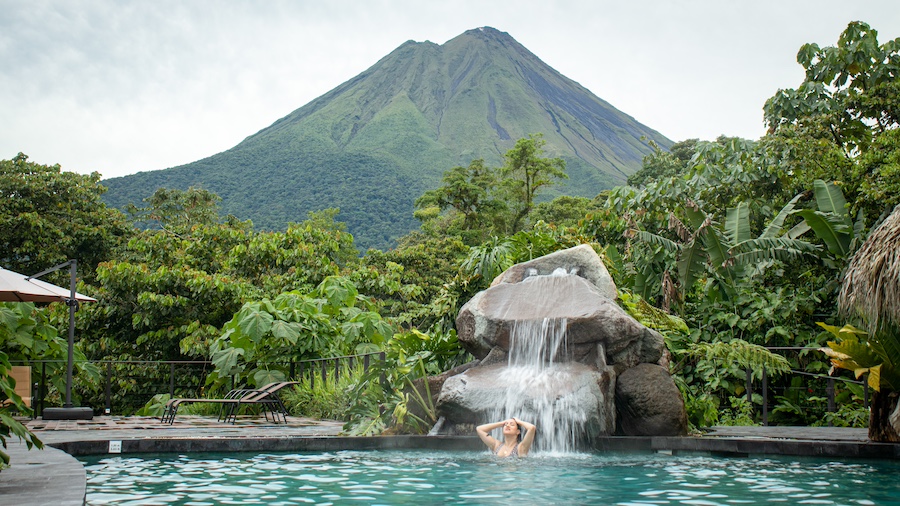
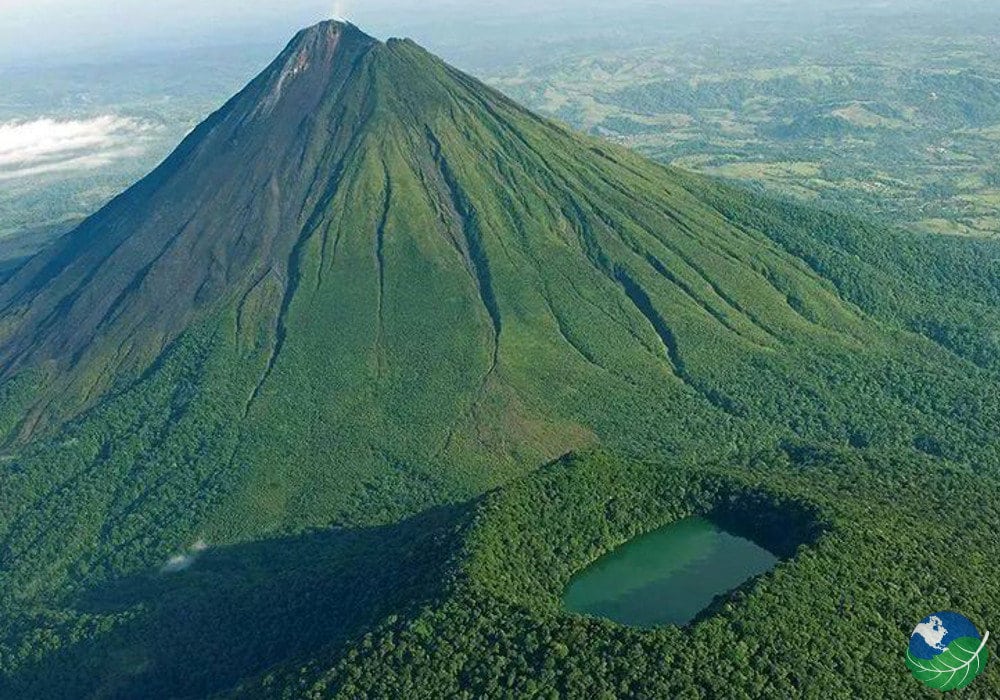
Arenal is Costa Rica’s most iconic volcano — a near-perfect symmetrical cone rising above rainforest and pastureland. It was highly active from 1968 to 2010 and is currently in a resting phase, but still classified as active.
The experience here includes:
- Lava flow hiking trails
- Rainforest wildlife
- Lake Arenal
- Geothermal hot springs
- Resort-style accommodations
Arenal is immersive, scenic, and full of activities.
Overview: Poás Volcano
Location: Central Valley, about 1.5 hours from San José
Elevation: 2,708 meters (8,885 ft)
Type: Crater-style stratovolcano with acidic lake
Poás is known for its massive, open crater and striking turquoise acid lake. It remains volcanically active and has experienced intermittent closures in recent years due to gas emissions and eruptions.
The experience here is:
- Short, structured crater viewpoint access
- Cooler high-altitude climate
- Cloud forest surroundings
- Day-trip friendly from San José
Poás feels more geological and immediate — less immersive, but visually dramatic.
Cone vs Crater: What’s the Landscape Difference?
Arenal Volcano: Classic Cone
- Symmetrical volcanic cone
- No access to the summit
- View from surrounding trails.
- Lava fields and forest regeneration
You see Arenal from the outside — framed by rainforest, lake, and sky.
Poás Volcano: Open Crater
- Large exposed crater
- Visible fumaroles (steam vents)
- Acidic turquoise crater lake
- Direct viewpoint access
At Poás, you look into the volcano.
If your travel goal is standing at the edge of a steaming crater, Poás delivers that experience. If you want sweeping landscape views of a dramatic volcanic cone, Arenal is unmatched.
Accessibility: Which Is Easier to Visit?
Poás Volcano National Park
- 1.5–2 hours from San José (SJO)
- Paved road access
- Timed-entry reservation system
- Short walk from the parking lot to the crater viewpoint
Poás is ideal for travelers with limited time or those staying in San José.
Minimal hiking required.
Arenal Volcano National Park
- 2.5–3.5 hours from San José
- 2.5–3 hours from Liberia
- Multiple trail sectors
- Requires more time commitment
Arenal is best suited to a 2–4 night stay rather than a day trip.
For travelers flying into Liberia and combining beach destinations, Arenal integrates more naturally into a longer itinerary.
Hiking Experience: Arenal vs Poás
Hiking at Poás
- Short, paved path to crater overlook
- Additional forest trail (Botos Lagoon)
- Limited time allowed at the crater due to gas monitoring.
Physical effort: Low
Exposure to elements: High altitude, wind, cooler temperatures
Poás is less about hiking and more about geological viewing.
Hiking at Arenal
- Sendero Las Coladas (lava flow trail)
- Sendero El Ceibo (forest trail)
- Peninsula sector (lake views)
Physical effort: Moderate but manageable
Terrain: Gravel paths, hardened lava, forest trails
Climate: Warm, humid
Arenal offers a more immersive hiking experience through varied terrain.
For detailed trail breakdowns, see our full Arenal Volcano National Park Hiking Guide.
Accommodation & Nearby Attractions
Staying Near Arenal
Arenal has developed into one of Costa Rica’s strongest inland tourism hubs.
Accommodations range from:
- Luxury eco-resorts (Nayara Springs, The Springs Resort & Spa)
- Hot spring resorts (Tabacón Thermal Resort & Spa)
- Boutique jungle lodges
- Family-friendly hotels
Nearby attractions include:
- La Fortuna Waterfall
- Mistico Hanging Bridges
- White-water rafting
- Ziplining
- Sloth tours
- Lake Arenal
Arenal offers multi-day depth.
Staying Near Poás
Poás is typically visited as:
- A day trip from San José
- A stop en route to La Fortuna or the Central Valley
Accommodation nearby is more limited and generally boutique or rural.
Nearby attractions include:
- Coffee farms
- La Paz Waterfall Gardens
- Central Valley scenic drives
Poás is shorter in scope but easier logistically.
Weather & Visibility
Poás Volcano
- Higher elevation
- Frequent cloud cover
- Strong winds
- Cooler temperatures
Clear crater visibility is not guaranteed. Mornings are best.
Arenal Volcano
- Lower elevation
- Warmer climate
- Afternoon rain is common in the green season.
- Morning clarity is most reliable.
Both volcanoes reward early starts.
Safety & Volcanic Activity (Important)
Both Arenal and Poás are classified as active volcanoes and monitored by Costa Rican scientific authorities.
Poás has experienced temporary closures in recent years due to gas emissions and eruptive activity.
Arenal has been in a resting phase since 2010, with no recent explosive activity.
Always:
- Check the official park status before visiting.
- Follow the ranger’s instructions.
- Respect trail restrictions
Costa Rica maintains robust monitoring systems to ensure tourist safety.
Which Should You Visit?
Choose Arenal Volcano If You:
- Want a multi-day nature experience.
- Prefer scenic cone-shaped volcano views
- Enjoy hiking and wildlife.
- Value hot springs and luxury accommodations
- Are you combining adventure activities with volcano exploration?
Arenal is immersive and diverse.
Choose Poás Volcano If You:
- Have limited time near San José
- Want to see a dramatic open crater.
- Prefer minimal hiking
- Are interested in geological features over resort stays
Poás is direct and visually striking.
Can You Visit Both?
Yes — many travelers do.
A common route:
San José → Poás (morning) → Drive to La Fortuna → Multi-day Arenal stay.
If your itinerary allows 7–10 days in Costa Rica, combining both provides a fuller volcanic perspective.
Final Verdict: Arenal vs Poás
If you want a quick, high-impact crater experience close to the airport, Poás Volcano is efficient and dramatic.
If you want a deeper, multi-layered experience — hiking lava fields, soaking in hot springs, staying in rainforest lodges, and seeing a perfect volcanic cone rise above the jungle — Arenal Volcano offers more dimension.
For first-time visitors to Costa Rica with 3–5 days to dedicate to the interior, Arenal typically offers a richer overall experience.
For travelers tight on time or staying in the Central Valley, Poás is a compelling alternative.
Both are impressive. The better choice depends on how much time you have — and how deeply you want to immerse yourself in Costa Rica’s volcanic landscape.