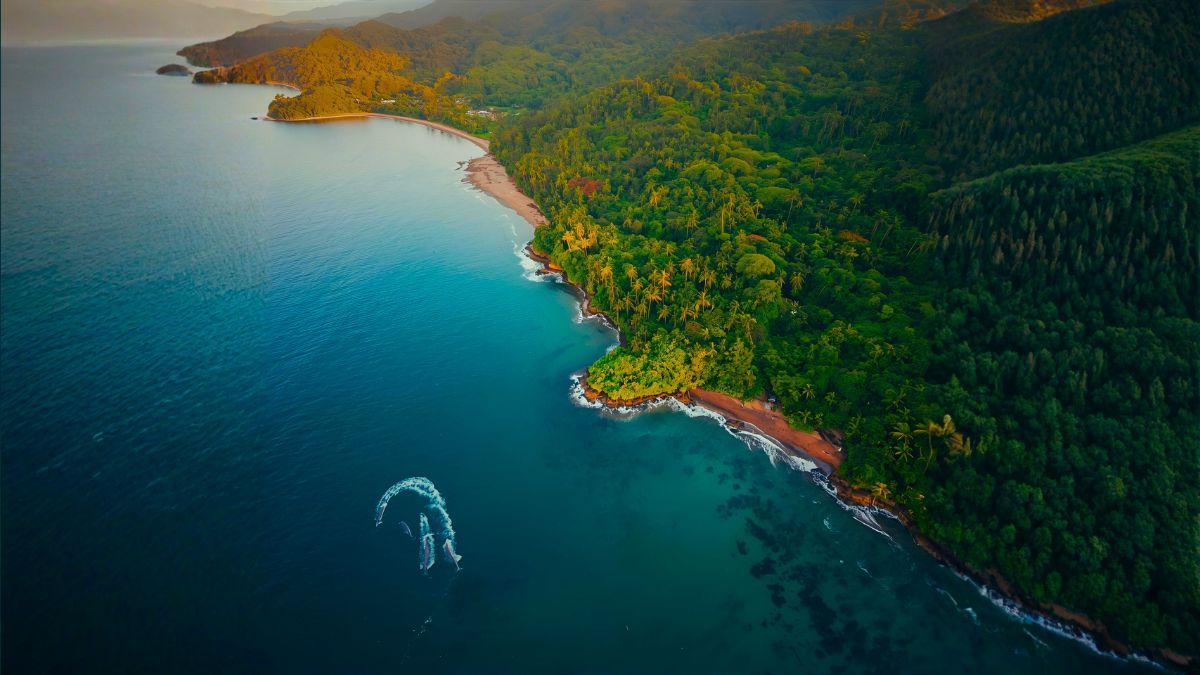
Along the eastern edge of the Osa Peninsula lies a body of water unlike anywhere else in Central America: Golfo Dulce.
At first glance, it appears to be a calm tropical bay framed by rainforest-covered hills. But scientifically and ecologically, Golfo Dulce is something far rarer — a tropical fjord with extraordinary marine biodiversity and deep-water characteristics found in only a handful of places worldwide.
For travelers based in Puerto Jiménez, Golfo Dulce is not just scenery. It is a living ecosystem filled with dolphins, migratory whales, reef species, mangroves, and nutrient-rich waters that support complex food chains.
For an overview of the town that anchors the gulf, see:
What Makes Golfo Dulce So Unique?
A Rare Tropical Fjord
Unlike most tropical bays, Golfo Dulce has:
- A deep inner basin reaching over 200 meters
- A narrow entrance connecting it to the Pacific
- Stratified water layers with limited deep-water oxygen exchange
This makes it one of the few true tropical fjord-like ecosystems in the world.
Its depth and structure create:
- Distinct temperature layers
- Nutrient retention
- Plankton-rich waters
- Stable habitats for marine species
Few travelers realize that the calm waters off Puerto Jiménez are part of a globally rare marine system.
Marine Biodiversity in Golfo Dulce
Golfo Dulce’s unique structure supports a surprisingly high density of marine life.
Dolphins (Year-Round Residents)
Two species commonly seen:
- Bottlenose dolphins
- Pantropical spotted dolphins
They are often observed in small pods within the calm inner gulf.
Whales (Seasonal Visitors)
Humpback whales migrate through Golfo Dulce:
- Northern Hemisphere whales: December–March
- Southern Hemisphere whales: July–October
This creates two migration windows annually.
Sea Turtles
Various turtle species pass through or nest along the broader Osa coastline.
Reef & Pelagic Species
The Gulf supports:
- Snapper
- Roosterfish
- Jacks
- Mackerel
- Tuna (near the outer gulf and the Pacific boundary)
Fishing guide:
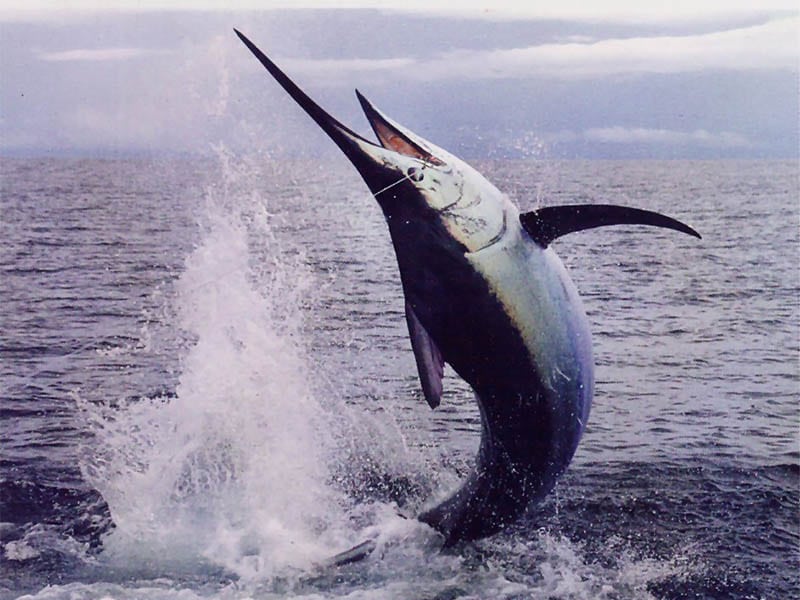
The nutrient-rich waters sustain both recreational fishing and local artisanal fisheries.
Mangroves & Coastal Ecology
Beyond open water, Golfo Dulce contains:
- Extensive mangrove forests
- Estuaries
- Mudflats
These serve as:
- Fish nurseries
- Bird habitats
- Carbon sinks
- Protective buffers against erosion
The mangrove systems are critical to maintaining biodiversity throughout the Osa Peninsula.
Best Marine Activities in Golfo Dulce
Dolphin & Wildlife Boat Tours
Short excursions from Puerto Jiménez allow visitors to:
- Observe dolphins
- Explore mangroves
- Photograph the coastal rainforest.
- Learn about the fjord ecosystem.
Kayaking & Paddleboarding
Because the inner gulf is relatively calm:
- Kayaking is accessible year-round.
- Sunrise paddles are especially scenic.
- Wildlife sightings often occur from the water.
Sportfishing
Inshore fishing in Golfo Dulce is a major draw.
Full overview:
Calmer waters make it suitable even for families.
Snorkeling (Limited but Possible)
While not a coral-reef hotspot like Caño Island, nearshore snorkeling can still reveal reef fish and marine life in certain areas.
Where to Stay Along Golfo Dulce
Accommodation ranges from in-town convenience to remote eco-lodges.
In Puerto Jiménez
- Walkable access to the marina
- Easy boat departures
- Boutique hotels and cabinas
Ideal for travelers prioritizing logistics and access to Corcovado.
Jungle Eco-Lodges Outside Town
Located along quieter stretches of the Gulf.
Best for:
- Birdwatchers
- Wellness travelers
- Privacy and immersion
Destination overview:
Is Puerto Jiménez Worth Visiting?
Seasonal Marine Wildlife Patterns
Dry Season (December–April)
- Calmer conditions overall
- Strong inshore fishing
- Northern humpback migration (early months)
- Clearer skies for kayaking
Green Season (May–November)
- Southern humpback migration (July–October)
- Nutrient upwellings can improve fishing.
- Afternoon rain common
- Lush rainforest backdrop
Seasonal planning guide:
Best Time to Visit Puerto Jiménez
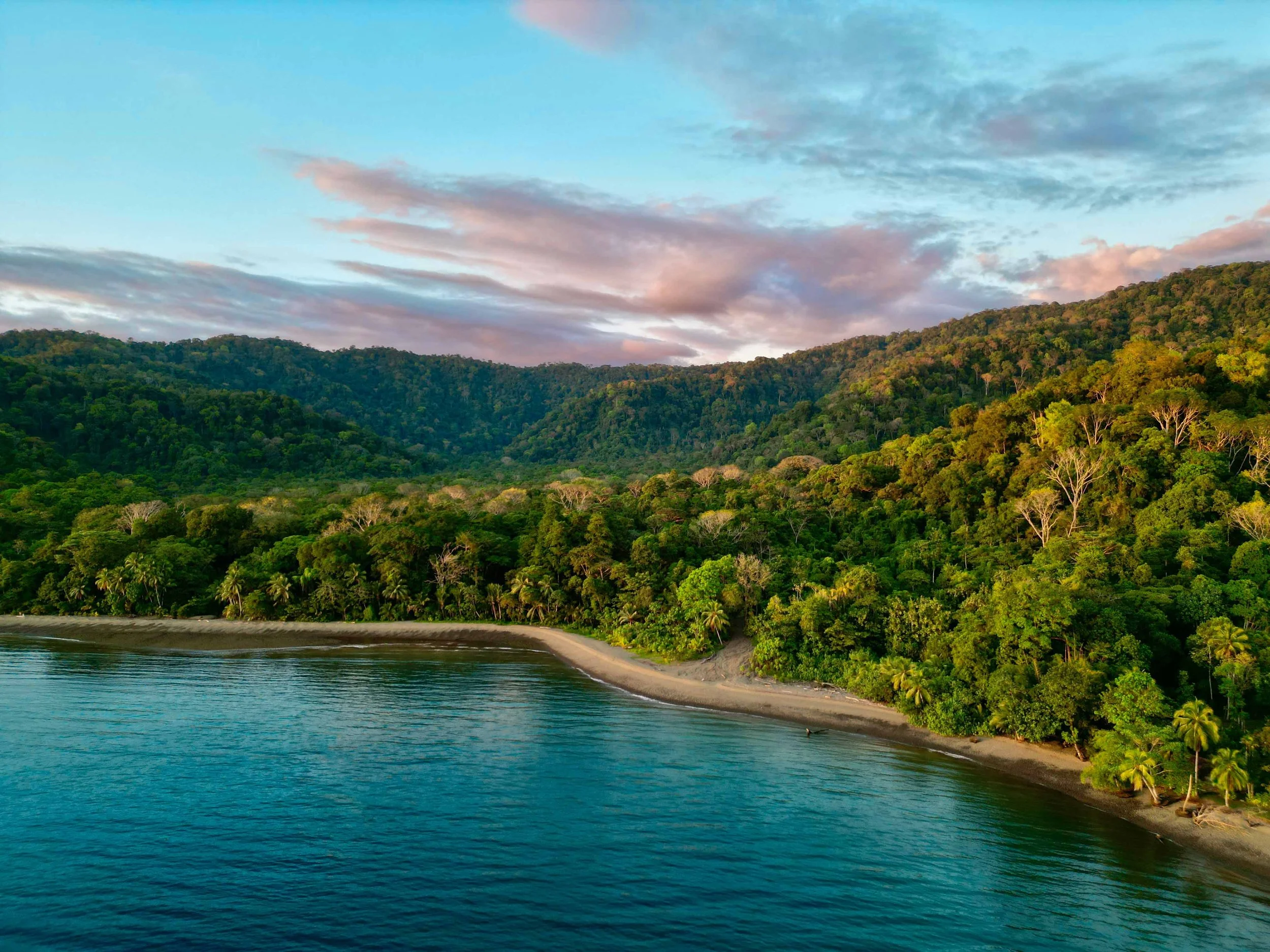
Golfo Dulce remains navigable year-round, but weather patterns influence offshore trips.
Why Golfo Dulce Matters Ecologically
Golfo Dulce is not just scenic — it is ecologically significant.
Its characteristics:
- Rare deep-water tropical basin
- Critical habitat for marine mammals
- Important mangrove ecosystems
- Biodiversity corridor linked to Corcovado.
The health of Golfo Dulce directly supports both marine and terrestrial ecosystems across the Osa Peninsula.
Corcovado’s rainforest and Golfo Dulce’s waters are interconnected systems.
Park overview:
Who Will Appreciate Golfo Dulce Most?
Golfo Dulce is ideal for:
- Wildlife enthusiasts
- Birdwatchers
- Marine life photographers
- Kayakers
- Anglers
- Slow-travel seekers
It may not suit:
- Travelers expecting turquoise Caribbean-style water.
- Luxury marina experiences
- High-energy nightlife
This is a place for observation and immersion.
Final Thoughts
Golfo Dulce does not compete with Costa Rica’s surf beaches or coral reefs. Its power lies in subtlety and depth — literally.
It is one of the only tropical fjord ecosystems in the world. Its deep basin shelters dolphins year-round. Its mangroves protect fragile food chains. Its waters reflect rainforest hills that rise directly from the shoreline.
For travelers staying in Puerto Jiménez, Golfo Dulce is more than a view — it is the marine counterpart to Corcovado’s rainforest.
And together, they form one of the most unique ecological pairings in Central America.
Related Posts
Is Golfo Dulce Worth Visiting? An Honest Guide
Who It’s For, What to Expect, and When to Go…
Fishing in Golfo Dulce from Puerto Jiménez
Inshore & Offshore Sportfishing on Costa Rica’s Osa Peninsula Puerto…
Best Time to Visit Golfo Dulce (Rainfall & Marine Wildlife)
A Seasonal Guide to Costa Rica’s Tropical Fjord Golfo Dulce,…