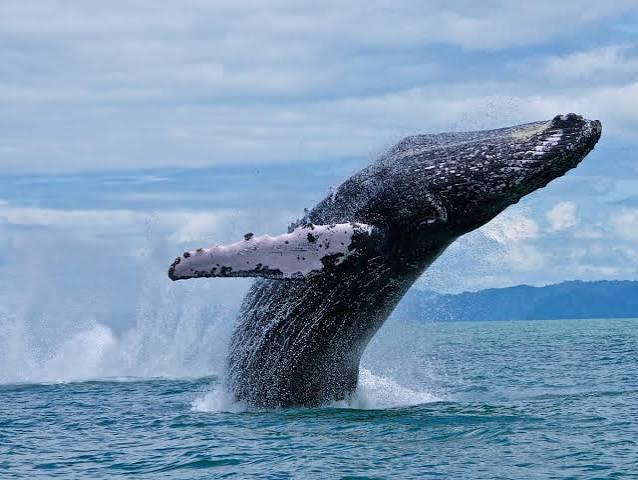
Costa Rica is one of the world’s best destinations for whale watching, and one of the biggest reasons is simple: humpback whales visit the country’s Pacific coast during two different migration seasons every year.
Unlike many whale-watching destinations that only experience a single migration, Costa Rica welcomes humpback whales from both the Northern and Southern Hemispheres. This creates one of the longest whale-watching seasons anywhere in the world and gives travelers multiple opportunities to see these magnificent marine mammals.
Whether you’re planning your vacation around whale watching or hoping to include a marine wildlife tour during your trip, understanding when whales arrive—and where they go—will help you make the most of your visit.
Why Costa Rica Has Two Whale Watching Seasons
Costa Rica sits in a unique position along the Pacific coast of the Americas.
Every year, humpback whales migrate thousands of miles between cold feeding grounds and warm tropical breeding areas.
Because Costa Rica lies between two major whale populations, it receives visitors from both hemispheres at different times of the year.
The result is an exceptionally long whale-watching season that extends across much of the calendar year.
This natural phenomenon is one of the reasons Costa Rica has become one of the world’s leading destinations for whale watching.
Northern Hemisphere Whale Season
The first migration arrives from the North Pacific.
These humpback whales travel from feeding grounds around Alaska, British Columbia, Washington, Oregon, and California before reaching Costa Rica’s warm waters.
Typical Season
December through April
During these months, whales arrive to:
- Mate.
- Give birth.
- Nurse newborn calves.
- Rest before returning north.
Because this migration overlaps with Costa Rica’s dry season, it is especially popular with travelers from North America and Europe.
The combination of sunny weather and reliable whale sightings makes this one of the busiest travel periods.
Southern Hemisphere Whale Season
Several months later, a second migration begins.
This population travels north from Antarctica and southern Chile, covering one of the longest migrations of any mammal on Earth.
Typical Season
July through October
Many wildlife experts consider August and September the peak months for whale watching throughout much of Costa Rica’s southern Pacific coast.
During this period, visitors frequently observe mothers swimming with young calves in protected coastal waters.
The surrounding rainforest is also at its greenest, creating spectacular scenery for wildlife photography.
Month-by-Month Whale Watching Guide
January
Excellent whale watching along the southern Pacific coast.
Northern Hemisphere whales are well established, and weather conditions are generally ideal.
February
One of the best months for combining beach vacations with whale watching.
Ocean conditions are often calm, and whale activity remains strong.
March
Excellent opportunities continue, especially around Marino Ballena National Park and Drake Bay.
April
Northern Hemisphere whales begin leaving Costa Rica, although sightings are still possible.
Toward the end of the month, whale numbers gradually decrease.
May
This is considered a transition month.
Whale sightings become less predictable as one migration ends, and the next has not yet fully arrived.
June
Occasional sightings begin increasing again as Southern Hemisphere whales approach Costa Rica.
Although not yet peak season, visitors may already encounter whales in some areas.
July
Southern Hemisphere migration becomes well established.
Whale watching improves significantly throughout the southern Pacific coast.
August
One of the very best months for whale watching anywhere in Costa Rica.
Large numbers of humpback whales arrive, and mothers with calves are commonly observed.
September
Peak whale season continues.
This month is often considered the single best time to visit Uvita and Drake Bay for whale watching.
October
Excellent whale watching continues before Southern Hemisphere whales gradually begin their return migration.
November
Another transition month.
Some whales remain, but sightings become less consistent.
December
Northern Hemisphere whales begin arriving once again, marking the start of a new migration season.
Best Places for Whale Watching
Although humpback whales travel along much of Costa Rica’s Pacific coastline, several destinations consistently provide the best opportunities.
Uvita
Marino Ballena National Park is widely recognized as Costa Rica’s premier whale-watching destination.
Protected waters attract mothers with calves during both migration seasons, making Uvita the country’s most famous location for whale watching.
Drake Bay
Drake Bay combines whale watching with access to Corcovado National Park and Caño Island.
The relatively uncrowded waters surrounding the Osa Peninsula create an intimate wildlife experience where dolphins, sea turtles, and humpback whales are frequently seen on the same excursion.
Golfo Dulce
Golfo Dulce is especially well known for resident dolphins.
However, humpback whales also enter the gulf during migration seasons, making it an excellent destination for travelers hoping to observe multiple marine mammal species during one trip.
Dry Season or Green Season?
Many travelers wonder whether they should prioritize weather or whale activity.
The answer depends on which migration you want to experience.
The dry season generally offers:
- More sunshine.
- Calmer travel conditions.
- Easier road access.
- Northern Hemisphere whales.
The green season offers:
- Lush rainforest.
- Fewer visitors.
- Dramatic scenery.
- Peak Southern Hemisphere migration.
Neither season is objectively better.
Both provide outstanding whale-watching opportunities.
Morning or Afternoon Tours?
Morning tours generally offer the best conditions.
Earlier departures often mean:
- Calmer seas.
- Better visibility.
- More comfortable boat rides.
- Improved photography.
Afternoon tours remain worthwhile, but ocean conditions often become windier later in the day.
What Else Might You See?
Whale watching excursions often include much more than whales.
Depending on location and season, visitors may also encounter:
- Bottlenose dolphins.
- Pantropical spotted dolphins.
- Sea turtles.
- Flying fish.
- Rays.
- Brown pelicans.
- Frigatebirds.
- Ospreys.
Every tour is different because wildlife moves freely throughout the Pacific.
Planning Your Trip
If whale watching is the primary reason for visiting Costa Rica, plan your itinerary around one of the migration seasons.
Book tours early during peak months, especially in August, September, January, and February.
Bring:
- Sunscreen.
- Sunglasses.
- Hat.
- Water.
- Camera.
- Binoculars.
- Light rain jacket if traveling during the green season.
Although sightings are never guaranteed, visiting during migration dramatically increases your chances.
Frequently Asked Questions
What is the best month for whale watching in Costa Rica?
August and September are generally considered the best months, although January through March are also excellent.
Can you see whales year-round?
Not quite. Costa Rica experiences two long migration seasons separated by shorter transition periods.
Where is the best place to see whales?
Marino Ballena National Park in Uvita is widely regarded as Costa Rica’s top whale-watching destination.
Can you see whales and dolphins together?
Yes. This is especially common in Drake Bay and Golfo Dulce.
Is whale watching suitable for children?
Absolutely. Whale watching is one of Costa Rica’s most family-friendly wildlife experiences.
Final Thoughts
The best time for whale watching in Costa Rica depends on when you travel. Still, the country’s two annual humpback whale migrations mean visitors have excellent opportunities during much of the year.
Whether you choose the sunny months of the Northern Hemisphere migration or the lush green season that welcomes whales from Antarctica, Costa Rica offers one of the world’s longest and most rewarding whale-watching seasons.
From the protected waters of Marino Ballena National Park to the remote beauty of Drake Bay and the rich biodiversity of Golfo Dulce, every destination provides a chance to witness one of nature’s greatest migrations.
With a little planning, your visit could become one of the most unforgettable wildlife experiences of your life.
Related Posts
Humpback Whale Migration in Costa Rica: Why Two Whale Seasons Make This One of the World’s Best Destinations
Costa Rica is one of the few places in the…
Marine Conservation Efforts in Costa Rica: Protecting One of the World’s Richest Marine Ecosystems
Costa Rica is internationally recognized as one of the world’s…
Dolphin Species Found in Costa Rica: A Guide to the Country’s Most Fascinating Marine Mammals
Costa Rica is famous for its rainforests, volcanoes, and incredible…