One of 2026’s biggest events began in early September. Here’s what it was — and how to be ready when the next one arrives.
In the early hours of September 4, 2026, thousands of olive ridley sea turtles emerged from the Pacific and flooded the beach at Ostional, beginning one of the largest arribadas of 2026. Local guides and residents described it as among the biggest events of the year. Within days, access to the beach was restricted to certified guided groups only.
This is what that event was — and how to be in position when the next one arrives.
What Is an Arribada?
The word means “arrival” in Spanish, and no translation captures the scale. An arribada is a synchronized mass nesting event: hundreds of thousands of olive ridley sea turtles (Lepidochelys olivacea) emerging from the ocean simultaneously to nest on the same stretch of beach. It is not a trickle of animals spread across a few weeks. It is a wave, arriving over three to seven days, so dense that later turtles routinely dig through the nests of those who came before them.
Ostional Wildlife Refuge on the Nicoya Peninsula is one of only three or four beaches in the world where this happens reliably. September and October typically produce the largest arrivals, with more than 100,000 females coming ashore during a peak event. The September 2026 event — which began around the last quarter moon on September 4 and continued over the nights that followed — was among the biggest of the season.
No one fully understands what triggers the synchronization. The leading theory involves chemical signaling among females aggregating offshore in the days before an event, combined with the lunar cycle: arrivals at Ostional cluster reliably around the last quarter moon, giving researchers and guides a 24–48 hour prediction window. Turtles have been observed gathering in the shallow water offshore — a local phenomenon called palancas — in the days before the beach fills.
Ostional is one of only three or four beaches in the world where a mass synchronized nesting happens reliably — and September is when it peaks.
The Conservation Story Behind the Beach
What makes Ostional unusual — beyond the turtles themselves — is the community model protecting them.
The refuge is co-managed by Costa Rica’s national wildlife service (SINAC) and the Asociación de Desarrollo Integral de Ostional (ADIO), the local community development association. When an event reaches roughly 1,000 turtles, ADIO can declare an “arribada aprovechable” — a managed event. That declaration closes the beach to anyone not accompanied by a certified local guide, caps groups at nine visitors per guide, and activates a legal, regulated harvest of a portion of first-phase eggs.
That last detail surprises many visitors. The biology behind it is straightforward: eggs laid in the first days of an arribada are frequently destroyed anyway by the wave of females arriving behind them — a later turtle digging her nest tears through earlier nests. Collecting a controlled share of those first-phase eggs provides income that funds ADIO’s beach patrols, which are the primary deterrent against illegal poaching of the eggs laid later, when nests have a real chance of hatching.
University of Costa Rica biologists who have studied Ostional for decades have confirmed that the controlled harvest does not reduce overall hatchling production. The colony remains one of the most stable olive ridley populations in the Americas. The ADIO model is cited internationally as an example of community-based conservation economics working in practice.
When to Go
The season runs August through December, peaking in September and October. Small, irregular events may occur in July; nothing is reliable before that. Dry-season arrivals, running roughly January through July, are considerably smaller — typically under 20,000 turtles over three to four nights — and less predictable.
Each event ties to the last quarter moon, giving you roughly four to five chances per season. The key logistical reality: no one can confirm an arrival more than 24–48 hours in advance. You cannot book a guaranteed slot for a specific event because the exact timing isn’t known until the turtles begin arriving.
Planning tip: Build three to four nights of flexibility into your Nicoya Peninsula stay rather than targeting a single overnight. Tour operators in Nosara and Sámara monitor arrivals daily, confirm your tour the day before, and offer full refunds or solitary-nesting alternatives if no event occurs during your date range.
From Nosara: 20–30 Minutes Away
Nosara is the most natural base for an Ostional visit, sitting about 15 kilometers north on the peninsula’s coastal road. During the rainy season (May–November), the Nosara–Ostional road requires a 4WD — it is not passable in a standard sedan, and attempting it at night in a 2WD is not advisable.
The Wildlife Conservation Association (WCA Nosara) runs the Thousands of Turtles Tours, covering the full logistics: hotel pickup in Nosara, the 30-minute drive to Ostional, an educational orientation with a National Geographic Explorer researcher, and a guided hour on the beach with ADIO-certified local guides. Tours run at 5–7 a.m. or 3–8 p.m. Pricing is $150 flat plus $35 per person, with a full refund if no event occurs during your booked date range.
Book: wcanosara.org/thousandsofturtles
Independent travelers already in Nosara can also connect directly with ADIO guides in Ostional village for roughly $10–15 per person. Drive out when an event is confirmed, check in with the association at the entrance, and join a group. Slots fill quickly once a large event is announced.
From Sámara: About 1.5 Hours Away
Sámara sits approximately 30 kilometers south of Ostional — roughly an hour and a half by road. Tours from Sámara are longer but include full logistics: transport from your hotel, park entry fees, water, and snacks.
Explore Samara Tours runs an Ostional Turtle Watching tour exclusively during active arrivals. The four-hour experience includes the drive to Ostional and back, plus the guided beach tour with local guides. Pricing is $70 per adult, $65 for children eight and under. Tours run only during confirmed arrivals; Explore Samara stays in contact with Ostional guides and confirms your booking once an event is called. Hotel pickup is included in Sámara and Carrillo.
Book: exploresamaratours.com
What to Expect on the Beach
Most visitors describe the first moments as disorienting. You hear the turtles before you fully see them — the sound of hundreds of shells and flippers moving against wet sand, the ocean behind it all. As your eyes adjust to red light, the scale comes into focus: animals in every direction, moving with the unhurried efficiency of a creature that has been repeating this cycle for tens of millions of years.
Each female spends roughly an hour on the beach: emerging from the surf, locating a position on dry sand above the tide line, excavating a flask-shaped nest cavity with her rear flippers, depositing around 100 eggs, filling the nest, and returning to the water. Most females will return to nest again later in the season, drawn back to the same beach.
Rules are strictly enforced and exist for good reason. A nesting female startled mid-process will abandon the attempt and return to the sea. Follow these on the beach:
- No white flashlights. Red-filtered light only; only guides carry lights.
- No flash photography. Leave cameras in your bag if you can — you’ll remember it better anyway.
- Do not touch the turtles, eggs, or hatchlings.
- Stay within the designated visitor area and with your guide at all times.
- Wear dark clothing and closed-toe shoes. Bring rain gear May–November.
Getting There
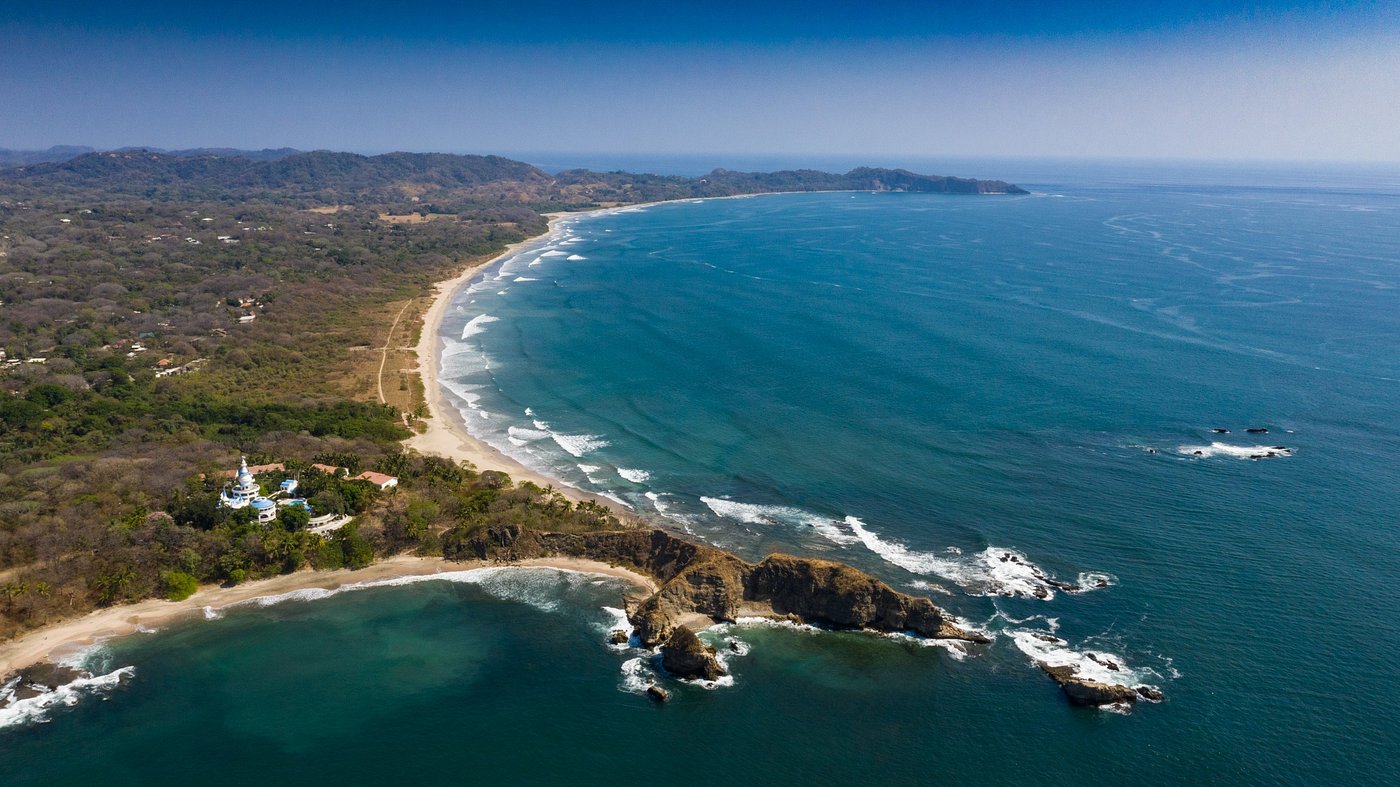
Ostional Wildlife Refuge sits along a 16-kilometer stretch of Nicoya Peninsula coastline, taking in not only the main nesting beach but also Nosara, Pelada, and Guiones to the north. The village of Ostional has a handful of basic cabinas run by community families. The nearest mid-range accommodation is in Nosara (north) or Sámara (south).
Road note: The Nosara–Ostional road has river crossings and deep ruts that are impassable in a standard sedan during rainy season (May–November). A 4WD with good ground clearance is genuinely necessary. Do not attempt the road at night without one.
The Next Arrival
The September 2026 event was one of the largest of the year — but it wasn’t the last. October arrivals at Ostional routinely match or exceed September events. If you are planning a Nicoya Peninsula trip this season, October is the window — one of the few months when you have a real chance of watching something that happens on only a handful of beaches in the world.
Contact WCA Nosara or Explore Samara Tours, pick a date range centered on the next last quarter moon, and let the turtles decide the rest.