Playa Carrillo is widely considered one of the safest swimming beaches in Guanacaste — but like anywhere along Costa Rica’s Pacific coast, safety depends on conditions, timing, and awareness.
Located just south of Sámara on the Nicoya Peninsula, Playa Carrillo’s broad crescent bay and relatively protected orientation make it calmer than many surf-heavy beaches such as Tamarindo or Santa Teresa. For families, Baby Boomers, and travelers seeking gentle ocean conditions, Carrillo consistently ranks among the most comfortable swimming environments in the region.
That said, the Pacific Ocean is never a swimming pool. Understanding seasonal patterns and daily conditions makes all the difference.
For a full destination overview, see the Playa Carrillo Travel Guide.
What Makes Playa Carrillo Safer Than Many Beaches
The natural shape of the bay plays a big role.
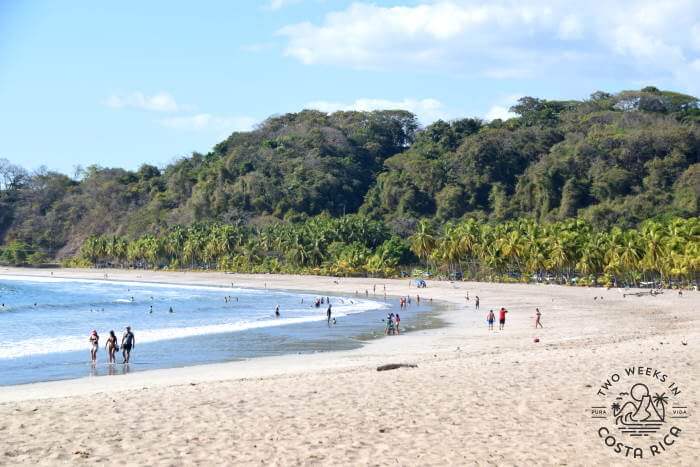
Playa Carrillo forms a curved crescent protected by headlands on either side. This reduces direct exposure to large swells compared to open beaches. Waves are typically moderate and rolling rather than steep and crashing.
Morning conditions are generally the calmest. Winds tend to increase in the afternoon, which can make the water choppier.
The beach also has a gradual sandy entry in most areas, making it easier for children and older swimmers to enter without sudden drop-offs.
Typical Ocean Conditions
Most of the year, you can expect:
• Gentle to moderate waves
• Sandy bottom
• Minimal reef hazards in the main swimming areas
• Warm Pacific water temperatures
However, conditions are not uniform every day. Larger swells from distant storms can increase wave size, particularly between May and November.
Unlike some popular beaches, Playa Carrillo does not have permanent lifeguards stationed along the shore. This means families should take on extra responsibility for closely monitoring their children.
Best Areas of the Beach for Families
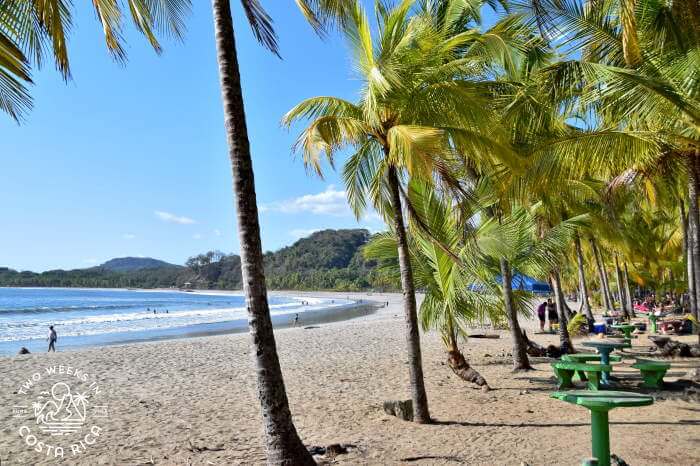
The central stretch of the bay — roughly in front of the main palm-lined parking area — typically offers the most consistent and predictable swimming conditions.
Staying nearby lets you walk to the beach early in the morning, when the water is calmest.
For convenient beach access, Nammbú Beachfront Bungalows offers one of the closest accommodations to the sand.
Hotel Leyenda, slightly inland, is another family-friendly option with easy driving access to the beach.
If you’re booking a vacation rental, look for homes along the main Carrillo–Sámara road for faster access and easier logistics with children.
Seasonal Differences: Dry Season vs Rainy Season
Dry Season (December–April)
This is generally the most predictable time for swimming. Offshore winds in the morning often keep the water smoother, especially from January through March.
Holiday weeks (Christmas, New Year, Easter) bring more visitors, but water conditions remain typically manageable.
Rainy Season (May–October)
Rainy season brings greener hills and fewer crowds — but also more variable ocean conditions.
• Swells can be larger, particularly in September and October.
• Afternoon thunderstorms may create choppier water.
• Rivers can occasionally discharge sediment after heavy rains, reducing water clarity for a day or two.
Morning swims remain the safest and calmest option during this season.
Practical Water Safety Tips for Families
Even at calmer beaches, Costa Rica’s Pacific can produce occasional rip currents. They are less common here than at exposed surf beaches, but they can occur.
Families should:
• Swim in the morning when the winds are lighter
• Avoid swimming alone
• Stay within visible range of shore
• Supervise children at all times
• Ask locals about conditions that day
If you notice strong crosscurrents or waves pulling outward, exit the water calmly and reposition farther along the beach.
Sun exposure is often a bigger risk than the water itself. The Guanacaste sun is intense year-round. Use reef-safe sunscreen, hats, and hydration breaks under the palm shade.
Best Family Activities Beyond Swimming
Playa Carrillo is ideal for low-stress beach days, but families often combine swimming with other gentle activities.
Kayaking and boat tours can be arranged through operators in nearby Sámara. Calm mornings are best for paddle activities.
For more structured excursions, see Best Things to Do in Playa Carrillo and Playa Carrillo Tours.
Nearby Sámara also offers beginner surf lessons in its more protected sections, providing a fun option for older children.
Is Playa Carrillo Safe for Swimming Overall?
Yes — for most families, Playa Carrillo is one of the safer swimming beaches in Guanacaste.
Its protected bay, sandy bottom, and typically moderate waves make it significantly calmer than many of Costa Rica’s more famous surf destinations.
That said, ocean conditions can change daily. Awareness, timing, and supervision remain essential.
If your priority is a wide, scenic beach with relatively gentle Pacific conditions and fewer crowds, Playa Carrillo is one of the strongest choices on the Nicoya Peninsula — particularly for families seeking simplicity and space.
For planning your full stay, see:
How to Spend 5 Days in Playa Carrillo
Things to Do in Playa Carrillo with Kids For an Unforgettable Beach Vacation
With the right timing and basic precautions, Playa Carrillo offers not just beauty, but one of the most comfortable swimming experiences along the Pacific coast.
Related Posts
Playa Carrillo vs Nosara: Which Should You Visit?
Both Playa Carrillo and Nosara sit along Costa Rica’s Nicoya…
How to Get to Playa Carrillo from Guanacaste Airport and San José Airport
Playa Carrillo sits just south of Sámara on Costa Rica’s…