Living in Atenas, Costa Rica appeals to retirees, remote workers, long-stay travelers, and expats who want a comfortable Central Valley climate without the density of San José or the heat and humidity of the Pacific coast.
Set among rolling hills west of the capital, Atenas has developed a reputation for easy daily living: warm days, breezy evenings, a strong international community, local markets, and relatively straightforward access to Juan Santamaría International Airport (SJO).
Still, Atenas is not a resort town. Life here revolves around routines rather than attractions. You shop, drive into town, meet friends for coffee, work from home, spend afternoons on a terrace, and gradually settle into the rhythm of the Central Valley.
For anyone considering moving to Atenas, Costa Rica, the most important questions are practical: how much does it cost, where should you live, do you need a car, how reliable is the internet, and what kind of lifestyle should you expect?
This guide breaks down those realities.
Why People Choose Atenas
Atenas works because it occupies a useful middle ground.
It feels significantly less urban than San José, yet it remains close enough to the capital region to access the airport, major hospitals, shopping, and specialized services.
At the same time, it is much less humid than many coastal communities.
That combination attracts people who want Costa Rica without feeling geographically isolated.
Residents are also drawn to:
- A relatively comfortable year-round climate
- Strong international and local communities
- Access to San José and SJO
- A slower residential pace
- Hillside homes with views and outdoor living
- Reasonable access to the Pacific coast
For many long-term residents, the appeal is not any one attraction. It is the ability to build an ordinary life in a place that still feels scenic.
What Daily Life in Atenas Feels Like
Life starts early.
Mornings are often the most active part of the day, particularly during the dry season. People walk, exercise, run errands, work outdoors, or head into town before the afternoon heat builds.
By midday, the pace slows.
Evenings are relaxed rather than energetic. Social life tends to revolve around restaurants, private homes, community groups, small gatherings, and local events rather than nightlife.
Atenas is therefore a strong fit for people who value routine, wellness, and space.
It is less suitable for anyone who needs constant entertainment, major shopping districts, or a highly walkable urban environment.
Local Culture and the Expat Community
Atenas has an established international population, including residents from the United States, Canada, and Europe.
That can make the transition easier for newcomers.
You may find informal networks for:
- Housing
- Local services
- Social events
- Volunteering
- Language exchange
- Recommendations for contractors and professionals
However, there is a difference between living among expats and actually integrating into Costa Rican life.
Spanish becomes increasingly important the longer you stay.
You can get by in many social situations with English, but deeper integration—dealing with local businesses, government offices, tradespeople, neighbors, and everyday errands—is much easier with Spanish.
For many residents, that balance between an international community and traditional Costa Rican town life is one of Atenas’ strongest qualities.
Cost of Living in Atenas
The cost of living in Atenas, Costa Rica varies dramatically according to housing, transportation, imported goods, and lifestyle expectations.
Someone renting a simple home near town and eating mostly local food can live very differently from someone renting a luxury villa, driving frequently, dining out several nights a week, and buying imported products.
Housing will usually be your largest expense.
Housing Costs
Long-term rentals range from simple apartments to large hillside villas with pools and panoramic views.
Typical categories include:
Simple apartments or smaller homes: approximately $600–$1,200 per month.
Modern homes or properties in established residential communities: often around $1,200–$2,500 per month.
Luxury villas: $2,500 per month and up, particularly for homes with pools, large gardens, multiple bedrooms, or extensive views.
These figures should be treated as broad planning ranges rather than fixed market prices.
Furnished short-term rentals often cost considerably more than leases intended for residents.
For that reason, people considering relocation often benefit from renting short-term first and negotiating a longer lease after getting to know the area.
Downtown vs Hillside Living
Where you live changes both your costs and your lifestyle.
Downtown Atenas
Living near the center means easier access to:
- Supermarkets
- Restaurants
- Pharmacies
- Banks
- Public transportation
- Local markets
You may be able to live with less dependence on a vehicle.
However, homes are generally closer together, street activity is higher, and you lose some of the panoramic scenery that defines the surrounding hills.
Hillside Neighborhoods
The hills are where many long-term international residents gravitate.
Homes often offer better airflow, more privacy, gardens, pools, and views.
The trade-off is transportation.
A property that looks only a few kilometers from town may involve steep, winding roads that make walking unrealistic.
A car is generally essential.
Rural Properties
Fincas and more remote homes offer more land, greater quiet, and deeper immersion in nature.
They also require more planning.
Groceries, restaurants, medical services, and maintenance all involve additional driving.
For residents seeking complete privacy, this can be ideal. For someone who wants convenience, it can become frustrating.
Grocery Costs
Local produce can be one of the more affordable parts of life in Atenas.
Fresh fruit, vegetables, rice, beans, eggs, and Costa Rican staples are generally easier on the budget than imported foods.
Imported products are another story.
International brands, specialty items, imported cheese, wine, packaged foods, and certain health products can cost noticeably more than visitors from North America or Europe expect.
A couple might spend roughly $300–$700 per month on groceries, depending heavily on diet and how often they buy imported goods.
Shopping locally makes a considerable difference.
Farmers’ markets, local produce stands, and Costa Rican brands can keep costs down while also making daily life feel more connected to the community.
Dining Out
Eating locally remains relatively accessible.
Traditional sodas generally offer the best value, with straightforward Costa Rican meals centered on rice, beans, vegetables, plantains, and meat or fish.
Mid-range and international restaurants cost more, particularly in areas popular with international residents.
Dining expenses therefore depend less on Atenas itself than on how often you choose local food over imported or international cuisine.
For long-term residents, cooking at home and eating out selectively tends to create the best balance.
Transportation Costs
A car is one of the most important expenses to consider.
Downtown residents may be able to rely more heavily on buses, taxis, and occasional rideshare services. However, hillside and rural living usually makes a vehicle necessary.
Fuel costs add up quickly if you frequently drive toward San José, Alajuela, the airport, or the coast.
Residents should budget not only for fuel but also for:
- Insurance
- Maintenance
- Registration-related expenses
- Tires
- Occasional road damage
- Parking when traveling into urban areas
Public buses remain inexpensive, but they are not always convenient for the spontaneous daily routines many long-term residents prefer.
Healthcare Access
Atenas has local clinics and pharmacies for basic healthcare needs.
For more specialized treatment, many residents travel toward larger medical centers in the San José metropolitan area.
Costa Rica has both public and private healthcare systems.
Residents who qualify for the public system may access care through the Caja Costarricense de Seguro Social. At the same time, many international residents also use private clinics and hospitals for convenience and faster appointments.
Private consultations can cost significantly less than comparable care in the United States, although prices vary by doctor, specialty, and facility.
Healthcare needs should be considered carefully before choosing a remote hillside or rural property.
If regular specialist visits are part of your life, proximity to San José may matter more than a panoramic view.
Utilities
Utilities are another expense that depends heavily on your house.
Electricity can remain relatively modest in homes that rely on natural ventilation.
However, air conditioning, pool pumps, dryers, and other high-consumption appliances can push the bill higher.
A planning range of roughly $50–$150 per month for electricity may be reasonable for some households, though larger homes or heavy AC use can exceed that amount.
Water is generally inexpensive.
Internet plans often fall between $40 and $80 per month, depending on the provider, speed, and location.
Again, rural availability varies.
Internet and Remote Work
Atenas can work well for remote workers, but internet quality should be verified on a property-by-property basis.
Fiber coverage has expanded, yet not every rural or hillside rental will have the same service.
Before signing a long-term lease, ask for:
- Actual download speed
- Upload speed
- Internet provider
- Whether the property has fiber
- Backup options during outages
- Mobile signal strength
Do not accept “good Wi-Fi” as sufficient information if your income depends on video calls and reliable uploads.
Power interruptions can happen, particularly during storms.
Remote workers may therefore want a mobile hotspot, UPS battery backup, or another contingency plan.
Climate and Everyday Comfort
Climate is one of Atenas’ strongest selling points.
The town sits between Costa Rica’s cooler highlands and hotter lowlands, giving many areas a comfortable balance of warm days and cooler evenings.
Hillside properties often benefit from stronger breezes.
The dry season brings more sunshine, while the green season turns the hills lush and brings more afternoon rain.
However, because microclimates vary significantly, not every home feels the same.
A west-facing lower-elevation house may become far warmer than a breezy hilltop property.
Do You Need Air Conditioning?
Not necessarily.
Many homes use ceiling fans, open-air architecture, and cross-ventilation instead of constant AC.
That can reduce electricity costs and create a pleasant indoor-outdoor lifestyle.
However, lower properties or homes with poor airflow can become hot.
If temperature sensitivity matters to you, visit a rental in the afternoon before committing to it long term.
A beautiful morning showing will not tell you how the bedrooms feel at 3:00 PM in March.
Social Life in Atenas
Atenas has a stronger sense of community than many short-term visitors expect.
International residents often organize informal social events, classes, volunteer activities, and hobby groups.
Local life centers around the town, family networks, schools, churches, markets, and everyday businesses.
That creates two overlapping social worlds.
New residents who participate in both tend to have a richer experience than those who remain entirely inside the expat community.
Learning Spanish is one of the most effective ways to broaden that circle.
Safety and Security
Atenas generally feels calm and residential, but normal Costa Rican precautions still apply.
Homes should have appropriate locks and security measures.
Do not leave valuables visible in parked cars, and do not assume that rural isolation automatically means there is no theft risk.
Security varies from one neighborhood to another, so ask residents about the specific area rather than relying on broad claims about Atenas as a whole.
Gated communities may provide additional peace of mind for some residents, although they can feel more disconnected from town life.
Living Without a Car
It is possible if you choose your location carefully.
Living downtown puts supermarkets, restaurants, pharmacies, buses, and many services within easier reach.
Once you move into the hills, the situation changes.
Steep roads, heat, distance, and limited sidewalks make walking impractical in many areas.
Therefore, anyone hoping to avoid car ownership should prioritize downtown or nearby neighborhoods rather than selecting housing solely for its views.
Retirees in Atenas
Retirees are one of the groups most consistently attracted to Atenas.
The combination of climate, airport access, international community, and proximity to healthcare can work particularly well.
However, long-term comfort depends on the specifics.
A remote villa may feel idyllic at 65 but less practical later if driving becomes difficult.
When choosing a home, think beyond the first year.
Consider stairs, road access, proximity to medical care, walkability, and whether the property would still be manageable if mobility needs change.
Remote Workers and Digital Nomads
Atenas offers a different remote-work experience from Costa Rica’s better-known beach hubs.
There is less social infrastructure built specifically around digital nomads, but there is also less tourism pressure.
Instead of coworking spaces and beach cafés, the appeal lies in renting a comfortable house, establishing a routine, and working from a terrace or home office.
For people who value stability over constant social activity, this can be a major advantage.
Families
Families may appreciate the quieter atmosphere and access to services.
Housing with gardens, pools, and multiple bedrooms can also provide more space than central San José.
However, schooling becomes a major planning factor for longer stays.
Families should investigate school options, commute times, transportation, and extracurricular activities before deciding where to live.
A home high in the hills may create a much longer daily school run than expected.
Atenas vs Escazú
Escazú offers greater access to upscale shopping, private healthcare, international restaurants, and urban services.
It also comes with more traffic, greater density, and generally higher housing costs.
Atenas trades some of that convenience for a quieter, more scenic lifestyle.
Choose Escazú if you want access to the city.
Choose Atenas if you want space and a slower pace of life.
Atenas vs Grecia
Grecia has a more traditional Costa Rican atmosphere and generally cooler conditions.
Atenas has a stronger international community and tends to feel warmer and drier.
Both can work well for long-term residents, so the choice often comes down to climate, housing inventory, and how connected you want to be to expat networks.
Atenas vs San Ramón
San Ramón sits higher and generally feels cooler and greener.
It may appeal more to residents who want mountain temperatures.
Atenas offers warmer conditions and easier access toward the Pacific.
Again, climate preference matters.
Atenas vs the Pacific Coast
Living on the coast gives you the beach.
It also means more heat, humidity, salt exposure, and tourism in many popular areas.
Jacó, for example, offers nightlife and immediate ocean access but has a completely different daily rhythm from Atenas.
Atenas suits people who want Costa Rica’s tropical setting without having to structure their lives around the beach.
The coast remains accessible for occasional trips.
Residency and Long-Term Legal Status
Costa Rica has several immigration categories that may apply to retirees, people with qualifying income, remote workers, and other long-term residents.
Requirements can change.
Therefore, do not base relocation decisions on old blog posts, social media groups, or informal advice.
Use current official information and seek qualified Costa Rican legal advice when necessary.
Likewise, immigration status, tax residency, permission to work, and property ownership are separate issues that should not be treated as interchangeable.
The U.S. Embassy in Costa Rica provides general information for U.S. citizens, although Costa Rican authorities are the definitive source for immigration requirements.
Renting Before Buying
For most newcomers, renting first is the more sensible approach.
Atenas contains many microclimates and lifestyle differences that are difficult to understand during a short visit.
Spend time learning:
- Which elevation feels comfortable
- How often you drive into town
- Which roads you like
- How the green season affects the neighborhood
- Whether you actually want a pool
- How important walkability is
- How much you use San José
A one- to three-month rental can reveal far more than a real estate tour.
Buying property should come later, after you understand the practical realities.
Buying Property
Foreigners can own property in Costa Rica, but purchasing real estate requires careful due diligence.
Use qualified legal professionals, verify title and boundaries, understand water access and utilities, and confirm that construction and property documentation are in order.
Do not assume a real estate agent replaces independent legal review.
This is particularly important with rural or hillside properties where access rights, easements, water, and infrastructure can be complex.
Who Is Most Likely to Enjoy Living Here?
Living in Atenas, Costa Rica is a particularly strong fit for people who want a residential lifestyle rather than a permanent vacation atmosphere.
Retirees may appreciate the climate and community.
Remote workers may value space and the ability to create a comfortable home office.
Couples often enjoy hillside living and a slower social rhythm.
Long-stay travelers can use Atenas as a base to understand what ordinary life in Costa Rica is actually like.
It is less suitable for people who require a major nightlife scene, walkable urban amenities, or immediate beach access.
Try Atenas Before You Commit
This is the most useful advice for anyone considering a move.
Stay for at least several weeks.
If possible, experience part of both the dry and green seasons.
Shop for groceries, drive the roads after rain, test the internet, visit the doctor, commute to San José, use the airport, and live like a resident rather than a tourist.
You may discover that Atenas fits perfectly.
You may also realize you prefer Grecia, Escazú, San Ramón, or the coast.
Either outcome is valuable.
Final Thoughts
Living in Atenas, Costa Rica is ultimately about balance.
The town combines a relatively comfortable climate, Central Valley accessibility, a substantial international community, and a quieter pace than the San José metropolitan area.
Yet it is not effortless.
You may need a car. Imported goods can be expensive. Hillside living creates beautiful views but also steep roads. Specialized healthcare often means traveling toward the capital. And long-term integration becomes easier when you speak Spanish and participate in local life.
For the right person, those trade-offs are reasonable.
Atenas works best when you stop thinking of it as a destination and begin treating it as a place to build routines.
That is when the climate, community, landscape, and slower pace begin to make sense together.
Related Posts
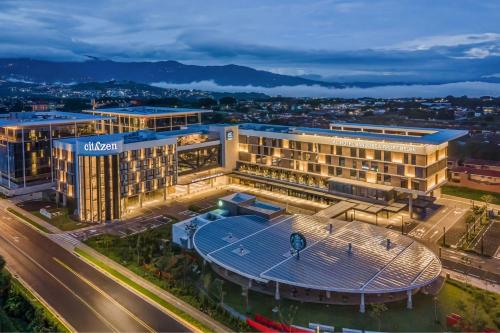
Best Hotels Near San José Airport (SJO) in Alajuela
Choosing one of the best hotels near San José Airport (SJO) can…

Coffee Tours in Alajuela, Costa Rica
Coffee is woven deeply into Costa Rica’s history, economy, and…

Where to Stay in Atenas, Costa Rica: Best Areas & Rentals
undefined More Atenas Guides Naranjo Coffee Farm Tours Near Atenas…