Day trips from San José are one of the strongest reasons to spend a few nights in Costa Rica’s capital rather than treating it only as an arrival point.
San José sits in the middle of the Central Valley, placing volcanoes, coffee-growing highlands, waterfalls, historic towns, rafting rivers, and mountain landscapes within reach.
That central location means you can sleep in the same hotel each night while seeing a very different side of Costa Rica every day.
Some excursions are easy half-day outings. Others require an early departure and a full day. The best option depends on your interests, comfort with driving, and how much time you want to spend in transit.
Planning Day Trips from San José
A rental car provides the most flexibility, particularly if you want to combine several attractions or stop in smaller towns along the way.
However, driving is not always necessary.
Private transfers and organized tours work particularly well for volcanoes, coffee farms, and rafting trips. Ride services and taxis are also useful for destinations closer to the metropolitan area.
Public transportation serves many towns, but it is generally slower and less convenient for travelers trying to make the most of a single sightseeing day.
Also consider where you are staying.
A hotel in central San José works well for cultural excursions toward Cartago and the eastern Central Valley.
Meanwhile, Escazú and Santa Ana can provide easier access toward Route 27 and destinations west of the capital.
If Poás Volcano is one of your main priorities, staying in Alajuela may reduce morning travel.
1. Poás Volcano National Park
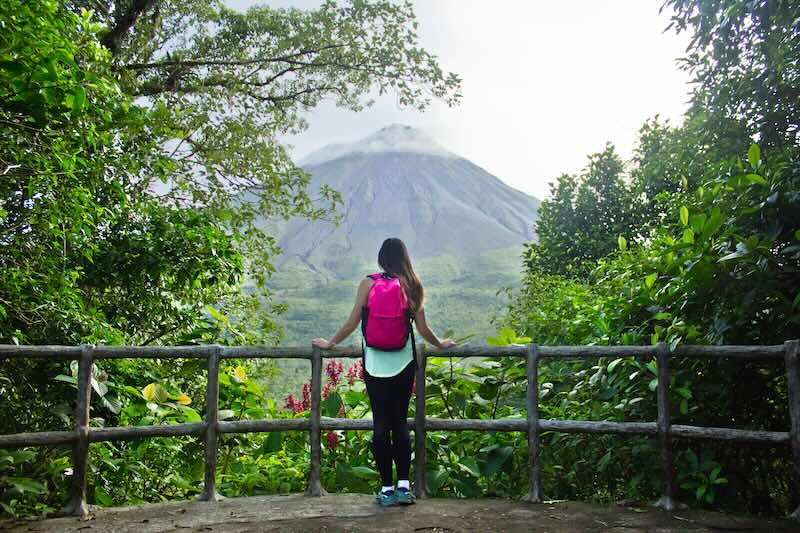
Poás Volcano National Park is one of the easiest major natural attractions to visit from the capital.
The volcano rises to 2,708 meters above sea level and is known for its enormous active crater. When clouds cooperate, visitors can look directly into the volcanic basin from the main viewing area.
This is not a long hiking excursion.
Instead, the appeal is the ability to experience a dramatic, active-volcano landscape without spending an entire day trekking.
Poás is particularly well suited to families, Baby Boomers, photographers, and first-time visitors.
Reservations are required through SINAC’s online system, and an early visit generally offers a better opportunity to see the crater. SINAC currently lists Poás as an online-reservation park.
For planning, see the Poás Volcano Tickets and Reservations Guide and Poás Volcano Weather Guide.
Best for: Volcano scenery, families, shorter nature excursions
Good combination: Coffee country or La Paz Waterfall Gardens
2. La Paz Waterfall Gardens
La Paz Waterfall Gardens is an excellent choice if you want a more extended nature experience without committing to a difficult wilderness hike.
The property combines waterfall trails, gardens, forest scenery, and wildlife-focused areas.
It works particularly well after an early visit to Poás.
That order is important because crater visibility at Poás is much more weather-dependent, whereas waterfalls remain rewarding in cloudy or misty conditions.
For travelers with only one free day in the Central Valley, combining these two attractions creates one of the region’s strongest itineraries.
Best for: Families, couples, photographers, multi-generational groups
Good combination: Poás Volcano
3. Coffee Farms in Alajuela and Heredia
Few excursions provide more cultural context than visiting a working coffee farm.
Coffee played a major role in Costa Rica’s economic development, and the Central Valley remains one of the country’s historic coffee-growing regions.
Several experiences are available within relatively easy reach of San José.
Doka Estate is one of the established coffee-tour destinations in the Alajuela highlands.
Another option is Hacienda Alsacia, Starbucks’ working coffee farm and global research hub. Its official site describes the property as a farm, a farmer support center, a visitor center, and a research facility.
A coffee tour may include explanations of cultivation, harvesting, processing, roasting, and tasting.
For a broader comparison, see Best Coffee Tours Near San José.
Best for: Coffee enthusiasts, cultural travelers, families, slow travel
Good combination: Poás Volcano or Alajuela
4. Irazú Volcano and Cartago
For a different volcanic experience, head east toward Cartago and Irazú Volcano.
Irazú is Costa Rica’s highest volcano, reaching approximately 3,432 meters above sea level. SINAC notes that on exceptionally clear days, visitors can see extensive portions of the country and, potentially, both the Pacific and the Caribbean from the summit area.
The landscape feels very different from Poás.
At this elevation, vegetation is lower, temperatures are colder, and the crater area can feel stark and almost lunar.
Afterward, continue into Cartago.
The city served as Costa Rica’s colonial capital and remains home to one of the country’s most important religious landmarks, the Basilica of Our Lady of the Angels.
SINAC currently requires online tickets for the Craters and Prusia sectors of Irazú.
Best for: History, volcanic scenery, photography
Good combination: Cartago and Orosi Valley
5. Orosi Valley and Ujarrás
The Orosi Valley offers a quieter alternative to Costa Rica’s heavily promoted attractions.
Here, the landscape shifts to agricultural valleys, mountain roads, rivers, historic communities, and traditional Costa Rican countryside.
The Ujarrás ruins add a historical element, while Orosi provides a pleasant base for a relaxed lunch and scenic exploration.
This is not the day trip to choose if you want a packed schedule of famous attractions.
It is better for travelers who enjoy road trips, photography, local communities, and slower travel.
You can also combine the area with Cartago if you start early.
Best for: Couples, photographers, cultural travelers, slow travel
Good combination: Cartago
6. Pacuare River Rafting
If you want something considerably more active, a rafting trip on the Pacuare River is one of the most exciting adventure options accessible from San José.
Costa Rica’s tourism materials identify the Pacuare as the country’s best-known rafting river and describe the popular San Martín–Siquirres section as Class III–IV.
Many excursions are designed as full-day experiences with transportation arranged from the San José region.
Expect a very different day from a volcano or coffee tour.
Instead of viewpoints and museums, the focus is rainforest, rapids, waterfalls, and sustained physical activity.
Minimum ages and participation requirements vary by operator and river conditions, so families should confirm those details before booking.
Best for: Adventure travelers, active couples, older teenagers
Allow: A full day
7. Heredia and the Coffee Highlands
Heredia is a good option when you want to leave San José without spending hours in a vehicle.
Its central area offers plazas, traditional businesses, churches, cafés, and a strong university influence.
The real advantage, however, is that Heredia serves as a gateway to the surrounding coffee highlands.
You can combine a few hours in town with a coffee tour or scenic drive through nearby agricultural areas.
Compared with Poás or Irazú, this is a lower-intensity excursion and works well when you want a slower day between more demanding activities.
Best for: Culture, coffee, relaxed exploration
Good combination: Coffee farm visit
8. Atenas and Naranjo
Travelers interested in Costa Rica beyond its major tourist attractions may prefer a day in Atenas and Naranjo.
Atenas is known for hillside communities, warm Central Valley weather, and a relaxed residential atmosphere.
Naranjo is more strongly connected to working coffee agriculture.
Together, they provide mountain views, small-town life, and opportunities to understand Costa Rica’s coffee economy at a slower pace.
This is one of the better choices for repeat visitors who have already seen the country’s most famous attractions.
Best for: Coffee enthusiasts, slow travelers, couples, long-stay visitors
Should You Visit Monteverde as a Day Trip?
Technically, it can be done.
Practically, I would not recommend it for most travelers.
Monteverde deserves more time than a rushed out-and-back trip from San José.
The drive is long enough that you could spend much of the day inside a vehicle, leaving relatively little time for cloud-forest trails, hanging bridges, wildlife, or the atmosphere that makes the destination special.
If Monteverde matters to you, spend at least one night there.
For a true day trip, Poás, Cartago, Orosi, the coffee highlands, or La Paz usually provide much better value for your time.
Best Day Trips for Families
Families generally benefit from excursions that limit driving and offer a variety of activities.
Poás and La Paz are an especially strong combination.
Coffee tours can also work well with school-age children because they turn an everyday product into a lesson about agriculture and food production.
For active families with older children, rafting may be an option if everyone meets the operator’s age and participation requirements.
Best Options for Baby Boomers and Older Travelers
Poás is one of the easiest choices because the primary volcano experience requires relatively limited walking.
Coffee estates can also provide a comfortable pace and plenty of opportunities to rest.
La Paz is another possibility, although visitors should consider the stairs and elevation changes on waterfall trails.
Orosi and the coffee highlands work particularly well for travelers who prefer scenery and culture without demanding physical activity.
Best Excursions for Adventure Travelers
Rafting is the obvious choice if adrenaline is your priority.
Irazú can also be combined with additional hiking, while several mountain regions surrounding the Central Valley offer more active opportunities.
However, travelers seeking several consecutive days of adventure may eventually find San José less useful as a base than destinations such as La Fortuna.
Best Choices for Culture
For cultural travelers, prioritize Cartago, Heredia, and coffee country.
These destinations provide more context about Costa Rican history, agriculture, religion, and everyday life than a purely nature-focused excursion.
A coffee farm visit is particularly useful because coffee helped shape both the Central Valley landscape and Costa Rica’s economic history.
Where to Stay in San José for Day Trips
Where you stay can reduce unnecessary driving.
Central San José
A central hotel works well if you want museums, historic neighborhoods, and easy departures east toward Cartago.
Hotel Grano de Oro is near Paseo Colón on Calle 30, rather than in Barrio Amón, and its official website lists it as within walking distance of central San José.
Escazú
Escazú is useful if you prefer modern hotels, restaurants, and easy access toward the western side of the metropolitan area.
The InterContinental Costa Rica at Multiplaza Mall is one of the area’s larger full-service options.
Alajuela
If your main excursions are Poás and coffee country, Alajuela may actually be more practical than San José.
It also works particularly well for the first or final night of a Costa Rica itinerary because SJO is located in Alajuela province.
Best Time of Year for Day Trips
The Central Valley can be explored year-round.
Dry Season
From approximately December through April, you generally have lower rainfall and more predictable outdoor conditions.
This period is especially useful for volcano viewpoints and scenic drives.
However, it is also the busiest season for tourism.
Green Season
From May through November, the landscape becomes greener and afternoon rainfall becomes more common.
The easiest strategy is to schedule outdoor activities early.
Coffee tours, town visits, and other more flexible activities can fill the afternoon.
Volcano conditions are never guaranteed in either season, so weather should guide expectations rather than dictate the entire itinerary.
How Many Day Trips Should You Plan?
If you are staying three nights in San José, one or two excursions are usually enough.
For example:
Day 1: Explore San José.
Day 2: Poás and La Paz.
Day 3: Coffee country or Cartago and Orosi.
This creates variety without turning every morning into an early departure.
If you want more than three full days of excursions, consider whether moving to another destination would reduce driving.
Costa Rica rewards regional travel. San José is a useful base, but it does not need to be the base for the entire trip.
Are Day Trips from San José Worth It?
Yes, especially if you value comfortable urban lodging and do not want to change hotels every night.
The capital’s location gives you access to remarkably different environments within a relatively small region.
One morning can begin beside a volcanic crater.
Another can take you through coffee fields.
A third can lead east to colonial history, agricultural valleys, or a river for rafting.
That variety is San José’s greatest strength as a travel base.
Final Thoughts
The best day trips from San José show why Costa Rica’s capital deserves more than a quick airport transfer.
Poás provides volcanic drama.
La Paz adds waterfalls and forest.
Coffee farms reveal the agricultural history of the Central Valley.
Cartago and Orosi bring culture and history.
The Pacuare adds adventure.
Meanwhile, Heredia, Atenas, and Naranjo offer quieter glimpses of everyday Costa Rican life.
You do not need to attempt all of them.
Choose two or three that fit your travel style, start early when weather matters, and leave enough time to enjoy the journey rather than simply collecting destinations.
Used strategically, San José becomes much more than the place where your flight lands.
It becomes a practical gateway to some of the most diverse experiences in Costa Rica.
Related Posts
San José or La Fortuna: Which Should You Visit First?
San José or La Fortuna is one of the first itinerary…

San José Neighborhoods: Where to Stay and Why
Choosing among San José's neighborhoods can have a major impact on your…

2 Days in San José: The Perfect Costa Rica Itinerary
2 days in San José gives travelers enough time to…