A Poás Volcano day trip combined with La Paz Waterfall Gardens is one of the easiest ways to experience several sides of Costa Rica’s Central Valley in a single day. Within a relatively compact mountain region, you can see an active volcanic landscape, walk through cloud forest, visit waterfalls, and stop in agricultural communities known for coffee and strawberries.
The key is doing the day in the right order.
Poás Volcano should come first because crater visibility can change quickly as clouds develop. La Paz Waterfall Gardens works much better as the second stop because waterfalls and forest scenery remain enjoyable even when mist or rain moves into the mountains.
For travelers staying in Alajuela or San José, this combination makes for a full yet manageable Central Valley day.
Why Combine Poás Volcano and La Paz Waterfall Gardens?
Although the two attractions are close enough to visit together, they offer very different experiences.
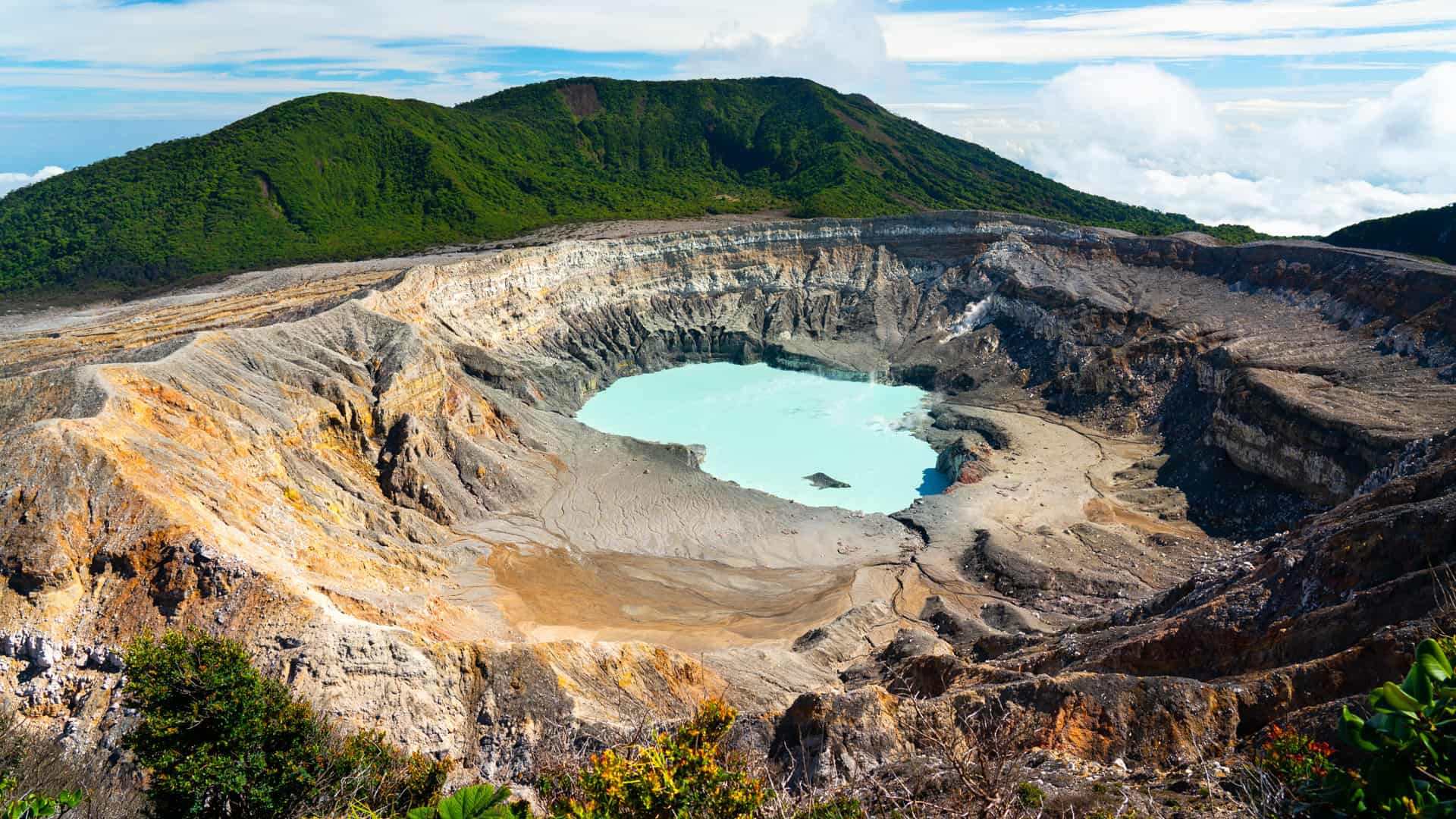
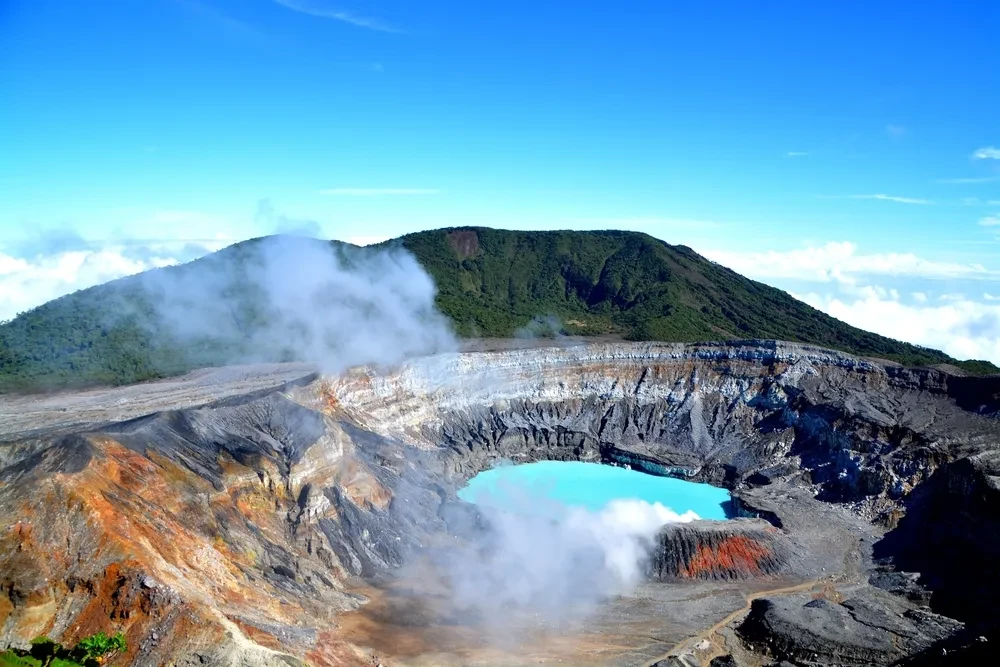
At Poás, the emphasis is geology.
You travel into the highlands and approach one of Costa Rica’s active volcanic systems. The main experience centers on the crater viewpoint, where visibility depends heavily on cloud cover, weather, and current volcanic activity.
La Paz is greener and more immersive.
Instead of looking across an exposed crater, you descend through forest along established trails toward a series of waterfalls. The property also includes wildlife exhibits and gardens, so visitors generally spend considerably longer there than at Poás.
The combination works because neither experience feels repetitive.
Poás is open, volcanic, and dramatic.
La Paz is forested, wet, and lush.
Start the Day at Poás Volcano
Plan Poás first.
Morning generally gives you a better chance of seeing the crater before cloud cover becomes heavier around the summit.
However, there is no guaranteed hour when the crater will be clear. Poás sits at high elevation, and conditions can change within minutes.
Instead of relying on an exact weather rule, choose one of the earlier available reservations and keep expectations realistic.
For detailed weather planning, see the Poás Volcano Weather Guide.
Reserve Your Poás Entry Before Planning the Rest of the Day
Poás uses an online reservation system.
Therefore, your park reservation should be the first fixed point in the itinerary.
Once you know your entry time, you can determine:
- When to leave your hotel
- When to arrive at the mountain
- When to continue toward La Paz
- Whether there is time for lunch or another stop
Do not build the day around an estimated arrival and assume tickets will be available when you reach the entrance.
See the Poás Volcano Tickets and Reservations Guide before finalizing transportation.
Suggested Poás Volcano Day Trip Itinerary
A simple itinerary works better than trying to fit too much into one day.
Early Morning: Leave Alajuela or San José
If you are staying in Alajuela, the morning is easier because you are already closer to the volcano.
Travelers coming from San José should allow additional time for metropolitan traffic.
Leave enough buffer that rain, fog, or slower mountain traffic will not make you rush toward a timed reservation.
Morning: Visit Poás Volcano
After entering the national park, follow current park instructions toward the crater area.
The main visit is relatively short compared with a traditional national park hike.
When visibility is good, take time to appreciate the crater’s scale rather than rushing through it simply because the walk is easy.
If additional trails are open during your visit, you can extend your time in the park. However, trail availability can change in an active volcanic environment, so check current conditions rather than planning around a specific secondary trail.
Late Morning: Continue Toward La Paz
After Poás, continue through the mountain region toward La Paz Waterfall Gardens.
The drive is part of the experience.
The landscape shifts through cloud forest and agricultural countryside, with small restaurants, cafés, and roadside produce stands along portions of the route.
Late Morning or Early Afternoon: La Paz Waterfall Gardens
Allow several hours for La Paz rather than treating it as a quick photo stop.
The waterfall trails involve stairs and elevation changes, so families and older travelers may want to move at a relaxed pace.
You can combine the waterfall walk with the property’s gardens and wildlife areas before stopping for lunch.
Afternoon: Return or Continue Your Trip
After La Paz, you can return toward Alajuela or San José.
If you are continuing to another destination, keep daylight and mountain driving conditions in mind.
Do not add another major attraction simply because the itinerary appears short on paper.
Costa Rican travel days often take longer than expected.
Driving from Alajuela
Alajuela is one of the best places to begin this trip.
Staying there the night before reduces morning driving and makes an early Poás reservation easier to manage.
It is especially convenient for travelers who have just arrived through SJO.
For families and Baby Boomers, this can be considerably more comfortable than landing internationally and immediately trying to complete a long day of mountain sightseeing.
Spend the first night in Alajuela, sleep well, and start early the next morning.
Visiting from San José
The trip is also entirely possible from San José.
However, traffic becomes a bigger consideration.
If your Poás reservation is early, plan your departure around realistic metropolitan travel times rather than simply looking at the distance on a map.
For travelers primarily interested in museums, restaurants, and city activities, San José remains a perfectly reasonable base.
If Poás is one of the most important experiences on your itinerary, Alajuela is usually more convenient.
Rental Car or Guided Tour?
Both approaches work well.
Rental Car
Driving yourself offers the most flexibility.
You can spend additional time at La Paz, stop for lunch wherever you like, or visit a roadside café on the way back.
A rental car also makes sense if you are continuing elsewhere in Costa Rica afterward.
The primary consideration is mountain driving.
Rain, fog, curves, and reduced visibility can make the route feel more challenging than its distance suggests.
Guided Tour
A guided tour can simplify the entire day.
This is a good option if you:
- Prefer not to drive
- Are staying in San José
- Want transportation coordinated for you.
- Are traveling with several family members
- Prefer a more structured itinerary.
Before booking, confirm exactly what is included.
Park admission, La Paz admission, meals, and hotel transportation may vary between tours.
What to Expect at La Paz Waterfall Gardens
La Paz is more physically active than Poás.
The trails are developed, but you should expect stairs and some uphill and downhill walking.
Good footwear matters, especially when surfaces are damp.
Allow time to move slowly and enjoy the forest rather than treating the waterfalls as checkpoints.
For many families, this becomes the more extended portion of the day.
Poás provides the dramatic opening.
La Paz provides the longer nature experience.
Is This Day Trip Good for Families?
Yes, particularly for families that want variety without committing to a difficult wilderness hike.
Children get two very different experiences:
At Poás, they can learn about volcanoes, geology, and Costa Rica’s volcanic landscape.
At La Paz, the focus shifts to waterfalls, forest, and wildlife.
That variety helps maintain interest throughout the day.
Families should still prepare for stairs at La Paz and cooler temperatures at Poás.
Is It Good for Older Travelers?
This combination can also work well for older travelers, provided the walking at La Paz matches their comfort level.
Poás itself requires relatively limited physical effort.
La Paz involves more stairs and should be approached at an individual pace.
There is no need to move quickly.
If mobility is a concern, check the attraction’s current accessibility information directly before purchasing admission.
What Should You Wear?
The changing elevations mean you may experience several types of weather during the same day.
Bring:
- A light jacket or fleece
- Rain protection
- Comfortable walking shoes
- Sun protection
- Water
At Poás, wind and cloud cover can make conditions feel surprisingly cool.
At La Paz, the lower elevation and walking may make you warmer.
Layers are the easiest solution.
What Happens If Poás Is Cloudy?
Do not assume the entire day is ruined.
Cloud cover is part of visiting a high-altitude volcano.
If the crater is hidden, continue with the rest of your itinerary.
La Paz is much less dependent on clear skies. Mist and light rain can actually enhance the forest atmosphere and waterfalls.
That is one of the strongest reasons to combine the two attractions.
Your day does not depend entirely on receiving a perfect crater view.
What Happens If Poás Closes?
Because Poás is an active volcano, access can occasionally be affected by volcanic activity or other safety conditions.
Always check current official park information before leaving your accommodation.
If the park is closed, do not attempt to bypass restrictions.
Instead, use the extra time for La Paz, a coffee experience, or another activity in the Central Valley.
Your reservation does not override a safety closure.
Add a Coffee Stop
Coffee is a natural addition to this route if your schedule allows.
The surrounding highlands are part of Costa Rica’s historic coffee landscape.
Rather than trying to squeeze in a complete additional attraction, consider a relaxed coffee stop or café visit after the volcano or waterfalls.
Travelers with another free day can explore a more extensive coffee experience separately.
See Best Coffee Tours Near San José for ideas.
Do Not Overpack the Itinerary
It can be tempting to pack Poás, La Paz, a full coffee plantation tour, lunch, several viewpoints, and a long onward drive into a single day.
That often makes the experience worse.
A better plan is:
Poás first.
La Paz second.
A relaxed meal or café stop afterward.
Then return to your hotel or continue toward your next destination.
You will see plenty without spending the entire day watching the clock.
Can You Continue to La Fortuna Afterward?
Technically, you can continue to La Fortuna, but doing Poás and La Paz first can make for a long travel day.
For adults comfortable with extended driving, it may be manageable.
For families or travelers who prefer a slower pace, returning to Alajuela or spending another night in the region can be more pleasant.
Another option is to visit only Poás before continuing toward La Fortuna and save La Paz for a separate day.
Best Season for This Day Trip
The trip works year-round.
Dry Season
From approximately December through April, you generally have a better chance of lower rainfall and easier mountain driving.
It is also busier.
Reserve Poás early, particularly around holidays.
Green Season
From May through November, expect more rain and greener scenery.
Morning remains the best part of the day for weather-sensitive activities.
La Paz can be particularly atmospheric during this period because the surrounding forest becomes lush and the waterfalls remain a strong attraction even under cloudy skies.
Who Should Choose This Combination?
A Poás Volcano day trip with La Paz works especially well for:
- First-time Costa Rica visitors
- Families
- Multi-generational groups
- Baby Boomers
- Couples staying in the Central Valley
- Travelers with limited time
- Visitors who want nature without strenuous hiking
- Travelers arriving or departing through SJO.
It is less suitable for people seeking remote wilderness or a full day of challenging hiking.
Is the Combination Worth It?
For most Central Valley travelers, yes.
Poás by itself can feel short, particularly if weather limits crater visibility.
Adding La Paz gives the day more depth.
You experience the stark landscape of an active volcano in the morning, then descend into forest and waterfalls later in the day.
The contrast is what makes the itinerary work.
Rather than visiting two similar attractions, you experience two distinct environments within the same mountain region.
Final Thoughts
A Poás Volcano day trip combined with La Paz Waterfall Gardens is one of the most practical ways to experience Costa Rica’s Central Valley highlands without changing hotels or committing to several days of travel.
The best strategy is straightforward:
Reserve Poás first.
Choose an early entry.
Allow enough time for mountain driving.
Visit La Paz afterward.
Keep the afternoon flexible.
Most importantly, do not judge the day entirely by whether the crater is clear.
Poás provides the geological drama, while La Paz provides the forest, waterfalls, and longer nature experience.
Together, they create a balanced Central Valley day that works especially well for visitors who want to see a lot of Costa Rica without rushing from one distant region to another.
Related Posts
Poás Volcano Weather: Best Time for Clear Views
Poás Volcano weather can change quickly because of the park’s high…
How to Get to Poás Volcano from San José or Alajuela
If you are wondering how to get to Poás Volcano from…
Poás Volcano National Park: The Complete Visitor Guide
Poás Volcano National Park is one of the easiest places in…