Cahuita National Park is one of the most accessible and wildlife-rich coastal parks in Costa Rica.
On Costa Rica’s southern Caribbean coast, Cahuita National Park protects one of the country’s most accessible stretches of rainforest-meets-reef. Unlike many national parks that require steep hikes or long drives, Cahuita places you on a flat coastal trail where sloths nap above white-sand beaches and coral reefs shimmer just offshore.
For travelers searching for Cahuita National Park snorkeling tours, wildlife in Cahuita, Costa Rica, or where to stay near Cahuita National Park, this guide covers what you need to know — from entrances and logistics to seasonal tips.
Overview of Cahuita and the Surrounding Area
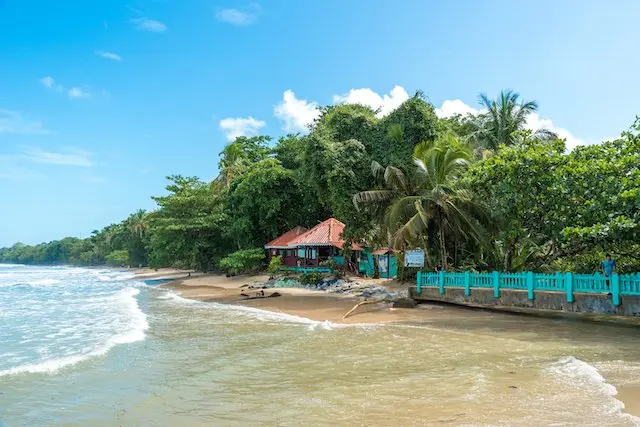
Cahuita sits about 4 hours from San José on Costa Rica’s Caribbean coast, roughly 25 minutes north of Puerto Viejo. It’s a small, walkable town with deep Afro-Caribbean roots, colorful wooden houses, and a laid-back pace that feels worlds away from the Pacific resort scene.
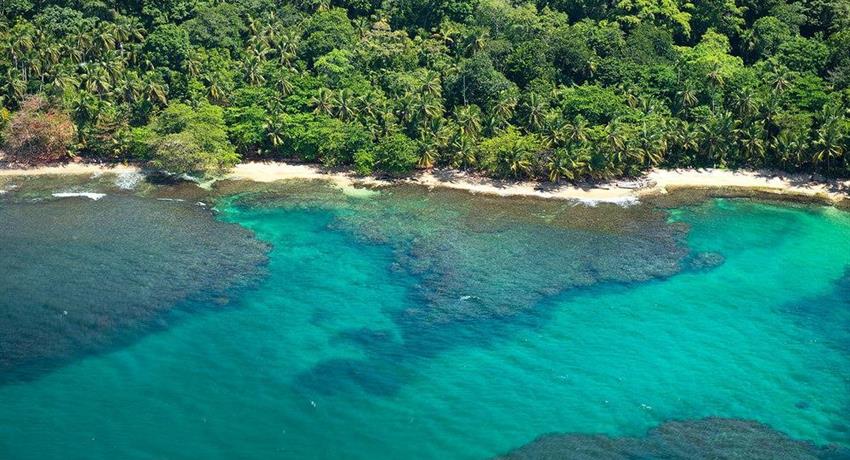
The park itself stretches along the coastline, protecting beaches, coral reefs, and lowland tropical forest. It’s one of the few places in Costa Rica where you can combine an easy coastal hike with world-class snorkeling in a single morning.
Visiting Cahuita National Park: What to Know
The official park site is Parque Nacional Cahuita.
Entrances
There are two main entrances:
- Kelly Creek Entrance (Cahuita town entrance) – Donation-based entry system and closest to Playa Blanca. Ideal for travelers staying in town.
- Puerto Vargas Entrance – Located about 15–20 minutes by car south of town. Fixed entrance fee applies, and fewer visitors.
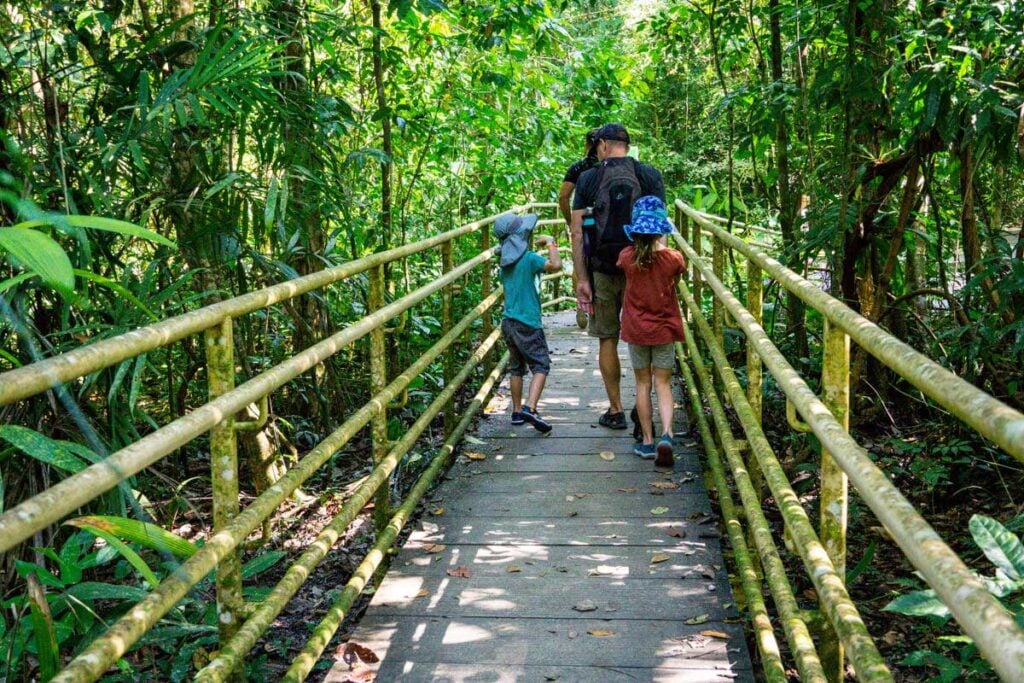
Most travelers enter through Kelly Creek and hike toward Punta Cahuita, enjoying wildlife sightings along the flat coastal trail.
Trail Conditions
The main trail runs approximately 8 km (5 miles) one way between the two entrances. It’s flat, shaded, and easy — perfect for families, older travelers, and photographers. You do not need advanced hiking experience.
Expect:
- Howler monkeys
- White-faced capuchins
- Sloths
- Iguanas
- Raccoons (keep food secured)
- Colorful birds, including toucans
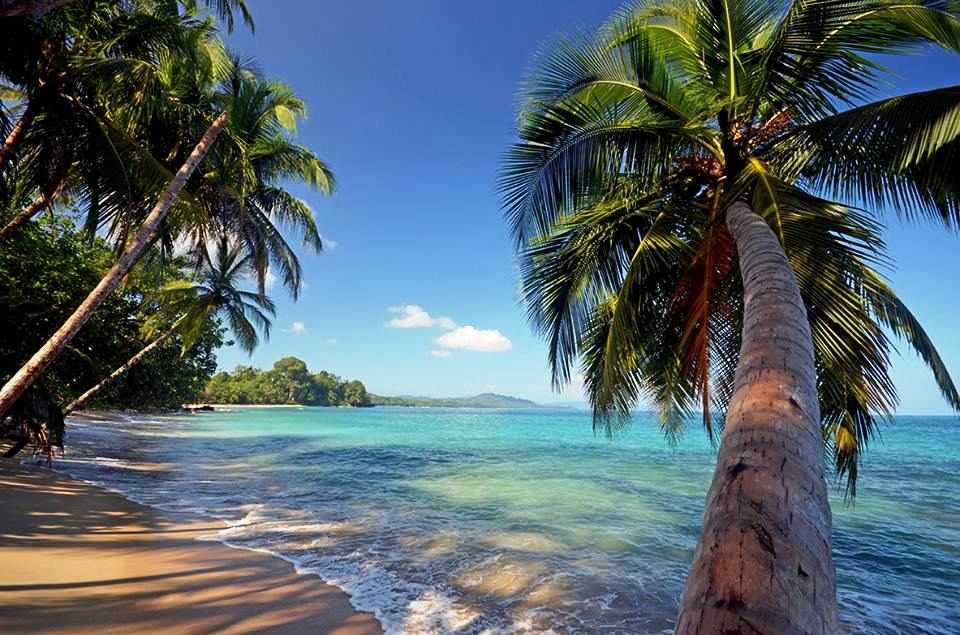
Because the trail runs parallel to the beach, you can stop for swims at Playa Blanca or Punta Cahuita.
Snorkeling in Cahuita National Park
Cahuita protects one of Costa Rica’s largest coral reef systems. Snorkeling is only allowed with licensed guides due to reef protection regulations.
Tours typically include:
- Boat transfer from the town
- Snorkel equipment
- Certified guide
- Fresh fruit and refreshments afterward
Visibility depends heavily on sea conditions and recent rainfall. Calm, sunny periods offer the best clarity.
September and October often provide the calmest water conditions on the Caribbean coast — a major difference from the Pacific’s rainy season.
Where to Stay Near Cahuita National Park
Staying within walking distance of the Kelly Creek entrance makes early park visits easy and avoids parking logistics.
Hotel La Diosa offers jungle-style accommodations just outside town, blending privacy with proximity.
Atlantida Lodge near Playa Negra gives beachfront access and a short drive to the park.
For a boutique jungle experience, Ciudad Perdida Eco Lodge provides immersion in nature while remaining close to the village.
If you prefer even quieter surroundings, some travelers stay in Puerto Viejo and drive north early in the morning.
Best Things to Do in Cahuita Beyond the Park
While the national park is the highlight, Cahuita offers more than a single trail.
Relax on Playa Negra’s dark volcanic sand or enjoy Caribbean cuisine at Miss Edith’s Restaurant, known for coconut rice and beans with fresh seafood.
For additional wildlife experiences, the Jaguar Rescue Center near Puerto Viejo offers guided educational tours focused on animal rehabilitation.
Travelers can also kayak in Punta Uva, bike along the coastal road, or take day trips to Puerto Viejo’s beaches.
Wildlife Viewing Tips
Cahuita is one of the easiest places in Costa Rica to see wildlife without a strenuous hike, but patience matters.
Go early — between 7:00 am and 10:00 am — when animals are most active. Walk slowly and scan tree branches carefully. Sloths often look like round clumps in the canopy.
Hiring a certified naturalist guide at the entrance can significantly improve sightings, especially for birds and camouflaged reptiles.
Seasonal Considerations
Caribbean weather differs from that of Costa Rica’s Pacific coast.
The Caribbean tends to be driest in:
- February to April
- September to October
Rain can occur at any time, and heavy rainfall may temporarily reduce snorkeling visibility. Trails, however, remain accessible year-round.
High season (December–April) brings more visitors, while September–October often offers fewer crowds and excellent reef conditions.
Practical Tips for Visiting
Bring reef-safe sunscreen, water, and secure storage for food — raccoons are clever and persistent. Swimming conditions vary; always assess currents before entering the water.
Food is not sold inside the park, so plan. The trail is shaded but humid, so light clothing and sturdy sandals or sneakers are ideal.
Final Thoughts
Cahuita National Park stands out for combining accessibility with biodiversity. Few places in Costa Rica allow you to walk through coastal rainforest in the morning, snorkel a coral reef by midday, and enjoy Caribbean cuisine by sunset — all within a compact, walkable village.
For travelers seeking wildlife without crowds, calm beaches, and a strong sense of place, Cahuita delivers one of Costa Rica’s most rewarding national park experiences.
Related Posts
Is Cahuita Worth It? A Travel Guide to Cahuita, Costa Rica
Is Cahuita worth it? For travelers seeking a quieter, more authentic…