The Costa Rica coffee regions climate is one of the biggest reasons travelers choose the Central Valley over the country’s hotter coastal destinations. In the coffee-growing hills around Heredia, Naranjo, and Atenas, elevation softens the tropical heat. It creates cooler evenings, defined wet and dry seasons, and generally comfortable conditions for exploring farms and mountain towns.
The best time to visit depends on what matters most to you.
If you want the clearest weather, come during the dry season.
If you want to see coffee harvesting and processing, plan around the harvest months.
If you prefer greener landscapes and fewer visitors, the rainy season can be especially rewarding.
Why Climate Matters in Costa Rica’s Coffee Country
Costa Rica’s coffee-growing regions sit at varying elevations, and altitude is one reason the climate feels so different from the coast.
Heredia generally sits at a higher elevation and tends to feel cooler.
Naranjo’s coffee farms spread across rolling highland terrain, with noticeable temperature changes by elevation.
Atenas sits lower and is usually warmer, although hillside neighborhoods often benefit from good airflow.
Together, these areas offer a climate that is generally:
- Cooler than the Pacific and Caribbean lowlands
- Less humid than many coastal destinations
- Warm during the day
- More comfortable in the evening
- Strongly influenced by elevation and rainfall.
Because Costa Rica contains many microclimates, conditions can change over surprisingly short distances.
That means the exact farm, town, and elevation matter as much as the broader region.
Dry Season: December Through April
For many travelers, the dry season is the easiest time to visit the coffee regions.
Rainfall generally decreases, outdoor activities become easier to plan, and mountain views are often clearer.
This period works especially well for:
- Coffee farm tours
- Scenic drives
- Outdoor dining
- Walking through Heredia or Naranjo
- Staying in hillside properties in Atenas
- Combining coffee country with Poás Volcano
January through March are particularly attractive if weather reliability is your main priority.
However, this is also one of Costa Rica’s busiest periods for tourism.
Accommodation can book earlier, especially around Christmas, New Year’s, and Easter travel periods.
What the Dry Season Feels Like in Heredia
Heredia tends to feel cooler than Atenas because of its elevation and location closer to the mountain slopes.
Mornings can be crisp by tropical standards, while afternoons remain comfortable.
The surrounding coffee estates benefit from generally good touring conditions during this period.
This makes Heredia especially useful for travelers who want coffee experiences without having to deal with intense heat.
What the Dry Season Feels Like in Naranjo
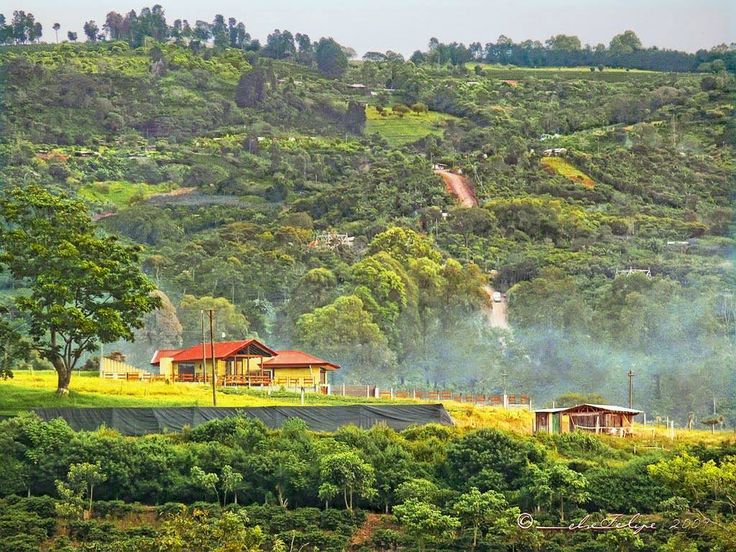
Naranjo often provides some of the most beautiful coffee-country scenery during the drier months.
Roads are generally easier to navigate, hillside views can be clearer, and harvest activity may still be underway.
Because farms sit at different elevations, temperatures vary throughout the region.
Higher properties can feel noticeably cooler in the morning, while lower slopes become warmer by afternoon.
For coffee-focused travel, see Naranjo Coffee Farms: Best Tours & Coffee Experiences.
What the Dry Season Feels Like in Atenas
Atenas is generally the warmest of the three destinations.
Its lower elevation and sunnier reputation make it appealing to travelers seeking Central Valley comfort without the cooler mountain weather.
Hillside areas can still feel pleasant because of breezes and evening airflow.
By late dry season, however, the landscape becomes noticeably less green.
That does not make it unattractive, but travelers expecting year-round lush tropical scenery should understand that February, March, and April can look quite different from the rainy months.
Green Season: May Through November
The green season changes the appearance and rhythm of the coffee highlands.
Rain returns, hillsides become intensely green, and farms enter different stages of the growing cycle.
Mornings are often the easiest time for outdoor activities.
By afternoon, clouds and showers become more common.
This pattern works well for travelers who are comfortable adapting their schedule.
A typical day might include a morning coffee tour, lunch in town, and a slower afternoon at your accommodation while rain moves through the hills.
Why the Green Season Can Be Better for Slow Travel
The rainy months have several advantages.
There are generally fewer visitors.
The countryside becomes more photogenic.
Accommodation availability can improve.
The atmosphere also becomes quieter and more reflective.
For travelers interested in wellness and slower itineraries, this is the most appealing season.
See Slow Travel Costa Rica: Wellness in Atenas and Naranjo for ideas on building a more relaxed Central Valley stay.
September and October
September and October are often among the wetter months in much of the Central Valley.
That does not mean constant rain, but showers can last longer, and road conditions may become more challenging in rural areas.
These months work best for travelers who value quiet and greenery over predictable outdoor conditions.
If your trip depends heavily on mountain views, photography, or extensive driving, other months may be easier.
Coffee Harvest Season: When Farms Are Most Active
For many visitors, weather is only part of the decision.
Coffee harvest season can make a farm visit far more interesting.
In much of the Central Valley, including Heredia and Naranjo, harvest activity commonly runs from roughly November through March, although timing varies by elevation, farm, weather, and coffee variety.
During this period, you may see:
- Ripe red coffee cherries
- Hand picking
- Active processing
- Drying patios
- Greater activity around mills
This makes harvest season the most dynamic time for travelers who want to understand coffee production rather than tour a plantation.
Best Months for Coffee Lovers
If coffee is your main priority, December through February is a particularly strong window.
You have a good chance of seeing active harvesting and processing while also benefiting from generally drier weather.
That combination is difficult to beat.
However, smaller farms may have different harvest timing.
If seeing active picking is essential, contact the farm before booking and ask what is expected during your travel dates.
Visiting Outside Harvest Season
A coffee tour can still be worthwhile when harvesting is not taking place.
You can learn about cultivation, farm management, processing methods, roasting, and tasting throughout the year.
In fact, quieter periods may allow more time for conversation with guides or producers.
The main difference is visual.
You may see green coffee cherries instead of ripe red ones, and processing equipment may be less active.
Best Time for Photography
Photography preferences can change the ideal season.
Dry Season
Best for:
- Clearer mountain views
- Golden light
- Scenic drives
- Wider landscape photography
Green Season
Best for:
- Lush coffee fields
- Saturated greens
- Clouds and atmospheric light
- Misty highland scenes
If you enjoy dramatic landscapes rather than clear skies, the green season can be more visually interesting.
Best Time for Poás Volcano and Coffee Tours
A popular Central Valley itinerary combines coffee country with Poás Volcano National Park.
The volcano is generally best attempted early in the morning because mountain clouds can build later in the day.
A practical plan is:
Morning: Poás Volcano
Late morning or afternoon: Coffee estate visit
This works throughout much of the year, although dry-season mornings generally offer more predictable visibility.
Always check current park conditions before departure.
Climate Differences Between Heredia, Naranjo, and Atenas
Although these towns are part of the same general coffee corridor, they should not be treated as climatically identical.
Heredia
Generally cooler, especially in higher areas.
Best for travelers who prefer mild temperatures and easy access to the metropolitan region.
Naranjo
Varied by elevation, with classic agricultural highland conditions.
Best for coffee enthusiasts who want rural scenery and farm immersion.
Atenas
Generally warmer and sunnier.
Best for travelers prioritizing outdoor living, hillside accommodation, and a more residential pace.
If climate comfort is one of your main concerns, this difference can help determine where you stay.
Coffee Highlands vs Guanacaste
Guanacaste feels substantially different.
During the dry season, Guanacaste is hotter, drier, and more sun-intensive.
For beach travelers, that may be ideal.
However, visitors sensitive to heat often find the Central Valley easier to walk in, for farm tours, and for longer stays.
The coffee highlands trade beach access for cooler temperatures and more comfortable evenings.
Coffee Highlands vs the Caribbean
Costa Rica’s Caribbean Coast follows a different rainfall pattern and is generally more humid.
The Central Valley experiences a more pronounced dry season and cooler conditions due to its elevation.
Travelers should therefore avoid assuming weather in one region predicts conditions in another.
Costa Rica’s geography creates distinct seasonal patterns over relatively short distances.
Coffee Highlands vs Monteverde
Monteverde is significantly higher and typically cooler, windier, and more influenced by cloud-forest conditions.
Atenas and many parts of Heredia and Naranjo feel warmer and less mist-heavy.
Travelers who enjoy cool, atmospheric mountain weather may prefer Monteverde.
Those who want warmer temperatures while avoiding coastal heat may find coffee country more comfortable.
Best Time for Baby Boomers and Older Travelers
January through March is often the easiest period.
Weather is more predictable, walking conditions are better, and rain is less likely to interfere with transportation.
However, travelers who dislike peak-season crowds may prefer May, June, or early July.
These months can provide greener scenery without the heaviest late-season rains.
The right choice depends on whether predictable weather or lower visitor numbers matters more.
Best Time for Families
School schedules often push families toward December holidays, spring breaks, or summer travel.
December through March works particularly well because coffee harvest activity adds an educational element.
June and July can also be rewarding.
The landscape is greener, and morning farm visits generally remain easy to schedule.
Pack rain protection and plan outdoor activities earlier in the day.
Best Time for Wellness and Slow Travel
May through August can be excellent.
The hills are green, visitor numbers are lower, and afternoon rain naturally slows the day.
Atenas is particularly suitable for longer stays because villas and residential properties allow you to enjoy the destination even when you are not sightseeing.
Best Time for a Weekend Getaway
For a short weekend getaway from San José, December through April provides the simplest planning.
When you only have two or three days, weather reliability becomes more valuable.
Still, a green-season weekend can be beautiful if you schedule outdoor activities early and keep afternoons flexible.
So, What Is the Best Month?
There is no single best month for everyone.
Choose January through March for dry weather, clear views, and straightforward touring.
Choose December through February if active coffee harvest is your priority.
Choose May through August for green landscapes and fewer visitors.
Choose September or October if quiet matters more than predictable weather.
Choose November if you want a transitional period when the landscape is still green, and the coffee harvest is beginning in many areas.
Practical Weather Tips
Even in the dry season, bring a light layer.
Temperatures can drop noticeably in higher coffee-growing areas after sunset.
During the green season, carry a lightweight rain jacket or compact umbrella.
Wear shoes with good traction on farm tours because agricultural paths can remain wet even after the rain stops.
Finally, plan around altitude.
Atenas, downtown Heredia, and higher coffee estates can feel very different on the same day.
Check the forecast for the specific location rather than relying only on “San José weather.”
For current conditions, consult the National Meteorological Institute of Costa Rica (IMN).
Final Thoughts
The Costa Rica coffee regions’ climate is one of the reasons Heredia, Naranjo, and Atenas work so well for travelers who want an alternative to coastal heat.
The dry season delivers clearer views, predictable travel, and much of the coffee harvest.
The green season offers quieter towns, lush hillsides, softer light, and a slower rhythm.
Meanwhile, differences in elevation mean you can fine-tune the experience even further: cooler Heredia, agricultural Naranjo, or warmer Atenas.
For most first-time visitors, January through March provides the easiest introduction.
For serious coffee travelers, December through February may be even better.
For slow travelers, photographers, and anyone willing to work around afternoon showers, the green season can be just as rewarding.
There is no truly bad season.
There are simply different versions of coffee country.
Related Posts
Naranjo Coffee Farms: Best Tours & Coffee Experiences
Naranjo coffee farms offer one of the best opportunities to experience…

Heredia vs Atenas: Which Coffee Town Is Right for You?
Choosing between Heredia vs Atenas means choosing between two very different versions…

Atenas Climate: Is It Really the Best in Costa Rica?
The Atenas climate has become almost as famous as the town itself.…