Arenal Volcano rises above the rainforest near La Fortuna, creating one of Costa Rica’s most recognizable landscapes. Its steep volcanic cone can be seen from national park trails, lakeside roads, nature reserves, and selected hotels.
However, finding the best viewpoints of Arenal Volcano involves more than choosing a location. Clouds frequently gather around the summit, sometimes hiding the entire cone while nearby areas remain sunny.
Some viewpoints offer wide landscapes with Lake Arenal in the foreground. Others provide closer perspectives framed by forest, volcanic rock, or open countryside.
Access also varies. Certain viewpoints are inside national parks or private attractions, while others are available only to hotel guests.
This guide compares six viewing areas, explains what makes each one different, and offers practical photography advice. It also covers weather, timing, and how to plan a visit without relying on guaranteed clear skies.
Understanding Arenal Volcano and Its Surrounding Landscape
Arenal Volcano stands near La Fortuna in northern Costa Rica. It reaches approximately 1,670 meters (5,479 feet) above sea level.
The volcano is a stratovolcano formed through repeated eruptions of lava and other volcanic material.
Arenal began a prolonged eruptive period in July 1968. Activity continued for decades before declining in 2010.
Today, the volcano remains geologically active but is not producing the frequent visible lava flows associated with its earlier eruptive period.
Visitors observe Arenal from surrounding trails, roads, hotels, and designated viewing areas. Climbing the active volcanic cone is prohibited.
The surrounding landscape includes Arenal Volcano National Park, Lake Arenal, rainforest reserves, farmland, and thermal resorts.
These different environments create varied photography opportunities.
For example, national park trails provide volcanic rock and forest foregrounds. Meanwhile, lakeside viewpoints offer broader compositions with water and hills.
Why Is Arenal Volcano Sometimes Hidden by Clouds?
Arenal’s location and surrounding climate strongly influence visibility.
Warm, moist air moves through the region and interacts with the volcano’s slopes. As air rises and cools, clouds can develop around the mountain.
Consequently, the summit may disappear even when the surrounding countryside looks relatively clear.
Rainfall also occurs throughout the year. Arenal does not follow the same pronounced dry-season pattern as Costa Rica’s northwestern Pacific coast.
This means that December through April does not guarantee clear skies.
Likewise, the wetter months can still produce periods of good visibility.
Early mornings sometimes offer favorable conditions. However, there is no reliable daily window when the summit is guaranteed to appear.
For photographers, flexibility is more useful than following a fixed schedule.
Spending several days in the region may provide more opportunities to photograph the volcano under changing conditions.
Best Viewpoints of Arenal Volcano
The following locations offer different perspectives of Arenal. Some require paid admission, while others involve private accommodation or roadside access.
1. Arenal Volcano National Park — Best for Volcanic Landscapes
Arenal Volcano National Park is one of the most established places to observe the volcano.
The park protects forest and volcanic terrain affected by earlier eruptions.
Trails in the main visitor sector include Las Coladas and El Ceibo. The Peninsula sector provides another area to explore when officially accessible.
Las Coladas is particularly interesting for visitors who want to photograph volcanic terrain.
Older lava deposits, rocky ground, and regenerating vegetation create a distinctive foreground.
However, open views are not available along every section of the trail. Trees, terrain, and clouds can interrupt sightlines.
Visitors should also expect uneven surfaces and changing trail conditions.
The park does not permit climbing the active cone. Therefore, photographs must be taken from authorized trails and observation areas.
For travelers interested in both geology and landscape photography, this is a strong starting point.
Before visiting, confirm current trail access and park rules through SINAC.
2. Arenal Observatory Lodge & Trails — Best for Nature Photography
Arenal Observatory Lodge & Trails is located in a forested area near the volcano.
The property combines accommodation with nature trails and observation areas.
Its setting offers opportunities to photograph Arenal alongside surrounding vegetation and open landscapes.
Wildlife observation is another attraction. Visitors interested in birds and rainforest photography may appreciate the combination.
However, volcano views vary between rooms, terraces, and trail locations.
Some areas may be available to day visitors, while others are reserved for overnight guests.
Therefore, confirm current access arrangements before planning a photography visit.
The lodge is particularly suitable for travelers who want to spend time exploring the surrounding forest.
Nevertheless, even its favorable location cannot guarantee an unobstructed summit.
3. Lake Arenal and Route 142 — Best for Wide Landscape Views
Lake Arenal provides a different perspective of the volcano.
Instead of photographing Arenal from a forest trail, visitors can include water, distant hills, and shoreline vegetation.
Route 142 connects La Fortuna with communities around the lake, including Nuevo Arenal and Tilarán.
Certain sections offer views toward the volcano. However, not every stretch of road provides a clear sightline.
The route also does not form a complete loop around the lake’s shoreline.
For photography, the lake creates opportunities for wider compositions.
Under suitable conditions, the volcano may reflect on the water. However, wind often disturbs the surface.
Cloud cover and changing light also affect the scene.
Road safety is especially important. Stop only where parking is permitted and the vehicle is completely clear of traffic.
Avoid narrow shoulders, private property, and restricted hydroelectric infrastructure.
For travelers who prefer scenic driving over hiking, Lake Arenal is worth including.
4. Mistico Arenal Hanging Bridges Park — Best for Rainforest-Framed Views
Mistico Arenal Hanging Bridges Park is a private nature attraction near La Fortuna.
Its walking route passes through rainforest and across suspension bridges.
The main attraction is the forest environment, but certain open areas may offer views toward Arenal Volcano.
These perspectives differ from the broad panoramas available at some roadside viewpoints.
Instead, photographers can incorporate forest vegetation and canopy layers into their compositions.
However, not every bridge faces the volcano. Dense vegetation may also limit visibility.
Weather can affect both the experience and photography conditions.
Visitors should check current admission arrangements and park rules before arriving.
For travelers interested in combining rainforest photography with possible volcano views, Mistico offers a useful option.
5. Volcano-View Resort Terraces — Best for Comfortable Viewing
Some hotels near La Fortuna provide terraces, gardens, pools, or rooms facing Arenal Volcano.
These locations can be convenient for travelers who prefer minimal walking.
The Springs Resort & Spa is known for its elevated setting and views toward the volcano.
Other properties, including Nayara Springs and Nayara Gardens, offer luxury accommodation within tropical landscapes.
However, vegetation and room orientation may affect sightlines.
Tabacón Thermal Resort & Spa is primarily known for its geothermal bathing experience. Travelers should confirm whether their chosen room or viewing area offers a direct volcano perspective.
Not every resort provides the same type of view.
Furthermore, some terraces and facilities are available only to registered guests.
Before booking, check the exact room category and ask whether the property has a shared volcano-facing observation area.
For travelers planning a longer stay, a well-positioned hotel can provide repeated opportunities to watch changing conditions.
6. El Castillo Area — Best for Quieter Volcano Perspectives
El Castillo is a small community southwest of Arenal Volcano.
The surrounding landscape includes forested hills, rural roads, and accommodations overlooking parts of the Arenal region.
Certain locations provide views toward the volcano, Lake Arenal, or both.
However, the quality of the view depends on the property’s position and surrounding vegetation.
Not every road or accommodation offers an unobstructed perspective.
The area may appeal to photographers who prefer exploring quieter surroundings outside central La Fortuna.
However, some viewpoints are located on private property.
Travelers should request permission before entering private land and avoid stopping where roads are narrow.
Road conditions may also vary, particularly after rainfall.
For visitors with access to suitable transportation, El Castillo provides another perspective of the volcano.
Arenal Volcano Viewpoints: Quick Comparison
| Viewpoint | Best For | Type of View | Access | Photography Advantage |
|---|---|---|---|---|
| Arenal Volcano National Park | Volcanic geology | Cone, older lava, forest | Paid national park | Rocky foregrounds |
| Arenal Observatory Lodge & Trails | Nature photography | Volcano and forest | Private property; confirm day access | Wildlife and landscape |
| Lake Arenal and Route 142 | Wide landscapes | Water, hills, volcano | Public road; safe stops only | Broad compositions |
| Mistico Hanging Bridges | Rainforest scenery | Forest-framed views | Paid private attraction | Canopy foreground |
| Resort terraces | Comfortable viewing | Depends on property | Often guest-only | Convenient repeated viewing |
| El Castillo | Quieter perspectives | Hills, forest, volcano | Public roads and private properties | Different angles |
Best Time of Day to See Arenal Volcano
The best time to see Arenal Volcano depends on cloud cover, light, and viewpoint orientation.
Early Morning
Early morning can be useful for photography because light and weather conditions may differ from later in the day.
However, Arenal’s summit can remain cloudy throughout the morning.
If your hotel has a volcano-facing terrace, check conditions before leaving for another viewpoint.
National park visitors must also respect opening hours. Arriving before a park opens does not provide authorized access.
Late Afternoon
Late afternoon can produce warmer light across the surrounding hills.
However, the direction of sunlight changes how the volcano appears from different viewpoints.
Clouds may also cover the summit or create shadows across the landscape.
For photographers, partly cloudy conditions can still produce interesting compositions.
Evening and Night Photography
Arenal is no longer producing the regular glowing lava displays associated with its earlier eruptive period.
However, the volcano may form a silhouette against the evening sky.
On suitable nights, photographers can experiment with stars, clouds, and long exposures.
Night photography should take place only where access is permitted.
National park trails and private reserves may have restricted evening hours. Avoid entering closed areas or photographing from unsafe roadsides.
Best Season for Arenal Volcano Photography
Arenal receives rainfall throughout the year, so there is no guaranteed clear-view season.
During December through April, some travelers expect drier conditions because this period is Costa Rica’s main tourism season.
However, the Arenal region has a different climate from the northwestern Pacific coast.
Clouds, rain, and wind can still affect volcano visibility.
Between May and November, changing rainfall patterns may produce misty landscapes and dramatic cloud formations.
These conditions can create interesting photographs, even when the summit remains hidden.
For photographers, the most useful strategy is flexibility.
Consider staying several nights, checking local conditions, and visiting viewpoints when visibility improves.
Photography Tips for Arenal Volcano
Arenal’s changing weather makes photography unpredictable. However, thoughtful composition and equipment choices can improve your results.
Use Foreground Elements
A photograph of the cone alone may not communicate the scale of the landscape.
Instead, include volcanic rock, forest vegetation, open fields, or Lake Arenal.
These elements provide depth and help distinguish one viewpoint from another.
Choose the Right Lens
A wide-angle lens can capture the volcano with its surrounding landscape.
For example, a 16–35mm equivalent lens works well for broad compositions.
A 24–70mm zoom offers flexibility for tighter framing. Longer focal lengths can emphasize the cone and surrounding ridgelines.
However, expensive equipment is not necessary for good results.
Use a Tripod When Appropriate
A tripod can help with low-light photography and longer exposures.
However, some attractions restrict photography equipment or require special permission.
Always check local rules before setting up a tripod on a trail or bridge.
Photograph Changing Clouds
Clouds can hide the summit while revealing parts of the lower slopes.
Rather than waiting only for completely clear skies, try photographing different cloud formations.
Mist and partial visibility can add depth to the landscape.
Improve Smartphone Photographs
Smartphones can capture excellent landscape images when used carefully.
Tap the screen to adjust focus and exposure. Keep the horizon level and avoid excessive digital zoom.
For low-light images, stabilize the phone against a secure surface.
Finally, avoid stepping beyond barriers or leaving marked trails to improve a composition.
Where to Stay for the Best Arenal Volcano Views
Accommodation location can influence how often you see the volcano.
Hotels along Route 142 and in the wider La Fortuna region may offer volcano-facing rooms or shared observation areas.
Meanwhile, properties near El Castillo provide different perspectives across the surrounding landscape.
However, elevation alone does not guarantee a better view.
Trees, buildings, and room orientation can affect sightlines.
Before booking, check the exact room description and ask whether your accommodation faces the volcano.
A hotel with a good public viewpoint may still have rooms without direct views.
How to Plan a Day Around Arenal Volcano Viewpoints
A practical photography day might begin at Arenal Volcano National Park during official opening hours.
After exploring an authorized trail, travelers could continue toward Lake Arenal for broader landscape photographs.
Later, returning to a hotel terrace allows another opportunity to observe changing conditions.
However, this schedule depends on transportation, weather, and individual walking preferences.
Visitors planning Mistico Hanging Bridges or Arenal Observatory Lodge should check admission arrangements separately.
If you have two days, spread the locations across both. This allows more time for hiking and reduces pressure to visit every viewpoint in one afternoon.
Are the Best Viewpoints of Arenal Volcano Worth Visiting?
Yes. The best viewpoints of Arenal Volcano offer different ways to understand and photograph the landscape.
Arenal Volcano National Park provides volcanic terrain and forest scenery. Lake Arenal offers wider compositions, while Mistico adds a rainforest perspective.
Arenal Observatory Lodge and El Castillo provide other viewing opportunities, depending on access and weather.
For travelers who prefer minimal walking, a volcano-facing hotel terrace may be the most convenient option.
However, no viewpoint guarantees a clear summit.
Choose locations that match your interests, check access requirements, and allow time for changing conditions.
Even when clouds obscure the volcano, the surrounding landscapes can make the visit worthwhile.
Related Posts

Best Hot Springs in La Fortuna, Costa Rica
Finding the best hot springs in La Fortuna depends on how you…
Arenal Volcano vs Poás Volcano
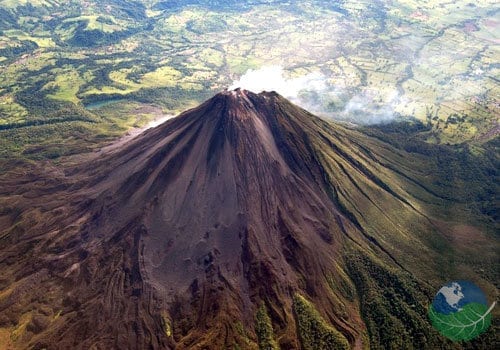
Choosing between Arenal Volcano and Poás Volcano depends on what you want to experience in Costa Rica. Both are active volcanic systems, but visiting them feels very different. Arenal is known for its steep volcanic cone, rainforest trails, geothermal hot springs, and nearby attractions. Poás, meanwhile, is famous for its large summit crater and acidic lake. The biggest difference is how visitors experience each volcano. At Arenal, you explore the surrounding landscape and admire the cone from a distance. At Poás, you may be able to look toward the active crater from an official viewpoint, depending on current restrictions. Travel time also matters. Poás is generally more convenient for visitors staying near San José. Arenal is better suited to travelers planning several days around La Fortuna. This Arenal Volcano vs Poás Volcano comparison explains the differences in scenery, hiking, accessibility, accommodation, weather, and volcanic safety. Arenal Volcano: What Makes It Different? Arenal Volcano rises approximately 1,670 meters (5,479 feet) above sea level in northern Costa Rica. Located near La Fortuna, it is a stratovolcano with a distinctive cone-shaped profile. Arenal began a prolonged eruptive period in July 1968. Activity continued for decades before declining in 2010. Although Arenal remains classified as an active volcano, visitors should not expect the lava flows once visible on its slopes.…
Best Hotels with Arenal Volcano Views
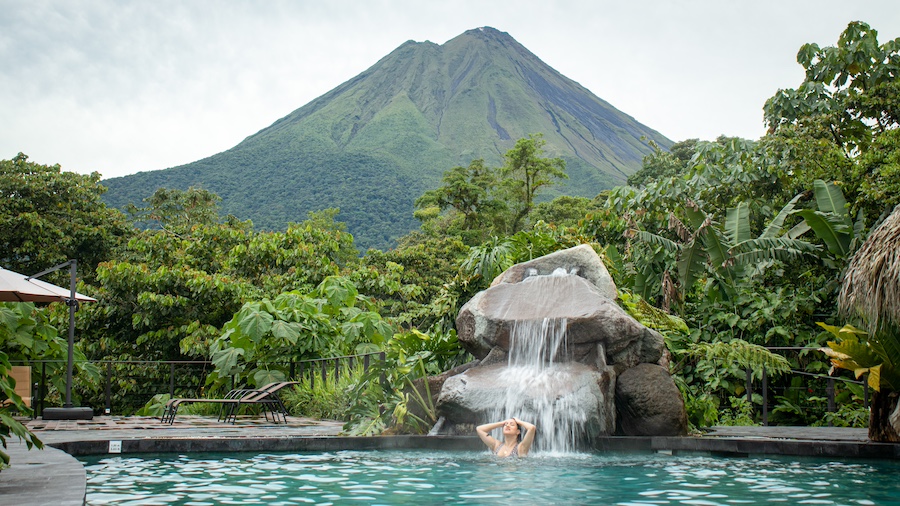
Choosing a hotel with a view of Arenal Volcano can make a stay in La Fortuna especially rewarding. On clear days, the volcano rises above the surrounding rainforest, creating one of Costa Rica's most recognizable landscapes. However, not every hotel offers the same view. Some properties have open terraces facing the volcano, while others provide glimpses through tropical gardens. Even within one resort, room orientation can make a difference. Weather is another important factor. Clouds frequently cover Arenal's summit, so no hotel can promise an unobstructed view throughout your stay. This guide compares the best hotels with Arenal Volcano views, explains their locations, and offers practical advice for booking the right room. Where Are the Best Arenal Volcano View Hotels Located? Arenal Volcano stands near La Fortuna in northern Costa Rica. It reaches approximately 1,670 meters (5,479 feet) above sea level. The volcano experienced a long eruptive period beginning in 1968. Its main eruptive activity ended in 2010, so visitors should not expect to see flowing lava. Today, the surrounding region includes rainforest reserves, thermal resorts, Lake Arenal, and Arenal Volcano National Park. Hotels are spread across several areas, each offering a different experience.…