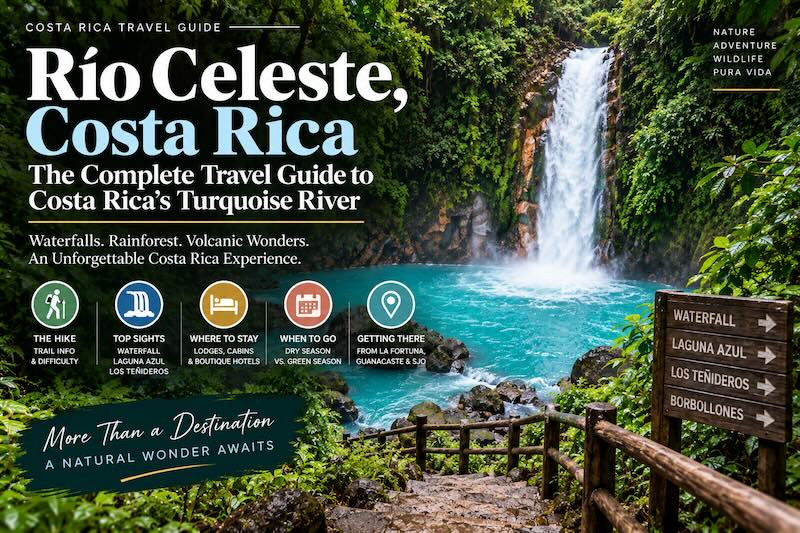
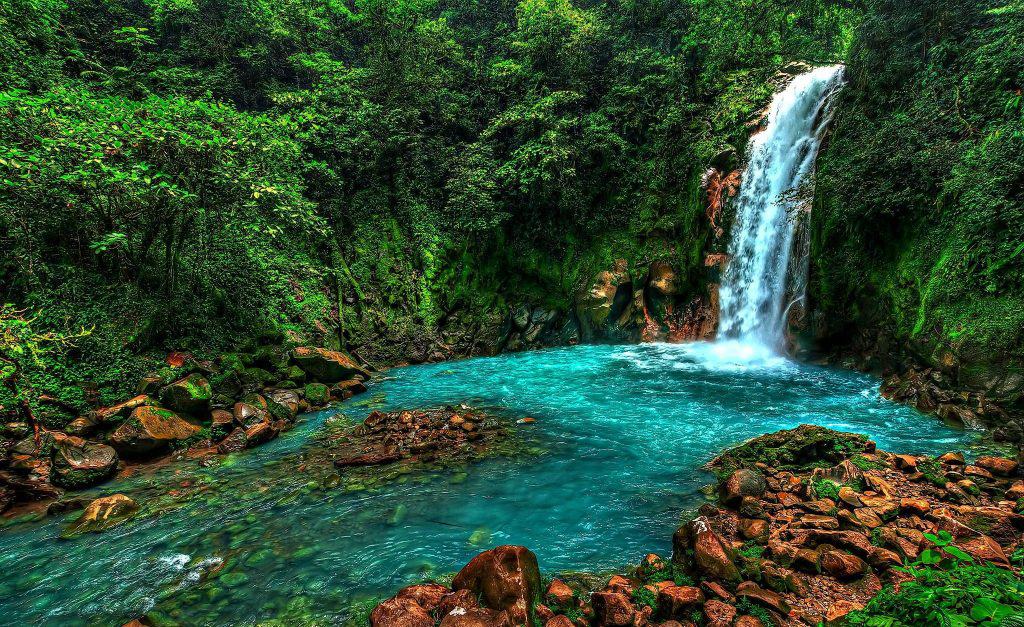
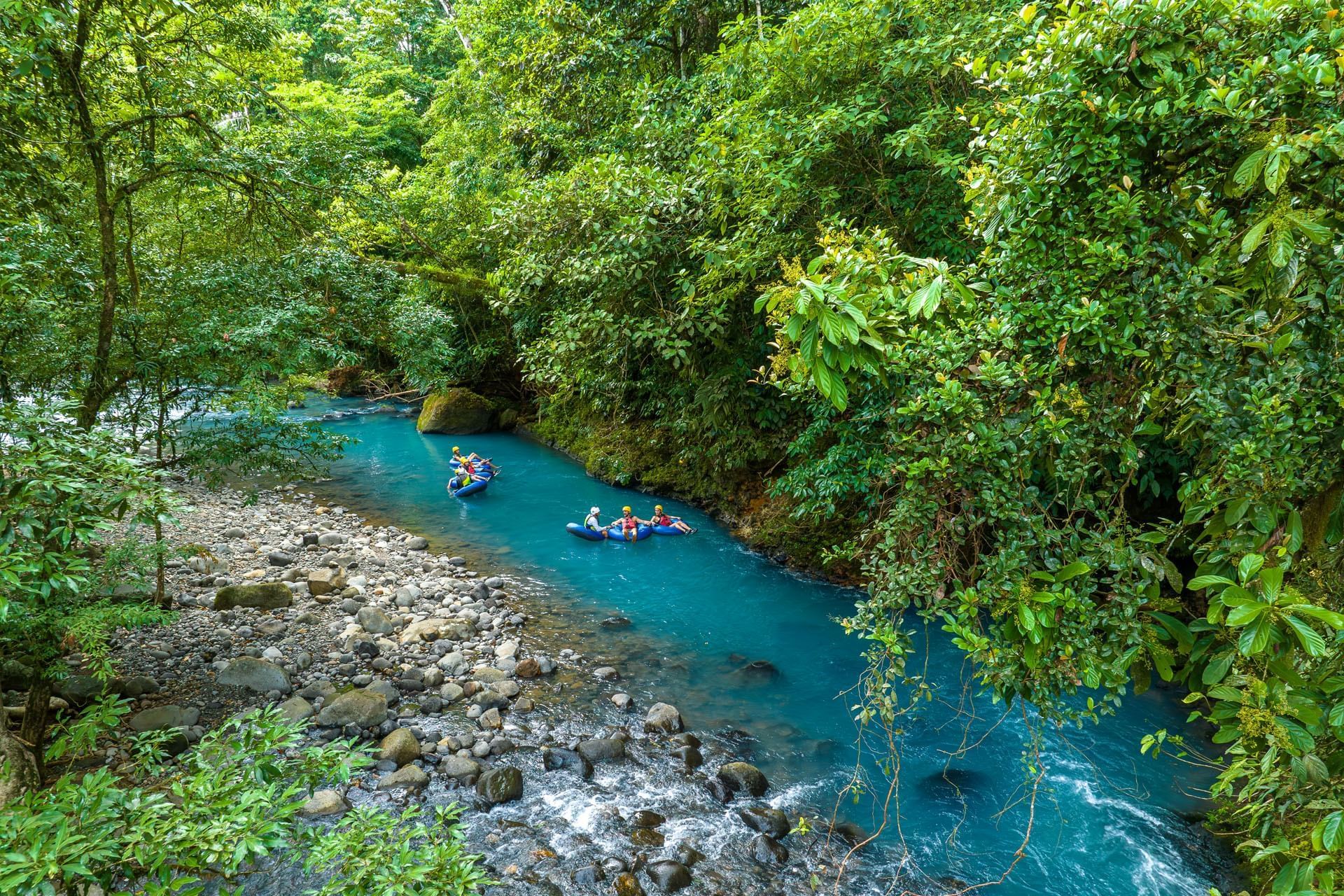
Few natural attractions in Costa Rica generate as much anticipation — and debate — as Río Celeste inside Tenorio Volcano National Park. Photos show an impossibly turquoise river cutting through dense rainforest. Social media calls it “the bluest water in Costa Rica.”
But is it actually worth the drive, the hike, and the planning?
The honest answer: Yes — for the right traveler, at the right time, with realistic expectations.
This guide breaks down what Río Celeste truly offers, where expectations sometimes misalign with reality, who it’s best suited for, and how to structure your visit.
Overview: What Is Río Celeste?
Río Celeste is located in northern Costa Rica near the small community of Bijagua, inside Tenorio Volcano National Park.
The park protects:
- Tenorio Volcano
- Primary rainforest
- Geothermal features
- The famous turquoise river
- Río Celeste Waterfall
The electric blue color occurs at Los Teñideros, where two clear streams merge, triggering a mineral reaction that scatters light and produces the vivid hue.
It is a legitimate natural phenomenon — not enhanced, not artificial.
But it is also weather-dependent.
Expectations vs Reality
Understanding what Río Celeste is — and what it isn’t — will determine whether it feels magical or disappointing.
Expectation: The Water Is Always Neon Blue
Reality: The color depends heavily on the weather.
After heavy rain, sediment can temporarily turn the river cloudy or brown. During dry or stable weather, the turquoise effect is far more vibrant.
Timing matters.
Expectation: It’s a Quick Photo Stop
Reality: It’s a moderate rainforest hike.
The full loop to see the waterfall, Laguna Azul, Los Teñideros, and geothermal bubbling sections is approximately:
6–7 km (3.7–4.3 miles) round trip
Plan 3–4 hours inside the park.
This is not a roadside viewpoint.
Expectation: You Can Swim in the Blue Water
Reality: Swimming is not allowed inside Tenorio Volcano National Park.
The experience is visual and educational — not recreational.
Expectation: It’s Like La Fortuna
Reality: Río Celeste feels more rural and less developed.
There are no large resorts or commercial strips. The area is quieter and more agricultural.
For some travelers, that’s part of the charm.
Who Río Celeste Is Best Suited For
Nature & Science Enthusiasts
If you’re intrigued by geology, volcanic chemistry, and rainforest ecosystems, Río Celeste is fascinating.
Watching two clear rivers merge and instantly turn blue at Los Teñideros is genuinely unique.
Photographers
When conditions are right, the waterfall and river produce striking compositions.
Dry season mornings are best for color intensity.
Adventure-Oriented Travelers
The moderate hike, humid conditions, and rural setting appeal to travelers who prefer immersive nature experiences over convenience.
Independent Travelers
Río Celeste works well for those comfortable with rental cars and flexible schedules.
Who May Want to Skip It
Río Celeste may not be ideal if you:
- Have limited time and prefer high-impact, short visits
- Want a swimmable waterfall experience.
- Are you traveling during peak rainy months with tight scheduling
- Prefer luxury infrastructure directly at the attraction.
In those cases, La Fortuna Waterfall or Arenal hot springs may offer a more immediate reward.
Where to Stay Near Río Celeste
Because the park is in a rural zone, accommodation is nature-focused.
Eco-Lodges & Boutique Jungle Stays
- Celeste Mountain Lodge
- Hideaway Río Celeste
- Tenorio Lodge
These offer:
- Quiet forest surroundings
- Birdwatching opportunities
- Short drives to the park entrance
Staying overnight nearby increases your chances of visiting early — when both weather and crowd levels are best.
Combining with La Fortuna
Many travelers base themselves in La Fortuna (1–1.5 hours away) and visit Río Celeste as a day trip.
This works well if you:
- Have a rental car
- Leave early
- Monitor the weather forecast.
What to Combine with Río Celeste
Río Celeste pairs well with:
- Arenal Volcano (multi-day inland itinerary)
- Lake Arenal scenic drive
- Guanacaste beach stays
- Birdwatching in Bijagua
It works particularly well as a transition point between the Arenal region and Guanacaste.
Seasonal Considerations
Dry Season (December–April)
- Most reliable blue color
- Less muddy trails
- Higher visitor numbers
Best for first-time visitors prioritizing visual impact.
Green Season (May–November)
- Lush rainforest
- Fewer crowds
- Afternoon rain common
September and October typically bring the heaviest rainfall, increasing the risk of duller river color.
Morning visits are critical year-round.
Travel Logistics Reality Check
From La Fortuna: 1–1.5 hours each way
From Liberia (Guanacaste): 1.5–2 hours
Add:
- 3–4 hours hiking
- Time for meals
- Buffer for weather shifts
Río Celeste requires a minimum commitment of half a day.
So… Is Río Celeste Worth Visiting?
If you:
- Value rare natural phenomena
- Enjoy rainforest hiking
- Are traveling in favorable weather
- Have flexibility in your schedule.
Then yes — Río Celeste is absolutely worth visiting.
The moment you reach Los Teñideros and see clear streams transform into a glowing turquoise river feels genuinely surprising.
If you expect:
- Guaranteed neon color in any weather
- Swimming beneath the waterfall
- Easy roadside access
You may feel underwhelmed.
Final Verdict
Río Celeste is not universally spectacular. It is conditionally spectacular.
When:
- The weather cooperates
- You arrive early
- You understand the hike.
- You accept the no-swimming rule.
It becomes one of the most unique natural experiences in Costa Rica.
For travelers willing to plan thoughtfully, adjust expectations, and embrace a slightly wilder setting, Río Celeste delivers something rare: a river that truly looks unreal — and yet is entirely natural.