A Complete Corcovado Wildlife Guide
If you are visiting Corcovado National Park, you are coming for one reason above all else: wildlife.
Located on Costa Rica’s remote Osa Peninsula, Corcovado protects one of the largest remaining tracts of Pacific lowland tropical rainforest in Central America. Its biodiversity density is extraordinary — often cited as among the highest on the planet.
But what can you realistically expect to see?
This Corcovado wildlife guide breaks down mammals, birds, reptiles, best access points, and the best times to maximize sightings.
For a full overview of visiting the park, start here:
Why Corcovado Is So Wildlife-Rich
Corcovado’s biodiversity is the result of:
- Intact primary rainforest
- Low human development
- Protected status
- River, mangrove, coastal, and mountain ecosystems within proximity
The park supports all four of Costa Rica’s native monkey species and some of its most iconic mammals.
Wildlife sightings are never guaranteed — but densities here are higher than in most other parks in the country.
Mammals You Can See in Corcovado
Baird’s Tapir
The star of Corcovado.
- Most frequently seen near Sirena Ranger Station.
- Often active early morning or late afternoon
- Large, shy but increasingly habituated in protected zones
Sirena access guide:
Four Monkey Species
Corcovado is one of the few places in Costa Rica where you can see all four:
- Howler monkeys
- Spider monkeys
- White-faced capuchins
- Squirrel monkeys
They are commonly seen along established trails.
White-Lipped Peccaries
Travel in large herds. When encountered, they are loud and unmistakable.
Sightings are unpredictable but thrilling.
Sloths
Both two-toed and three-toed sloths are present.
Often spotted with the help of a trained guide.
Big Cats (Rare)
- Puma
- Jaguar
They exist in the park, but sightings are extremely rare.
Tracks and camera-trap evidence confirm their presence.
Birdlife in Corcovado
Corcovado is a dream for birdwatchers.
Common sightings include:
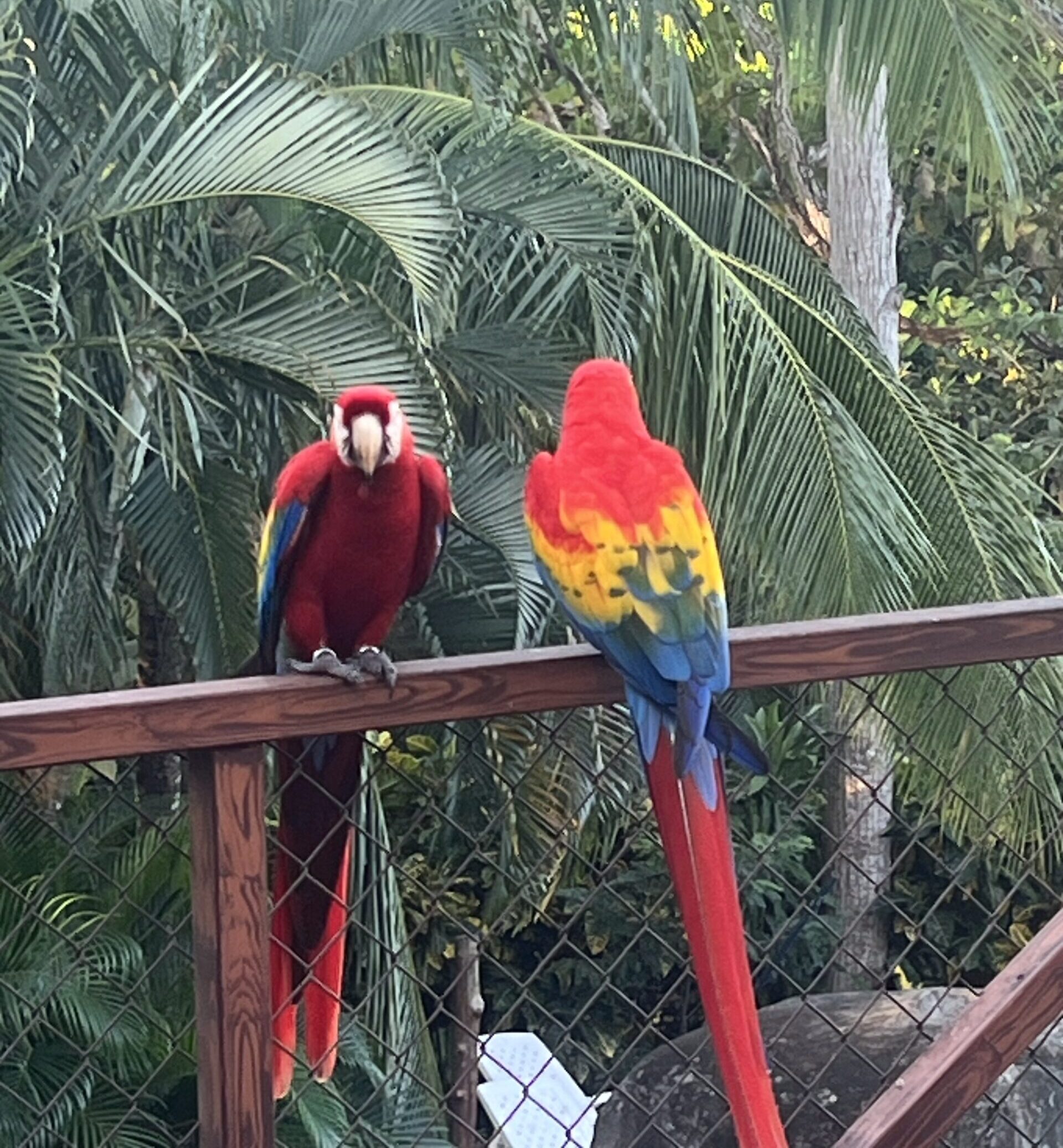
- Scarlet macaws (highly visible, especially near Sirena and coastal areas)
- Toucans
- Trogons
- Motmots
- Hawks and raptors
- King vultures (occasionally)
Early morning hikes offer the best bird activity.
For full species context, see:
How to Visit Corcovado National Park
Reptiles & Amphibians
Reptiles
- Iguanas
- Basilisk lizards
- Snakes (various species, usually shy)
Amphibians
- Tree frogs
- Poison dart frogs
- Toad species
Reptiles are more visible during warmer daylight hours, while amphibians are more active during rainy periods and at dusk.
Where to Stay for the Best Wildlife Access
Your base location significantly impacts your wildlife experience.
Sirena Ranger Station (Inside the Park)
Highest wildlife density.
Overnight stays provide:
- Sunrise wildlife activity
- Fewer day visitors
- Extended observation time
Full overnight details:
Drake Bay
Boat access to Sirena and San Pedrillo.
Ideal for combining wildlife with marine experiences.
Compare base options here:
Puerto Jiménez
Better for:
- Multi-day treks
- La Leona and Los Patos access
- Road connectivity
Wildlife density varies by entrance sector.
Best Time of Day for Wildlife Sightings
Early Morning (5:30–9:00 AM)
Best overall activity window.
- Tapirs
- Monkeys
- Birds
- Peccaries
This is why overnight stays are so valuable.
Late Afternoon (3:30–5:30 PM)
Another active period before dusk.
Midday
Wildlife slows due to heat and humidity.
Sightings are still possible but less frequent.
Seasonal Wildlife Differences
Dry Season (December–April)
- Easier hiking conditions
- Wildlife concentrates near water sources.
- More predictable trail access
- Higher visitor numbers
Excellent for first-time visitors.
Green Season (May–November)
- Lush rainforest
- Amphibian activity increases
- Fewer tourists
- Muddier trails
- Heavier rainfall (especially September–October)
Some species are more active in wetter conditions.
Full timing guide:
Realistic Expectations
Corcovado is not a safari park.
Wildlife:
- Moves freely
- Does not follow schedules
- Cannot be guaranteed
The difference is that your chances here are significantly higher than in Costa Rica’s more developed regions.
A knowledgeable licensed guide dramatically increases spotting success.
Who Will Appreciate Corcovado Wildlife Most?
Corcovado is best for:
- Wildlife enthusiasts
- Birders
- Photographers
- Adventure travelers
- Families with older children interested in nature
It may be overwhelming for travelers expecting easy, paved paths or guaranteed sightings.
If you’re still deciding, read:
Final Thoughts
Wildlife in Corcovado is not curated.
It is wild, unpredictable, and alive in ways that few protected areas in Central America still are.
You may walk for an hour without seeing much — and then suddenly encounter a tapir grazing quietly in the open, or a troop of spider monkeys crashing through the canopy overhead.
Corcovado does not promise spectacle.
It offers a possibility.
And for travelers who value authentic, intact ecosystems, that possibility is exactly what makes it extraordinary.
Related Posts
Best Time to Visit Corcovado National Park
A Seasonal Guide to Costa Rica’s Wildest Rainforest Corcovado National…
Birdwatching in Corcovado National Park, Costa Rica
Birdwatching in Corcovado National Park is one of the most…
Corcovado National Park vs Manuel Antonio: Which Is Better?
If you’re planning a Costa Rica itinerary and want to…