Las Catalinas Costa Rica is a coastal town in Guanacaste known for its pedestrian streets, Mediterranean-inspired architecture, and access to the Pacific Ocean. Unlike many beach destinations, Las Catalinas was designed around walking rather than driving. Its plazas, restaurants, vacation homes, and public spaces connect through a network of narrow streets.
The town sits beside Playa Danta, with the smaller Playa Dantita nearby. Behind the coastline, forested hills provide opportunities for hiking, trail running, and mountain biking. As a result, visitors can combine beach time with outdoor activities without traveling far.
However, Las Catalinas is not a traditional Costa Rican fishing village. It is a modern, planned community with a distinctive architectural style and a relatively small commercial center.
This Las Catalinas travel guide covers the beaches, activities, accommodations, restaurants, transportation, and practical details you need before visiting.
Where Is Las Catalinas, Costa Rica?
Las Catalinas is located on Costa Rica’s northwestern Pacific coast, in the province of Guanacaste. The town overlooks Playa Danta, north of Playa Potrero and Playa Flamingo.
The surrounding landscape includes tropical dry forest, coastal hills, and small bays. Meanwhile, other popular Guanacaste destinations are accessible by road.
Most international travelers arrive through Guanacaste Airport (LIR), near Liberia. The drive to Las Catalinas generally takes around 1 to 1.5 hours, depending on the route, traffic, and weather.
Playa Potrero and Playa Flamingo are nearby, while Tamarindo lies farther south.
If you plan to explore several coastal destinations, renting a car can be convenient. However, travelers staying mainly in Las Catalinas may prefer a private airport transfer.
Also, don’t confuse Las Catalinas with the Catalina Islands. The islands are an offshore diving destination, while Las Catalinas is a coastal town on the mainland.
What Makes Las Catalinas Different?
Las Catalinas stands out because of its pedestrian-oriented design.
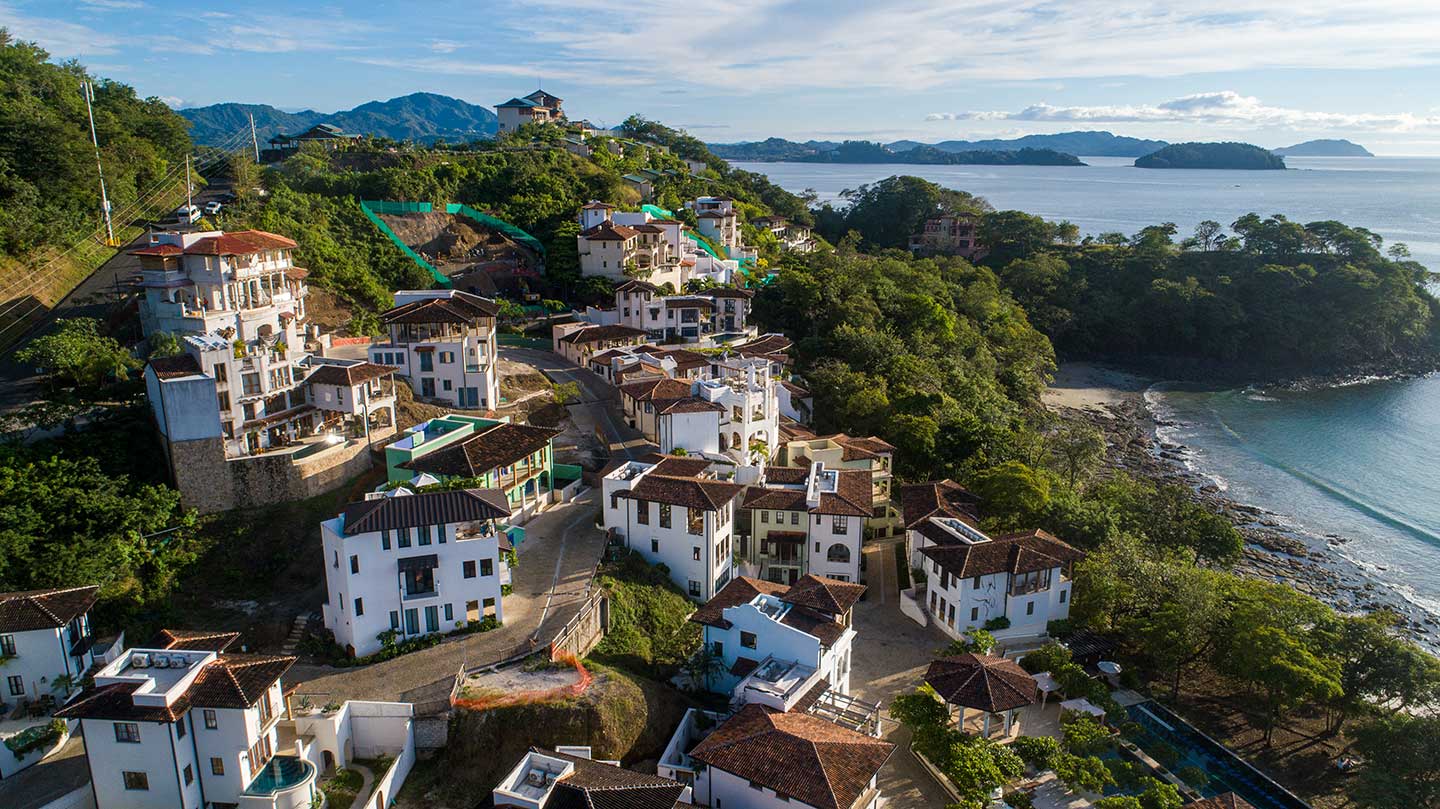
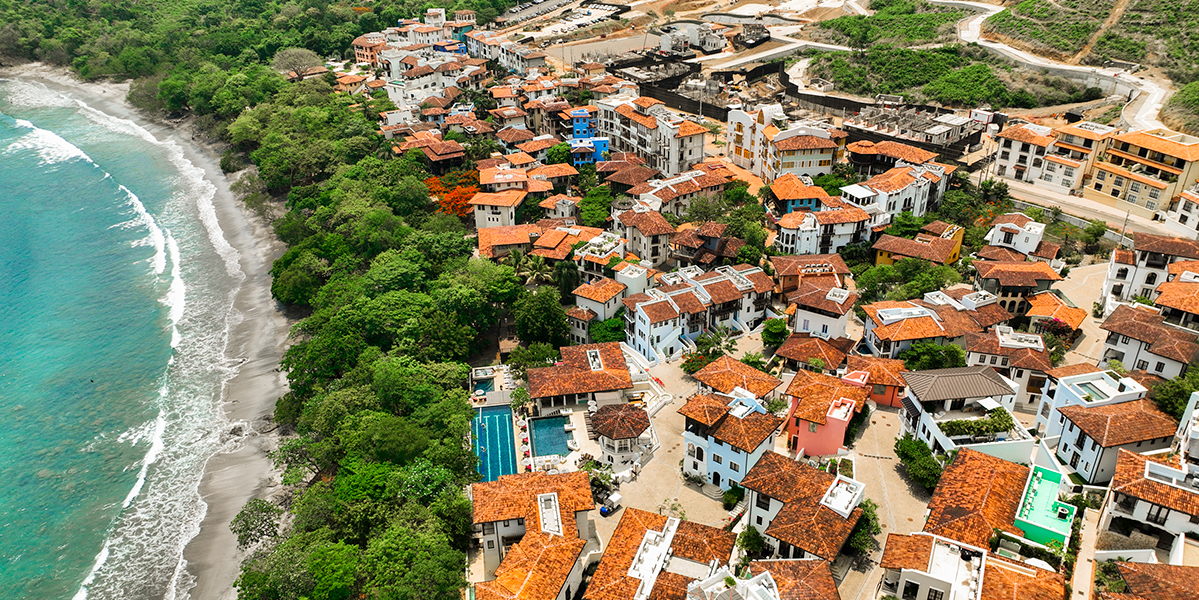
Instead of conventional streets filled with vehicles, the town features narrow walkways, plazas, courtyards, and closely arranged buildings. Its architecture draws inspiration from traditional Mediterranean and other coastal towns.
Balconies, stone walkways, and outdoor gathering spaces contribute to its appearance.
However, Las Catalinas is a modern development rather than a historic village. Its design intentionally combines residential accommodation, restaurants, public spaces, and nearby nature.
For visitors, this creates a compact environment where many daily activities are accessible on foot.
The town also has a different atmosphere from larger destinations such as Tamarindo. Its smaller commercial center and residential layout may appeal to travelers seeking a quieter coastal stay.
Nevertheless, Las Catalinas is not completely flat. Some streets involve hills and stairs, so accommodation location matters.
Is Las Catalinas Car-Free?
The central streets of Las Catalinas are designed primarily for pedestrians.
Visitors generally leave vehicles in designated parking or access areas rather than driving through the town’s main walkways.
This makes walking an important part of the experience. Restaurants, plazas, and Playa Danta are accessible on foot from many accommodations.
However, pedestrian-oriented design does not mean every property is equally easy to reach.
Some residences sit on higher ground, while others require stairs or uphill walking.
Therefore, travelers with strollers, heavy luggage, or mobility limitations should confirm accessibility before booking.
Overnight guests should also ask about parking, check-in procedures, and luggage assistance.
Although a car is unnecessary for many activities within town, transportation is still useful for exploring other parts of Guanacaste.
Playa Danta: The Main Beach at Las Catalinas
Playa Danta is the beach directly beside Las Catalinas.
The shoreline sits within a bay surrounded by coastal hills and vegetation. Its relatively compact setting differs from the longer beaches found in Tamarindo and other Guanacaste destinations.
Visitors can relax on the sand, walk along the shore, or enjoy the water when conditions permit.
Because the beach is close to the pedestrian town, many visitors can reach it without driving.
This is particularly convenient for travelers staying nearby.
Can You Swim at Playa Danta?
Swimming is possible when ocean conditions are suitable.
However, the bay is not guaranteed to remain calm throughout the day. Wind, tides, currents, and waves can change conditions.
Therefore, check the water before entering and follow any local safety guidance.
Families should supervise children closely, even when the sea appears relatively sheltered.
Playa Danta is a public beach, although nearby private facilities may have separate access rules.
Playa Dantita: A Smaller Beach Nearby
Playa Dantita is another coastal attraction near Las Catalinas.
Smaller than Playa Danta, it sits within a more enclosed setting surrounded by vegetation and rocky coastal terrain.
Visitors generally reach it on foot from the Playa Danta area.
However, the recommended access route can depend on current conditions. Tides, rainfall, and terrain may affect the walk.
Before visiting, ask locally about the safest available route.
Playa Dantita can be an attractive option for travelers interested in exploring another beach without driving far.
Nevertheless, swimming and snorkeling depend on sea conditions.
Do not assume the water will always be calm or visibility will always be clear.
Best Things to Do in Las Catalinas
Many of the most popular things to do in Las Catalinas involve the surrounding coastline and forest.
Visitors can hike, mountain bike, paddle, explore the beaches, or simply walk through town.
However, some activities require equipment, trail access arrangements, or advance reservations.
Hiking in Las Catalinas
The hills surrounding Las Catalinas contain designated hiking and trail-running routes.
These paths pass through tropical dry forest and coastal slopes. Some also lead to viewpoints overlooking the Pacific.
The official destination website identifies five designated hiking trails, separate from the mountain biking network.
However, difficulty varies between routes.
Some involve steep sections, exposed terrain, or uneven ground.
Before hiking, review the current trail map and confirm access requirements.
Las Catalinas has published Danta Pass rules for its trail system. Therefore, visitors should check current pass arrangements and any closures before entering.
During the dry season, heat can make exposed trails demanding. Carry drinking water, wear suitable shoes, and plan around the temperature.
Meanwhile, rain can create slippery conditions during the green season.
Choose a route that matches your fitness level and allow enough time to return before dark.
Mountain Biking in Las Catalinas
Mountain biking is one of Las Catalinas’ main outdoor attractions.
The surrounding hills contain purpose-built singletrack routes with climbs, descents, and changing coastal scenery.
The official Las Catalinas mountain biking page describes more than 22 kilometers of singletrack, although other destination materials use different trail totals.
For trip planning, the current trail map is more useful than relying on a single distance figure.
Experienced riders can explore more demanding terrain. However, beginners should select routes carefully.
Pura Vida Ride is identified by Las Catalinas as a local provider of bicycles, guiding, tours, and repairs.
Before arriving, confirm current rentals, trail access rules, and available services.
Riders should also consider heat, hydration, and trail conditions.
Kayaking and Paddleboarding
Playa Danta provides opportunities for kayaking and stand-up paddleboarding when sea conditions permit.
These activities allow visitors to explore the coastline from the water.
However, wind and waves can make paddling more difficult, especially for beginners.
Check equipment availability and ask local providers about suitable conditions.
Families should also confirm age requirements, safety equipment, and swimming ability.
If the sea is rough, choose another activity rather than assuming the bay will remain sheltered.
Explore Las Catalinas on Foot
Walking through the town is an activity in itself.
The narrow streets connect plazas, restaurants, shops, and residential areas.
Visitors can explore the architecture, stop for a meal, and continue toward Playa Danta.
Unlike hiking in the surrounding hills, exploring the central town does not generally require a trail pass.
However, some streets include stairs and slopes.
Comfortable footwear is useful, particularly during hot weather.
Where to Stay in Las Catalinas
Las Catalinas offers accommodation ranging from smaller residences to spacious vacation villas and hotel-style stays.
The best choice depends on your budget, group size, and preferred location.
Staying within the pedestrian town can make restaurants and public spaces convenient to reach.
However, not every property offers the same accessibility or amenities.
Vacation Rentals and Luxury Villas
Vacation rentals include apartments, townhomes, and larger residences.
Smaller properties may suit couples or families, while multibedroom villas can accommodate groups traveling together.
Depending on the property, amenities may include kitchens, terraces, private pools, or ocean views.
However, these features are not universal.
Before booking, confirm the number of bedrooms, pool arrangements, and exact location.
Also review stairs, parking, luggage handling, and walking distance to Playa Danta.
For families with strollers or travelers with limited mobility, these details may matter more than the view.
Boutique Hotels in Las Catalinas
Las Catalinas also offers hotel-style accommodation for visitors who prefer conventional hospitality services.
Santarena Hotel is one option within the town.
However, room features, services, and availability should be checked directly before booking.
Casa Chameleon at Las Catalinas offers a different experience from staying in the pedestrian center.
This hillside boutique hotel features private villas with plunge pools and coastal views.
Its published reservation policy describes the property as adults-only, with overnight guests aged 16 or older.
Because policies may change, families should confirm current age restrictions before reserving.
Staying in Las Catalinas vs Nearby Towns
You do not need to stay overnight to experience Las Catalinas.
Visitors based in Playa Flamingo or Playa Potrero can visit for the day.
However, staying overnight provides more time for hiking, mountain biking, and enjoying the town without rushing.
Travelers who prefer a less planned beach-town environment may find nearby communities more suitable.
Restaurants and Dining in Las Catalinas
Las Catalinas has restaurants and cafés within its pedestrian center.
This makes dining convenient for guests staying nearby.
For example, Celeste is a beachfront restaurant located near Santarena Hotel and Playa Danta.
However, restaurant availability, menus, and opening hours can change.
Therefore, check current details before planning a meal around a particular establishment.
Compared with Tamarindo, Las Catalinas has a smaller dining scene.
Visitors who enjoy trying a different restaurant every evening may prefer a larger destination or arrange occasional trips outside town.
Nearby Playa Potrero and Playa Flamingo provide additional options.
If you’re staying in a vacation rental, also consider grocery access and kitchen facilities.
Las Catalinas is generally better suited to relaxed evenings than extensive nightlife.
How to Get to Las Catalinas, Costa Rica
Guanacaste Airport (LIR), near Liberia, is the most convenient international airport for most travelers heading directly to Las Catalinas.
The drive generally takes around 1 to 1.5 hours, although actual travel time depends on traffic, weather, and route selection.
The main transportation options are rental cars, private transfers, and authorized taxis.
Shared shuttle arrangements may also be possible, but direct service should be confirmed before booking.
Public transportation is less straightforward and may involve connections.
Renting a Car
A rental car provides flexibility for exploring Guanacaste.
It can be useful if you plan to visit Tamarindo, Playa Flamingo, Playa Potrero, or other destinations.
However, you may not use it frequently while staying in the pedestrian center.
If driving from LIR, choose your route carefully. The paved approach through Belén is generally more suitable for conventional vehicles than the alternative Monkey Trail.
Private Airport Transfers
A private transfer can simplify arrival, especially for families and travelers unfamiliar with local roads.
However, confirm the pickup location, luggage arrangements, child seats, and final drop-off point.
Because Las Catalinas has pedestrian streets, vehicles may not reach every accommodation entrance.
Getting Around Without a Car
Once in Las Catalinas, walking is the main way to explore the town.
However, excursions to neighboring communities require transportation.
Taxis and private transfers may be arranged, although availability varies.
Therefore, confirm return transportation when planning outings.
Parking in Las Catalinas
Parking is available in designated areas rather than throughout the pedestrian streets.
However, rates and arrangements may change.
Overnight guests should ask whether parking is included and how luggage reaches the accommodation.
Day visitors should check current parking information before arriving.
Best Time to Visit Las Catalinas
Guanacaste generally has two main seasonal patterns: a drier period and a wetter period.
Both offer opportunities to enjoy Las Catalinas, although weather affects outdoor activities.
Dry Season: December to April
The dry season generally runs from December through April.
Rainfall is usually less frequent, making beach visits and trail activities easier to plan.
However, temperatures can be high, particularly on exposed hiking routes.
The season also includes popular holiday periods, when accommodation demand may increase.
Even during dry weather, wind and changing sea conditions can affect swimming and paddling.
Green Season: May to November
The wetter season generally extends from May through November.
During these months, the surrounding hills become greener.
However, rain can make trails muddy or slippery. Heavy rainfall may also cause temporary closures.
For this reason, check conditions before hiking or mountain biking.
Morning activities may be easier to plan on days when afternoon showers are expected.
Neither season guarantees calm seas or ideal outdoor conditions every day.
How Many Days Should You Spend in Las Catalinas?
The ideal length of stay depends on whether you’re visiting for sightseeing or planning an activity-focused vacation.
Half-Day Visit
A half-day allows time to explore the pedestrian streets, visit Playa Danta, and enjoy a meal.
This can work well for travelers staying in Playa Flamingo or Playa Potrero.
However, it leaves limited time for longer hikes or mountain biking.
Two or Three Nights
Two or three nights provide a more relaxed introduction.
You can explore the town, spend time at Playa Danta, visit Playa Dantita, and choose a trail activity.
This is a practical option for first-time visitors who want to experience the destination without committing an entire vacation.
Longer Stays
Longer visits may appeal to families, outdoor enthusiasts, and travelers staying in vacation rentals.
However, visitors who want frequent excursions should consider transportation.
Las Catalinas is convenient for nearby activities, but exploring the wider region generally requires a vehicle or arranged transfers.
Is Las Catalinas Good for Families?
Las Catalinas can work well for families who enjoy walking, beaches, and outdoor recreation.
Its pedestrian streets allow many guests to move between accommodation, restaurants, and public spaces without driving.
Vacation rentals may also provide kitchens and additional bedrooms.
However, families should consider the town’s hillside layout.
Some streets and accommodations involve stairs, making certain locations less convenient for strollers.
Beach safety is another consideration.
Although Playa Danta and Playa Dantita offer opportunities to enjoy the water, conditions change. Parents should supervise children and assess the sea before swimming.
Older children may enjoy hiking or mountain biking when routes match their abilities.
Ultimately, the best accommodation and activities depend on the family’s ages, interests, and mobility needs.
Las Catalinas vs Other Guanacaste Beach Towns
Las Catalinas provides a different vacation experience from nearby coastal destinations.
Las Catalinas vs Playa Flamingo
Playa Flamingo is known for its beach, coastal accommodation, and access to Marina Flamingo.
It may appeal to travelers interested in boating, sportfishing, and marine excursions.
Las Catalinas, meanwhile, emphasizes pedestrian streets and nearby recreational trails.
Las Catalinas vs Playa Potrero
Playa Potrero has a more conventional coastal layout, with accommodations and restaurants spread along local roads.
It may suit travelers seeking a less planned environment.
Las Catalinas offers a more compact pedestrian setting, although accommodation and dining choices are more concentrated.
Las Catalinas vs Playa Conchal
Playa Conchal is known for its shell-fragment shoreline and nearby resort accommodations.
It may appeal to travelers prioritizing beach time and resort facilities.
Las Catalinas offers a different combination of coastal access, architecture, and outdoor trails.
Las Catalinas vs Tamarindo
Tamarindo has a larger restaurant and nightlife scene, along with established surfing opportunities.
Las Catalinas generally offers a quieter, pedestrian-oriented environment.
Therefore, Tamarindo may be preferable for surfing and social activities, while Las Catalinas may suit travelers interested in coastal walks and outdoor recreation.
Is Las Catalinas, Costa Rica, Worth Visiting?
Las Catalinas is worth considering if you enjoy walkable coastal environments, beach activities, and outdoor recreation.
Its pedestrian streets and architecture create a distinctive setting, while Playa Danta and Playa Dantita provide access to the Pacific coast.
The surrounding trails also make the destination appealing to hikers and mountain bikers.
However, Las Catalinas may not suit everyone.
Travelers seeking extensive nightlife, inexpensive accommodation, or a traditional Costa Rican village atmosphere may prefer another destination.
Likewise, visitors who have difficulty navigating stairs or hills should review accessibility carefully.
If you’re unsure whether to stay overnight, a day trip from Playa Flamingo or Playa Potrero can provide a useful introduction.
Frequently Asked Questions About Las Catalinas
Where is Las Catalinas, Costa Rica?
Las Catalinas is located in Guanacaste on Costa Rica’s North Pacific coast, beside Playa Danta and north of Playa Potrero and Playa Flamingo.
Is Las Catalinas worth visiting?
Yes, particularly for travelers interested in pedestrian streets, coastal scenery, hiking, mountain biking, and a quieter vacation atmosphere.
Is Las Catalinas a car-free town?
The central town is designed primarily for pedestrians. Vehicles use designated parking and access areas.
Can you swim at Playa Danta?
Swimming is possible when conditions permit. However, waves, tides, currents, and wind can affect safety.
How do you get to Playa Dantita?
Visitors generally walk from the Playa Danta area. Check the recommended access route and current conditions before visiting.
What are the best things to do in Las Catalinas?
Popular activities include hiking, mountain biking, exploring pedestrian streets, visiting Playa Danta, and paddling when sea conditions allow.
Is Las Catalinas good for families?
It can be. However, families should consider stairs, accommodation accessibility, pool safety, and changing ocean conditions.
Do you need a rental car in Las Catalinas?
Not necessarily. Many activities within town are accessible on foot. A car is useful for exploring other Guanacaste destinations.
How far is Las Catalinas from Liberia Airport?
The drive generally takes around 1 to 1.5 hours. Actual distance and travel time depend on the selected route and road conditions.
Are there hotels and vacation rentals in Las Catalinas?
Yes. Accommodation includes hotel-style stays, apartments, townhomes, and villas. Amenities and services vary by property.
Is Las Catalinas expensive?
Las Catalinas has a strong selection of upscale accommodation, but costs depend on the property, season, and travel dates. Compare total costs before booking.
How many days should you spend in Las Catalinas?
A half-day is enough for a short introduction. Two or three nights allow more time for beaches and trails, while longer stays suit outdoor enthusiasts and families.
Final Verdict: Visiting Las Catalinas Costa Rica
Las Catalinas Costa Rica offers a different experience from many other Guanacaste beach destinations.
Its pedestrian-oriented streets, coastal architecture, and access to Playa Danta create a compact environment for exploring on foot.
Meanwhile, nearby hiking and mountain biking trails provide opportunities for more active vacations.
However, visitors should consider the town’s planned design, hillside terrain, accommodation options, and relatively small nightlife scene.
For travelers who enjoy walking, outdoor recreation, and a quieter coastal setting, Las Catalinas can be an appealing place to stay.
If you’re exploring several Guanacaste destinations, it also works as a day trip from nearby beach communities.
The best choice depends on how much time you want to spend at the beach, on the trails, and exploring the surrounding region.
Related Posts
Las Catalinas vs Tamarindo
Las Catalinas vs Tamarindo is a useful comparison for travelers…
Las Catalinas vs Playa Flamingo
Choosing between Las Catalinas vs Playa Flamingo can be surprisingly difficult. These…