If you’re considering surfing in Sámara Costa Rica for beginners, Playa Sámara offers established surf schools, a broad sandy beach, and convenient access to accommodation and restaurants. First-time surfers can take group or private lessons, practice on beginner equipment, and learn basic ocean safety. However, waves and currents change throughout the day, so choosing an experienced instructor matters more than finding a beach described as calm.
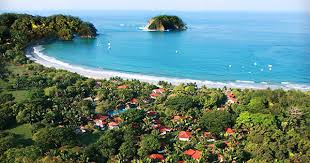
Sámara sits in Nicoya canton, Guanacaste, on Costa Rica’s Pacific coast. Its curved bay and offshore reef formations influence incoming waves, creating conditions that can suit beginners. Nevertheless, the bay is not completely sheltered, and not every section of the beach is appropriate for learning.
This guide explains how lessons work, what they cost, how to choose a school, and what to expect during your first sessions.
Why Learn to Surf in Sámara?
Playa Sámara has several advantages for travelers who have never surfed.
First, local surf schools offer instruction specifically for beginners. Therefore, visitors can learn basic techniques without needing to bring their own equipment.
The beach also has sandy sections where instructors can introduce students to smaller breaking waves when conditions permit.
In addition, Sámara has restaurants, cafés, shops, and accommodation near parts of the shoreline. This makes it possible to combine lessons with a regular beach vacation.
However, the beach’s geography deserves some explanation.
Sámara Bay has offshore reef formations and Isla Chora lies offshore. Together with the shape of the bay, these features influence how swell reaches the shoreline.
They do not eliminate waves, currents, or underwater hazards.
For that reason, a qualified instructor should assess conditions and select an appropriate practice area.
What to Expect During Your First Surf Lesson
Most beginner lessons combine instruction on the sand with supervised practice in the water.
Although teaching methods vary, the process generally follows three stages.
Before Entering the Water
Your instructor should begin by asking about your swimming ability, previous experience, and any relevant physical limitations.
Next, you will receive a surfboard suited to your size and the conditions.
The instructor may demonstrate how to lie on the board, paddle, position your feet, and stand up.
This standing movement is commonly called the pop-up.
A safety briefing should also cover currents, waves, board handling, and what to do after falling.
Practicing in the Water
Once the instructor considers conditions suitable, you will move into a selected practice area.
Beginners often start by catching broken waves, also called whitewater, before progressing to unbroken waves.
Your instructor may help position the board, explain when to paddle, and provide feedback on balance.
However, water depth varies with the tide and location. Therefore, lessons should not be assumed to take place entirely in shallow water.
After Your First Session
Some students stand up during their first lesson. Others need more time to develop balance and timing.
Neither outcome determines whether someone can eventually learn to surf.
Afterward, ask your instructor which skills need improvement and whether another supervised lesson would be useful.
How to Choose a Surf School in Sámara
Choosing the right instructor is one of the most important decisions when planning surfing in Sámara Costa Rica for beginners.
Several businesses advertise surf instruction in the area, but their qualifications, lesson formats, and policies differ.
Before booking, ask about instructor training, first-aid knowledge, water-rescue experience, and the number of students assigned to each instructor.
The International Surfing Association offers recognized surf-instructor education and certification programs.
However, do not assume every local instructor holds ISA certification.
Also confirm whether the school provides equipment, insurance, a safety briefing, and a clear policy for unsuitable conditions.
Recent reviews can help identify recurring customer experiences. Nevertheless, safety practices should carry more weight than ratings alone.
Questions to Ask Before Booking
- How many students will share one instructor?
- Does the instructor have first-aid and surf-rescue training?
- Are boards, leashes, and rash guards included?
- Where will the lesson take place?
- What happens if waves or weather are unsuitable?
- Are there age or swimming requirements?
- Does the price include taxes?
These questions help you compare schools beyond the advertised lesson price.
Group vs Private Surf Lessons
Both formats can work for beginners.
Group Lessons
Group lessons usually cost less per person and provide a social learning environment.
However, instructor attention is shared, and group sizes vary.
Ask how many students will participate and whether the instructor can accommodate different experience levels.
Private Lessons
Private lessons provide more individual attention.
They may suit nervous beginners, travelers who prefer personalized feedback, or students with specific learning needs.
However, private instruction generally costs more.
Neither format guarantees faster progress. Instead, choose according to your comfort, swimming ability, and budget.
How Much Do Surf Lessons Cost in Sámara?
Lesson prices depend on the school, instructor ratio, duration, and included equipment.
For example, published rates from local operators in November 2026 provide the following reference points.
| Lesson type | Published example |
|---|---|
| Group lesson | Approximately $55–$60 per person |
| Semi-private lesson | Approximately $70 per person |
| Private lesson | Approximately $80 per person |
| Surfboard rental | Varies by board and rental period |
These figures come from the published offerings of Tico’s Surf School and Choco’s Surf School. They are examples, not fixed prices across Sámara.
Some businesses advertise prices before Costa Rica’s 13% value-added tax. Others include different equipment or practice arrangements.
Therefore, request the final price before paying.
Also compare lesson duration, instructor ratios, cancellation terms, and whether additional board practice is included.
Multi-day packages may offer savings, but only if you plan to attend every session.
What Surfboard Is Best for Beginners?
Most beginners start on a larger, stable surfboard rather than a short performance board.
Soft-top boards are commonly used for lessons because they offer buoyancy and have a softer deck surface.
However, they can still cause injuries during collisions.
Board length and volume should match the student’s weight, height, experience, and current wave conditions.
For example, a larger adult may need a different board from a child.
Your instructor should help choose suitable equipment.
A properly fitted leash is also important, although it does not replace safe board handling.
Wear secure swimwear and consider a rash guard to reduce irritation from the board.
Surf Safety in Sámara
Although Sámara is known for beginner instruction, ocean safety remains essential.
Waves can become stronger when swell increases. In addition, tides and wind can change the location and behavior of breaking waves.
Rip currents may also occur, even along sandy beaches.
Certain sections can contain rocks, reef formations, or other underwater hazards.
Therefore, beginners should not assume the entire bay is suitable for practice.
Essential Safety Practices
Stay with your instructor and use the practice area they recommend.
Keep a safe distance from other surfers and avoid releasing your board where it could strike someone.
If you fall, protect your head and avoid diving headfirst into shallow water.
Learn how to recognize rip currents and what to do if caught in one. The International Life Saving Federation provides resources on water safety.
Never assume lifeguards are present.
If conditions become unsuitable, postpone the lesson rather than entering the water anyway.
Can Children Learn to Surf in Sámara?
Children can take surf lessons in Sámara when schools consider their age, swimming ability, and the conditions appropriate.
However, minimum ages and supervision requirements differ between operators.
Some schools offer dedicated children’s lessons or private instruction.
Before booking, ask about child-sized equipment, instructor ratios, and whether a parent must remain nearby.
You should also discuss your child’s water confidence with the instructor.
Even when waves appear small, children need continuous supervision around the ocean.
Can Older Adults Learn to Surf?
Learning to surf is not limited to younger travelers.
Adults beginning later in life may enjoy lessons when their fitness, swimming ability, balance, and mobility are suitable.
However, surfing requires repeated movements, paddling, and physical effort.
A private lesson may allow more individual attention and opportunities for rest.
Instructors can also help select a stable board and an appropriate practice area.
Travelers with significant medical conditions or mobility concerns should discuss participation with a qualified healthcare professional.
Age alone should not determine whether someone can try surfing.
Best Time for Beginner Surfing in Sámara
Surf lessons are offered during different parts of the year, but the best conditions depend on daily weather and ocean patterns.
Dry Season: December to March
Guanacaste generally experiences drier weather from December through March, while April often marks a transition toward the rainy season.
This period attracts visitors who prefer lower rainfall.
However, strong seasonal winds can affect the ocean surface and surfing conditions.
Therefore, dry weather does not automatically mean better beginner waves.
Holiday demand may also affect lesson availability.
Green Season: May to November
Rainfall generally increases between May and November.
During this period, changing swell and weather can influence lesson schedules.
However, rainy-season travel does not mean beginners cannot surf.
Some days offer suitable conditions, while others require instructors to adjust the location or postpone a session.
For seasonal weather information, consult Costa Rica’s Instituto Meteorológico Nacional.
Is Morning the Best Time?
Morning sessions can sometimes offer favorable wind conditions.
However, tide levels and swell direction may make another time more suitable.
For that reason, ask your surf school to recommend the lesson time rather than automatically booking the earliest available session.
How Many Surf Lessons Do Beginners Need?
There is no fixed number of lessons required to learn to surf.
During the first session, most beginners focus on board positioning, paddling, balance, and basic safety.
Additional lessons allow students to practice those skills and receive feedback.
However, standing up on a board is only one part of surfing.
Independent surfers must also understand currents, wave selection, other surfers, and changing conditions.
Therefore, beginners should continue supervised instruction until they can make appropriate decisions in the water.
A multi-day course may be useful, but progress varies from person to person.
Where to Stay in Sámara for Surf Lessons
Accommodation location affects how easily you can reach your lessons.
Central Sámara
Properties near the main town area may offer convenient access to restaurants, shops, and sections of the beach.
However, not every hotel is within walking distance of every surf school.
Before booking, confirm your lesson’s meeting point and check the walking route.
Outside the Town Center
Hotels and vacation rentals farther from central Sámara may provide more space or quieter surroundings.
However, reaching lessons and restaurants could require transportation.
Nearby Playa Carrillo
Playa Carrillo is a short drive south of Sámara.
It can be a good option for travelers who prefer a quieter beach setting while taking lessons in Sámara.
However, transportation should be arranged if you do not have a rental car.
What to Bring to Your First Surf Lesson
Most schools provide the surfboard and leash, although equipment policies vary.
Bring secure swimwear, a rash guard if needed, water-resistant sunscreen, drinking water, and a towel.
A change of clothes and a waterproof bag can also be useful.
Apply sun protection before your lesson, and follow product instructions for reapplication.
However, sunscreen alone does not prevent heat-related problems. Drink water, take breaks, and use protective clothing when appropriate.
Avoid bringing valuables onto the beach unless you have a secure place to store them.
Things to Do After Surfing in Sámara
Surf lessons can fit easily into a longer stay.
After your session, explore Sámara’s restaurants and cafés or spend time walking along the beach.
Another option is visiting nearby Playa Carrillo for a change of scenery.
Travelers interested in water activities can also consider guided kayaking or snorkeling excursions near Isla Chora.
However, these activities depend on tides, weather, and ocean conditions.
Wildlife-focused tours may also be available in the surrounding region. Choose responsible operators and never feed or disturb animals.
Sámara vs Nosara for Beginner Surfing
Sámara and Nosara both attract visitors interested in surfing, but their beach environments differ.
Sámara has an established beginner-lesson scene within its bay.
Meanwhile, Playa Guiones in Nosara is a more exposed surfing beach with an established community of surf schools and instructors.
However, neither destination guarantees suitable beginner conditions every day.
Nosara is not exclusively for advanced surfers, just as Sámara is not suitable for every beginner under all conditions.
Your choice should depend on instruction quality, accommodation location, daily surf conditions, and other activities you want to enjoy.
Frequently Asked Questions
Is Sámara Good for Beginner Surfers?
Yes. Sámara has established surf schools and beach sections that can suit beginners when conditions permit. However, professional instruction remains important.
Is Surfing in Sámara Safe for Beginners?
Surfing involves risks, including currents, collisions, and changing waves. Qualified instruction and suitable conditions help reduce those risks but cannot eliminate them.
How Much Do Surf Lessons Cost in Sámara?
Published examples from local schools show group lessons around $55–$60 and private lessons around $80 per person. Confirm current rates, taxes, and inclusions before booking.
Can You Learn to Surf Without Experience?
Yes. Beginner lessons are designed for people with little or no surfing experience. However, schools should assess swimming ability and water confidence before instruction.
What Is the Best Month to Learn to Surf in Sámara?
No single month guarantees suitable waves. Lesson conditions depend on tides, swell, wind, and weather.
Can Children Take Surf Lessons?
Yes, when their age, swimming ability, and ocean conditions meet the school’s requirements. Ask about supervision and child-specific equipment.
Do You Need to Know How to Swim?
You should have adequate swimming ability and water confidence for the conditions. Tell the instructor about any limitations before booking, and never assume surfing equipment replaces swimming skills.
How Many Lessons Does It Take to Learn to Surf?
Progress varies. Some beginners stand during their first lesson, while others need more practice. Safe independent surfing requires more than standing on a board.
Final Thoughts
Surfing in Sámara Costa Rica for beginners can be a practical introduction to the sport, especially for travelers who want professional instruction during a beach vacation.
The area offers established surf schools, beginner equipment, and accommodation near the coastline.
However, successful lessons depend on choosing a suitable instructor, understanding ocean conditions, and setting realistic expectations.
Before booking, compare lesson formats, ask about safety training, and confirm what the price includes.
With appropriate instruction and patience, beginners can develop fundamental surfing skills while enjoying their time on Costa Rica’s Nicoya Peninsula.
Related Posts
Sámara vs Nosara: Which Beach Town Should You Choose?
Sámara vs Nosara is a useful comparison for travelers choosing where…

5 Days in Sámara: A Costa Rica Beach Itinerary
Planning 5 days in Sámara gives you time to explore this Guanacaste…
Sámara Costa Rica: Complete Travel Guide
Sámara Costa Rica is a beach town on the Nicoya Peninsula…