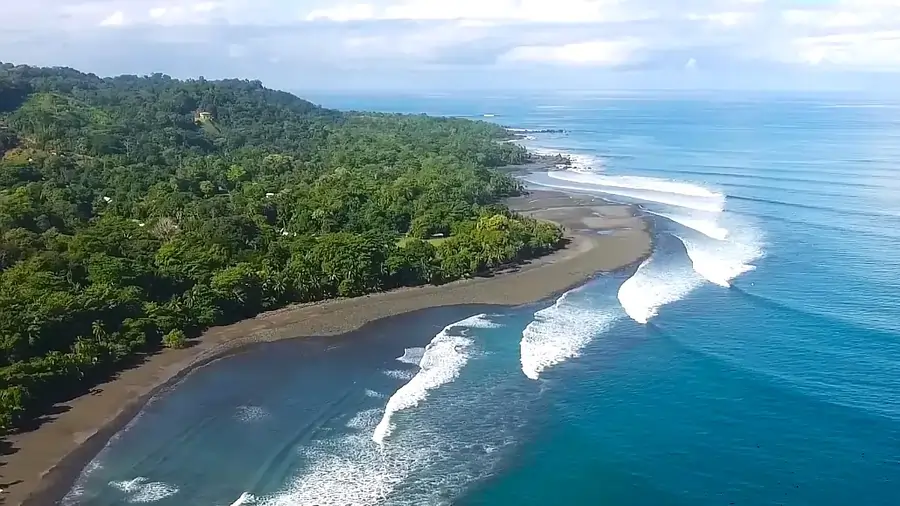
Surfing the famous Pavones left break is a dream for wave riders from around the world. Hidden near the southern edge of Costa Rica, Pavones offers a rare combination of long rides, warm water, tropical scenery, and a remote surf-town atmosphere.
When a strong south or southwest swell reaches the Golfo Dulce, the wave can connect across several sections. On exceptional days, skilled surfers may remain on the same wave for hundreds of meters. However, Pavones does not break perfectly every day. Its legendary reputation depends on the right swell direction, wind, tide, and local conditions.
The journey also requires commitment. Pavones is far from Costa Rica’s busiest beach destinations and major international airports. Still, surfers who make the trip often discover much more than a famous wave. The town offers a slower lifestyle, dense rainforest, uncrowded beaches, wildlife, and a close relationship with the ocean.
Why Is the Pavones Left Break Famous?
Pavones is known as one of the longest left-hand point breaks in the world. The wave wraps around a rocky point before peeling along the shoreline in a series of connected sections.
Rather than offering one short ride, Pavones can produce long walls with room for turns, trimming, and changes in speed. Some sections move quickly, while others become softer and more forgiving.
The quality and length of the ride depend on the swell. A modest swell may create shorter waves that break only across part of the point. In contrast, a powerful south or southwest swell can connect more of the lineup.
This possibility is what gives Pavones its almost mythical status. Surfers travel long distances because one excellent session can become a defining memory.
However, it is wise to arrive with realistic expectations. Pavones sits inside the sheltered Golfo Dulce. Therefore, it needs enough swell energy and the right direction to reach its full potential. Some days may be small or nearly flat, even during the main surf season.
Where Is Pavones?
Pavones is located in Puntarenas Province on Costa Rica’s southern Pacific coast. It lies along the eastern side of the Golfo Dulce, not far from the border with Panama.
The town feels very different from Tamarindo, Jacó, or Santa Teresa. Development remains limited, roads are quieter, and the surrounding landscape includes rainforest, rivers, farms, and long tropical beaches.
Golfito is the nearest larger town and serves as an important transportation point for the region. From Golfito, the final drive to Pavones follows rural roads through small communities and lush countryside.
Because of its remote location, visitors should plan transportation, accommodations, and surfboard rentals before arriving. Services are available, but options are more limited than in Costa Rica’s larger surf towns.
Understanding the Pavones Wave
Pavones is a left-hand point break. This means the wave generally breaks from a surfer’s right to left when viewed from the beach.
For a surfer riding the wave, the wall opens to the left. As a result, Pavones is especially popular with goofy-footed surfers, who ride with their right foot forward. Regular-footed surfers ride the wave backside.
The break contains several takeoff areas and changing sections. On larger swells, experienced surfers may begin farther outside. Meanwhile, shorter rides can sometimes be found farther along the inside.
Pavones is not one uniform wave. Instead, its personality changes according to swell size, direction, tide, wind, and the number of surfers in the water.
Some sections offer open faces for carving. Others become faster and require good positioning. When conditions align, the separate sections may connect into one exceptionally long ride.
Is Pavones Suitable for Beginner Surfers?
The main Pavones point is not usually the best place for complete beginners.
A smaller day can look inviting. However, rocks, crowds, long rides, currents, and experienced surfers moving quickly through the lineup create added challenges. Beginners may also struggle to understand where to sit or how to avoid crossing another surfer’s path.
Surfers should already know how to paddle confidently, catch unbroken waves, turn in both directions, and follow lineup etiquette before entering the main break.
Less-experienced visitors can still learn to surf in the Pavones area. Local instructors may choose gentler nearby sections or alternative beaches based on the day’s conditions.
Taking a lesson is a smart decision if you are unsure about your ability. A local instructor can assess the swell, select a safer area, and explain hazards that may not be obvious from shore.
Surfing Pavones for Intermediate Surfers
Intermediate surfers may find Pavones extremely rewarding on moderate days.
The long walls provide time to practice positioning, speed control, turns, and reading the next section. In addition, the warm water removes the need for a heavy wetsuit.
Still, intermediate surfers should avoid paddling into the most competitive takeoff zone before they understand the break. Watching from shore helps reveal where experienced surfers enter, where the rocks sit, and how the current affects the lineup.
Starting farther inside may provide shorter and less demanding waves. However, surfers must remain alert because riders from the outside can travel a considerable distance.
A wave that appears empty may already belong to someone approaching from far up the point. Therefore, looking carefully before paddling is essential.
Surfing Pavones for Advanced Surfers
Experienced surfers visit Pavones to chase its full potential.
When a significant swell reaches the point, waves can become faster, longer, and more powerful. Positioning becomes critical because missing the correct takeoff point may mean watching several excellent waves pass.
Advanced surfers often bring boards that combine speed with reliable control. The ideal choice depends on the forecast, personal style, and expected wave size.
Even experienced visitors should spend time observing the lineup before entering. Local surfers understand the point’s changing sections, rocks, currents, and preferred takeoff zones.
Respectful behavior matters. Waiting for your turn, avoiding aggressive paddling, and acknowledging local knowledge create a better experience for everyone.
The Best Time to Surf Pavones
The most reliable period for surfing Pavones generally corresponds with the Southern Hemisphere swell season.
From roughly April through October, storms in the South Pacific can send stronger south and southwest swells toward Costa Rica. These months overlap with the country’s rainy season.
Rain does not necessarily ruin a surf trip. In fact, many of Pavones’ best swells arrive during wetter months. Mornings can still offer clean conditions, while heavier showers often develop later in the day.
The dry season, from approximately December through April, usually brings less rain and easier road conditions. However, the waves may be smaller because south swells are less frequent.
November can serve as a transition month. Conditions vary, and rainfall can remain significant.
No month guarantees perfect Pavones. A flexible itinerary and careful forecast monitoring provide a better strategy than choosing dates based only on general seasonal patterns.
Swell, Wind, and Tide Conditions
Pavones usually responds best to swell energy arriving from the south or southwest. The wave needs enough energy to wrap into the Golfo Dulce and connect along the point.
Local wind also makes a major difference. Early mornings often provide smoother conditions before daytime breezes become stronger. Offshore or light winds help keep the wave face cleaner.
Tide preferences may change according to the swell and sand or rock conditions. Some surf forecasts favor a lower, rising tide. However, local advice remains valuable because the break can change.
Before paddling out, compare the forecast with what is actually happening in the water. Online predictions are useful, but they cannot always reflect every local factor. Pavones is known for being exceptional when the right swell arrives, yet inconsistent between major swell events.
What the Pavones Lineup Is Like
The lineup can feel relaxed when the waves are small. However, everything changes when a major swell appears on the forecast.
Surfers may travel from other parts of Costa Rica as soon as strong conditions become likely. International visitors also plan trips around promising swell windows. Consequently, the point can become crowded on its best days.
The long wave spreads surfers across several areas, but the preferred takeoff zones remain competitive. Experienced riders often know exactly where to sit and which sets will connect.
Visitors should avoid paddling directly to the deepest position without first understanding the rotation. Instead, observe how the lineup works and choose waves that match your ability.
Good etiquette includes waiting your turn, not dropping in, controlling your board, and avoiding paddling into the path of an approaching surfer.
Surf Etiquette at Pavones
Surf etiquette is especially important at a wave where rides can cover such a long distance.
The surfer closest to the breaking part of the wave usually has priority. If that person catches the wave, surfers farther down the line should not take off in front of them.
Always look toward the main point before paddling for an inside wave. A surfer may already be riding from much farther away.
When paddling back into the lineup, move toward the whitewater whenever it is safe. Do not paddle directly through the open face in front of a rider.
Finally, treat local surfers with respect. Pavones is not simply an attraction. It is part of a living community whose residents surf, work, raise families, and depend on the surrounding environment.
Hazards to Consider Before Surfing
Pavones has rocks around the entry, shoreline, and breaking area. Water movement can also make entering and leaving more difficult than it first appears.
Watch other surfers before choosing an entry point. Conditions change with the tide, so the easiest place to enter may not be the safest place to exit later.
Long rides also create an unusual physical challenge. After finishing a wave, surfers may face a lengthy paddle back to the takeoff area. Several long rides can become exhausting, even for strong paddlers.
Sun exposure is another concern. Tropical sunlight is intense, and long sessions increase the risk of sunburn and dehydration. Reef-safe sunscreen, protective surf clothing, and proper hydration are important.
During the rainy season, rivers may carry debris and affect water quality after heavy storms. Surfers should use additional caution after intense rainfall, especially near river mouths.
What Surfboard Should You Bring?
The best board for Pavones depends on your ability and the forecast.
A performance shortboard works well for advanced surfers who want speed and responsive turns. However, a board with slightly more volume can help during long paddles and softer sections.
Mid-length boards can perform well on smaller days. They offer easier paddling while maintaining enough control for longer walls.
Longboards may be enjoyable when conditions are gentle and the lineup is manageable. Still, carrying a large board through crowded or rocky areas requires care.
Bringing at least two board options is useful if your trip centers on surfing. Conditions can change quickly, and the board that works on a small morning may not suit a larger swell two days later.
A dependable leash is essential. You should also pack spare fins, fin keys, wax, repair materials, and an extra leash because replacement equipment may not always be available immediately.
Surfboard Rentals and Surf Lessons
Surfboard rentals are available in Pavones, although the selection may be smaller than in major surf destinations.
Reserve equipment ahead of time during popular travel periods or forecasted swells. This is especially important if you require a specific board size or style.
Local surf lessons can benefit beginners and intermediate surfers. Instructors understand where conditions are safest and which nearby beaches suit each ability level.
Even experienced surfers may benefit from a local guide. A guide can explain the lineup, suggest alternative breaks, and help visitors avoid wasting time when the main point is not working.
Nearby Surfing Around Pavones
The main point receives most of the attention, but it is not the only surf option in the region.
Punta Banco lies farther south and may offer additional waves depending on the swell. Other coastal sections can also become surfable under the right conditions.
These alternatives matter because Pavones does not always receive enough swell. Exploring nearby beaches can rescue a day that would otherwise remain flat.
However, some breaks are remote and have limited services. Road conditions may also change during the rainy season.
Ask local surf shops, instructors, or accommodation hosts before exploring unfamiliar areas. They can recommend appropriate locations without directing visitors toward sensitive or unsuitable breaks.
How to Get to Pavones
Reaching Pavones requires more planning than traveling to Costa Rica’s best-known surf towns.
Most international visitors arrive at Juan Santamaría International Airport near San José. From there, they can continue by rental car, private shuttle, public transportation, or domestic flight.
Driving from the San José area commonly requires most of a day. The route passes through Costa Rica’s Southern Pacific region before continuing toward Golfito and Pavones.
A domestic flight to Golfito can reduce road travel. However, travelers must still arrange transportation for the final section to Pavones.
Visitors arriving through Guanacaste Airport near Liberia face a much longer overland journey. Unless Pavones is part of a larger Pacific Coast itinerary, San José is generally the more practical international gateway.
During the rainy season, a 4×4 vehicle offers additional confidence on rural roads. Travelers should avoid driving after dark because visibility is limited and road hazards can be difficult to see.
Where to Stay for a Pavones Surf Trip
Pavones offers surf camps, cabinas, vacation rentals, small hotels, and jungle lodges.
Staying near the main point makes it easier to check conditions throughout the day. You can surf early, return for breakfast, and paddle out again if the wind remains favorable.
Properties farther from the point may offer more privacy, rainforest surroundings, or access to quieter beaches. However, they may require a vehicle.
Before booking, confirm the exact location. A property marketed as being in Pavones may still sit several kilometers from the main break.
Surfers should also ask about board storage, drying areas, breakfast times, transportation, and road access. Air conditioning is not essential for everyone, but fans and good ventilation make humid nights more comfortable.
Life Beyond the Famous Left
Although surfing is the main attraction, Pavones rewards travelers who leave time for other experiences.
The surrounding rainforest supports monkeys, scarlet macaws, toucans, and many other tropical species. Quiet roads and forest trails also create opportunities for birdwatching.
Nearby beaches are ideal for long walks, especially around sunset. Horseback riding, yoga, fishing, waterfalls, and nature excursions may also be available through local operators.
The town itself is simple and unhurried. Restaurants and small grocery stores serve residents and visitors, but Pavones does not offer the extensive dining or nightlife found in Tamarindo.
This slower rhythm is part of its appeal. Days tend to revolve around the swell, tides, meals, rain, and conversations with other surfers.
Rainy-Season Surf Trips to Pavones
The rainy season brings many of the swells surfers hope to find. It also requires more flexible planning.
Heavy showers can affect rural roads and increase travel times. Therefore, allow extra time when driving to or from Golfito, San José, or other destinations.
Waterproof bags protect phones, cameras, clothing, and documents. Quick-drying clothing is also more practical than heavy cotton.
Rain often arrives in bursts rather than continuing all day. Early surf sessions may offer calm conditions, followed by afternoon showers and cooler evenings.
Instead of avoiding the rainy season, prepare for it. The landscape becomes intensely green, waterfalls grow stronger, and the surf may be at its best.
How Many Days Should You Spend in Pavones?
A minimum of three or four nights provides a better chance of seeing the point under different conditions.
Surfers traveling specifically for the famous Pavones left break may prefer five to seven nights. A longer stay reduces the risk of arriving during a brief flat period.
Those with flexible schedules can monitor the swell before confirming the final part of their itinerary. However, last-minute accommodations may become limited when a major swell is approaching.
Non-surfing companions may also appreciate a slower visit if they enjoy nature, yoga, beaches, and quiet surroundings. Travelers seeking shopping, nightlife, or a large selection of organized activities may prefer a shorter stay.
Is Surfing the Famous Pavones Left Break Worth It?
For experienced surfers, Pavones can be one of the most memorable waves in Costa Rica.
Its appeal extends beyond its potential length. The warm water, rainforest backdrop, remote setting, and journey into the Southern Pacific region create a complete travel experience.
Still, Pavones should not be treated as a guaranteed wave machine. It needs the right swell, and its best conditions attract crowds.
Travelers who arrive expecting perfect waves every day may leave disappointed. Those who allow enough time, respect the community, and enjoy the destination beyond surfing are more likely to understand why Pavones inspires such loyalty.
The wave is the reason many people arrive. The surrounding landscape and slower way of life are often why they remember the trip.
Frequently Asked Questions About Surfing Pavones
Is Pavones really one of the longest left waves in the world?
Pavones is widely recognized as one of the world’s longest left-hand point breaks. However, its maximum length appears only when swell direction, size, wind, and tide align.
Can beginners surf at Pavones?
Complete beginners should not enter the main point without guidance. Local instructors can choose gentler nearby conditions for lessons.
What is the best month to surf Pavones?
There is no guaranteed best month. However, south and southwest swells are generally more frequent between April and October.
Do I need a wetsuit in Pavones?
Most surfers do not need a wetsuit because the water remains warm. A rash guard or lightweight surf shirt provides useful sun protection.
Does Pavones get crowded?
Yes. The lineup can become busy when a strong swell is forecast. On smaller days, it is often much quieter.
Do I need a 4×4 to reach Pavones?
A 4×4 is a sensible choice, especially during the rainy season. Road conditions can change after heavy rain.
How long should I stay in Pavones?
Three or four nights provide a basic introduction. A five- to seven-night stay gives dedicated surfers more time to wait for favorable conditions.
Final Thoughts on Surfing Pavones
Surfing the famous Pavones left break is not only about chasing an unusually long ride. It is also about traveling into a remote corner of Costa Rica where rainforest, community life, and surf culture remain closely connected.
The wave demands patience. It may be small when you arrive, powerful two days later, and crowded as soon as the forecast spreads. Yet when the sections connect, and the wall continues opening ahead, Pavones delivers the kind of ride surfers remember for years.
Come prepared, know your limits, and respect the lineup. Most importantly, leave enough time to appreciate the place beyond the point.