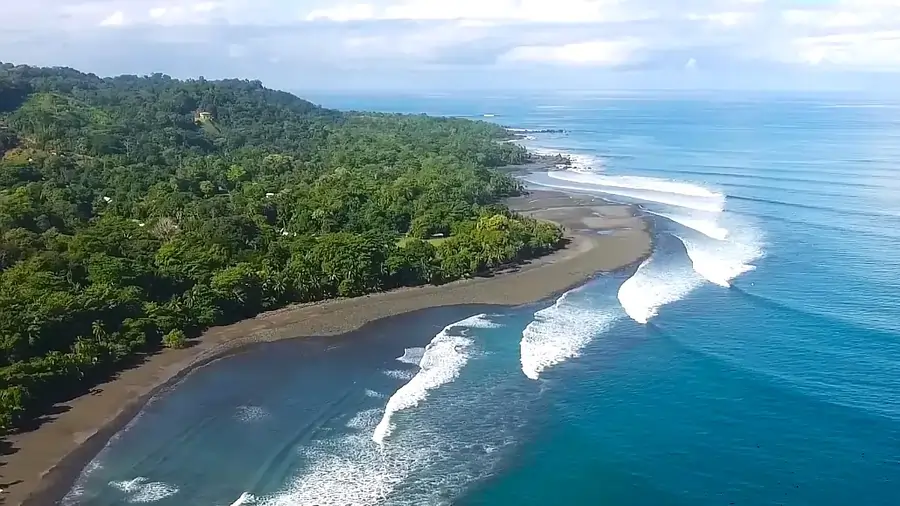
Beginner surfing near Pavones is possible, even though the region is famous for a powerful left-hand point break. New surfers shouldn’t assume the main Pavones lineup is always suitable for learning. However, local instructors can select gentler sections and nearby beaches according to the swell, tide, and student’s experience.
With warm water, tropical scenery, and several surf schools, the area can be an exciting place to take your first lesson. The key is to learn with a qualified instructor rather than entering the famous point break alone.
This guide explains where beginners can surf near Pavones, what lessons include, and how to prepare for a safe first experience.
Is Pavones Good for Beginner Surfers?
Pavones can be suitable for beginners under the right conditions. However, it’s not a typical beginner beach break.
The famous Pavones wave travels along a rocky shoreline and can attract experienced surfers when a strong south swell arrives. Riders may remain on the same wave for a long distance. Therefore, a beginner paddling into the wrong area could enter the path of another surfer.
Conditions look very different on smaller days. Softer waves may appear along the inside sections, and whitewater can provide space for basic practice. Even so, beginners should enter with a local instructor who understands the tide, rocks, current, and lineup.
Several local surf schools offer private lessons and beginner programs throughout the year. Their instruction usually covers ocean safety, paddling, standing up, choosing waves, and basic surf etiquette.
Why Take a Surf Lesson Near Pavones?
A surf lesson does more than help you stand on a board. It also teaches you how to enter the ocean safely and understand what is happening around you.
Pavones changes according to the swell and tide. A calm area in the morning may become faster or more crowded later. Local instructors evaluate those conditions before deciding where a lesson should take place.
During an introductory class, students usually begin on the beach. The instructor explains how to lie on the board, paddle, position their feet, and rise into a stable stance. The lesson then continues in shallow water with manageable whitewater.
A qualified instructor will also teach you how to fall safely, control your board, and avoid other surfers. These skills are essential before attempting to catch unbroken waves.
Where Can Beginners Surf Near Pavones?
The best location depends on the conditions that day. There is no single section that remains suitable for every student throughout the year.
Beginner Sections at Pavones Beach
When the swell is small, instructors may use softer inside sections of Pavones Beach. These areas can offer long, gentle foam waves that allow students more time to balance.
Learning on a longer wave has one clear advantage. Once standing, a student may have more time to adjust their stance and understand how the board moves.
However, the main point can become unsuitable as the swell grows. Crowds, rocks, and faster waves create unnecessary risks for first-time surfers. A responsible instructor will move the lesson rather than force students into difficult conditions.
Local schools advertise both private and group lessons for beginners at Pavones Beach. Some also offer multi-day camps that cover safety, equipment, tides, currents, paddling, and wave selection.
Punta Banco
Punta Banco is a small coastal community south of Pavones. The area has several surfable sections, although conditions can range from gentle to challenging.
On an appropriate day, an instructor may recommend part of the Punta Banco coastline instead of the main Pavones point. Nevertheless, beginners should not explore unfamiliar breaks without guidance.
Some areas may have rocks, currents, or stronger waves than expected. Local knowledge remains important, especially during the main swell season.
Other Nearby Beaches
The coastline around Pavones includes quiet beaches and river mouths that may produce smaller waves. Yet these locations are not always marked, monitored, or easy to reach.
A beach that looks empty is not automatically safe. It may have submerged rocks, strong currents, or no convenient exit point.
For that reason, beginners should ask a surf school or accommodation host about current conditions. The best learning area may change from one day to the next.
What to Expect During a Beginner Surf Lesson
Most beginner lessons last between one and two hours. The exact structure depends on the school, group size, and ocean conditions.
The first part normally takes place on land. Your instructor will introduce the equipment and explain how to carry the board without placing yourself or others at risk.
Next, you will practice the pop-up movement on the sand. This is the motion used to move from lying down to standing.
Once you understand the basic position, the lesson moves into shallow water. The instructor may push the board into small foam waves while giving directions about balance and timing.
Students should not expect to master surfing during one session. Still, many beginners can stand and ride short whitewater waves before the class ends.
Private lessons provide more individual attention. Meanwhile, group lessons can be enjoyable for families or friends who want to learn together.
What Beginner Surf Lessons Usually Include
Equipment is often included in the price of a lesson. Nevertheless, confirm the details before booking.
Most schools provide a beginner surfboard, leash, and rash guard. Beginner boards are normally wider and more stable than performance surfboards. In addition, soft-top models reduce the risk of injury during falls.
Instruction should include ocean safety and surf etiquette, not only help with standing up. Schools in Pavones describe programs covering board selection, currents, swell, tides, paddling, wave choice, and safe access to the lineup.
Ask whether transportation is included if the instructor plans to use another beach. Some surf camps provide transportation as part of a package, while individual lessons may begin at a fixed meeting point.
How to Choose a Surf School
Look for an instructor who asks about your swimming ability, physical condition, and previous experience before entering the water.
A good lesson should have a small student-to-instructor ratio. This gives the instructor enough time to supervise each person and correct unsafe habits.
Before booking, ask where the lesson will take place and how the school decides whether conditions are appropriate. The answer should depend on the day’s ocean conditions rather than a fixed promise to surf the main point.
You should also confirm what equipment is included, how long the lesson lasts, and whether there is an age requirement.
Reviews can be useful, but safety should remain the priority. A responsible school may postpone or relocate a lesson when conditions are not suitable.
Can Children Learn to Surf Near Pavones?
Children can take surf lessons near Pavones, provided the instructor chooses calm and shallow conditions.
The appropriate minimum age depends on the school, the child’s swimming ability, and the ocean that day. Some children feel comfortable immediately, while others need more time near the shoreline.
Private instruction is often the best choice for younger children. It allows the teacher to remain close and adapt the pace of the lesson.
Parents should tell the school about any concerns before booking. They should also ask whether the instructor has experience teaching children.
Even confident young swimmers need direct supervision. Ocean currents and moving surfboards create different risks from those found in a swimming pool.
Is Beginner Surfing Suitable for Older Travelers?
Surfing can be accessible to active older travelers, although it requires paddling, balance, and repeated movement from lying down to standing.
A private lesson allows the instructor to adapt the session to the student’s comfort and fitness. Some beginners may spend more time practicing on land before entering deeper water.
A wide soft-top board offers better stability. Small waves also reduce the need for aggressive paddling.
Travelers with joint, balance, or mobility concerns should speak with the instructor in advance. There is no need to rush the process. A short and controlled first lesson can be more rewarding than an exhausting session.
Best Time for Beginner Surfing Near Pavones
Beginner lessons are available throughout the year, but the best conditions depend more on the daily forecast than the calendar.
Pavones receives many of its strongest south and southwest swells between roughly April and October. These swells can produce the long waves that made the destination famous. However, they can also make the main point too demanding for beginners.
The dry season often brings easier road conditions and more predictable weather. On the other hand, the surf may become smaller or less consistent.
Small waves can be ideal for lessons. Therefore, beginners do not need to plan their entire trip around the biggest surf season.
Morning sessions are often preferred because winds may be lighter. However, tide and swell remain important. Follow the instructor’s recommendation rather than choosing a time based only on convenience.
What to Wear for a Surf Lesson
The ocean around Pavones remains warm, so most students do not need a wetsuit.
Wear a rash guard or lightweight surf shirt to protect your skin from the board and tropical sun. Comfortable swimwear should stay secure while you paddle and fall.
Apply water-resistant, reef-conscious sunscreen before the lesson. A product designed for active water use is less likely to wash off immediately.
Remove jewelry, watches, and loose accessories. They can become lost or cause injury.
Bring drinking water and dry clothing for after the lesson. Although a class may seem short, paddling and repeated pop-ups can be tiring.
Safety Tips for First-Time Surfers
Tell your instructor honestly about your swimming skills and health concerns. This helps them choose the right water depth and level of assistance.
Never place the board between yourself and an approaching wave. The water can push it back toward your face or body.
Keep control of the board whenever possible. Do not release it near other students.
When falling, move away from the board and protect your head with your arms as you return to the surface.
Most importantly, do not enter the main Pavones lineup alone after one lesson. Standing on a foam wave is different from paddling into an active point break with experienced surfers.
Understanding Pavones Surf Etiquette
Learning etiquette early makes you a safer and more respectful surfer.
The surfer closest to the breaking part of the wave generally has priority. Taking off in front of that person is known as dropping in.
At Pavones, this rule requires extra attention because a rider may approach from far up the point. Before catching a wave on the inside, look carefully toward the main takeoff area.
Beginners should also avoid sitting directly in the path of other riders. An instructor can explain where to wait and how to paddle back without blocking the open face.
Respect for local surfers matters as well. Pavones is a community, not simply a recreational attraction. Patience and courtesy create a better experience for everyone.
Should You Book One Lesson or a Surf Camp?
One lesson is enough to discover whether you enjoy surfing. It can also provide a memorable activity during a broader trip through southern Costa Rica.
However, learning basic control usually requires several sessions. A multi-day program allows you to repeat the same movements while receiving feedback.
Surf camps may include daily lessons, equipment, accommodations, meals, and transportation to suitable beaches. Pavones has beginner programs designed to teach wave selection, paddling, safety, board control, and etiquette over several days.
Independent travelers can also book lessons separately. This provides more flexibility for wildlife tours, waterfall visits, yoga, or quiet beach days.
What to Do When the Waves Are Too Large
Not every day will be suitable for a beginner lesson at the main beach.
If the swell becomes too large, your instructor may relocate the class, delay it, or recommend another activity. This is a sign of responsible decision-making, not poor service.
Pavones sits within a rich natural region. On a non-surfing day, visitors can explore waterfalls, watch birds, practice yoga, walk along the beach, or plan a wildlife experience near Golfo Dulce.
A flexible schedule prevents one day of unsuitable surf from disrupting the entire trip.
Is Beginner Surfing Near Pavones Worth It?
Beginner surfing near Pavones is worthwhile for travelers who want to learn in a remote and beautiful part of Costa Rica.
The area offers warm water, tropical surroundings, and experienced instructors. However, it is not the type of destination where first-time surfers should rent a board and paddle out without advice.
The main Pavones point deserves caution and respect. With a local instructor, beginners can find conditions that match their experience and develop the skills needed to progress safely.
Your first wave may last only a few seconds. Even so, standing on a surfboard with the rainforest behind you can become one of the most memorable moments of your visit to southern Costa Rica.
Frequently Asked Questions About Beginner Surfing Near Pavones
Can complete beginners take lessons in Pavones?
Yes. Local surf schools offer lessons and camps for complete beginners. However, instructors may use a gentler section or nearby beach instead of the main point.
Is the main Pavones wave safe for beginners?
The main wave is not always suitable for beginners. Rocks, crowds, long rides, and stronger swells can make it challenging.
Do I need to know how to swim?
Students should be comfortable in the water. Tell the surf school about your swimming ability before booking.
Are surfboard rentals available?
Yes, surfboard rentals are available in the area. However, complete beginners should begin with a lesson rather than renting a board alone.
How many lessons will I need?
One lesson can introduce the basics. Several sessions are usually needed to improve paddling, standing, turning, and board control.
Do I need a wetsuit?
Usually not. The water is warm, although a rash guard or surf shirt is helpful for sun and skin protection.
Final Thoughts
Pavones may be known for advanced surfing, but beginners do not need to avoid the destination. They need to approach it differently.
Book a qualified instructor, remain flexible about the lesson location, and avoid entering the famous point before your skills are ready. Under the right conditions, beginner surfing near Pavones offers a safe and exciting introduction to Costa Rica’s surf culture.
The goal of a first lesson is not to conquer the legendary left. It is to understand the ocean, gain confidence, and enjoy the first steps toward riding waves independently.