It’s easy to assume that Malpaís and Santa Teresa are essentially the same destination.
After all, they sit side by side along Costa Rica’s southern Nicoya Peninsula, sharing the same Pacific coastline, the same sunsets, and many of the same outdoor activities. In fact, if you didn’t know where the town limits were, you could easily drive from one to the other without noticing.
Spend a day in each, however, and the differences quickly become clear.
One has evolved into an internationally recognized surf destination filled with boutique hotels, cafés, yoga studios, and an energetic social scene. The other remains quieter, more residential, and deeply connected to the rugged coastline that first attracted surfers decades ago.
Neither destination is better.
They offer two very different ways to experience the Nicoya Peninsula.
The Atmosphere Is Completely Different
The biggest difference isn’t the beaches.
It’s how each town feels.
Santa Teresa has become one of Costa Rica’s most popular beach destinations. Throughout the day, surfers, digital nomads, families, and international travelers fill cafés, coworking spaces, restaurants, and beachfront hotels. There is always something happening, whether it’s a yoga class, a sunset gathering, or dinner that naturally turns into cocktails later in the evening.
Malpaís moves much more slowly.
Although it’s only a few minutes farther south, the atmosphere changes almost immediately. The roads become quieter, development becomes less noticeable, and the coastline begins to feel considerably wilder. Fishing boats replace surf schools, boutique villas disappear into the jungle, and evenings are defined by the sound of the ocean rather than music drifting from nearby bars.
If Santa Teresa feels vibrant, Malpaís feels peaceful.
Beaches and Surf
Both towns have built their reputations around the Pacific Ocean, but they appeal to different kinds of beach travelers.
Santa Teresa is known for its long stretches of sandy shoreline, making it easy to spend an entire day moving between surfing, swimming, cafés, and beachfront restaurants. The waves are consistent throughout much of the year, and the abundance of surf schools makes it one of Costa Rica’s best places to learn.
Malpaís offers a very different coastline.
Here, volcanic rock formations, tide pools, and reef breaks shape the landscape. The scenery feels more rugged, and many surf spots are better suited to intermediate and advanced surfers who are comfortable with changing ocean conditions.
Even travelers who don’t surf often appreciate Malpaís simply because the shoreline feels quieter and less developed.
It depends on whether you picture your beach day with a surfboard and a café nearby—or a quiet walk along a rocky coastline with hardly anyone else around.
Which Destination Feels More Natural?
Nature surrounds both towns, but it plays a different role in each.
Santa Teresa has grown around tourism while still preserving much of its natural beauty. Jungle-covered hills rise behind the beach, and outdoor activities remain central to the experience.
Malpaís feels as though nature still has the final say.
The forest reaches almost to the shoreline, rocky headlands interrupt the coastline, and wildlife is part of everyday life rather than something you seek out on an excursion.
Another advantage is location.
Malpaís sits closer to Cabo Blanco Nature Reserve, Costa Rica’s first protected area. Hiking through tropical dry forest, spotting monkeys and tropical birds, or spending a day immersed in one of the country’s most important conservation areas is considerably easier from Malpaís than from Santa Teresa.
If exploring nature is one of the main reasons you’re visiting Costa Rica, Malpaís has the advantage.
Restaurants, Cafés, and Nightlife
Santa Teresa offers far more choice.
Its restaurant scene has grown alongside its popularity, creating an impressive variety of international cuisine, specialty coffee shops, bakeries, smoothie cafés, and upscale dining experiences. After sunset, many restaurants naturally transition into cocktail lounges, and the town remains lively well into the evening.
Malpaís takes a quieter approach.
Restaurants tend to be smaller and more intimate, with an emphasis on fresh seafood, local ingredients, and relaxed dinners overlooking the ocean. Nights end earlier, conversations last longer, and there’s little pressure to continue the evening after dessert.
For some travelers, that’s exactly what makes Malpaís special.
Where Should You Stay?
Accommodation reflects the personality of each destination.
Santa Teresa offers the greatest variety, ranging from stylish boutique hotels and luxury villas to surf camps and wellness retreats. Many properties are within walking distance of restaurants, shops, and the beach, making it an excellent choice for travelers who prefer not to drive during their stay.
Malpaís focuses more on privacy.
Boutique hotels, jungle lodges, and secluded villas blend into the surrounding landscape, creating an experience that feels peaceful without sacrificing comfort. Staying here often means trading walkability for tranquility, a compromise many visitors happily make.
Neither option is better.
It simply depends on whether convenience or seclusion matters more to you.
Which One Is Easier to Reach?
From a practical standpoint, there isn’t much difference.
Most travelers reach both destinations by driving from San José to Puntarenas, taking the ferry to Paquera, and continuing south across the Nicoya Peninsula. Domestic flights to Tambor followed by a short drive are also popular.
Because Malpaís sits immediately beyond Santa Teresa, reaching it usually adds only another ten or fifteen minutes to the journey.
The real difference begins after you arrive.
So, Which Should You Choose?
Choose Santa Teresa if you want a lively beach town with excellent restaurants, beginner-friendly surfing, boutique shopping, wellness retreats, and an active social atmosphere. It’s an especially good choice for first-time visitors to the Nicoya Peninsula, families, digital nomads, and travelers who enjoy having plenty of options within walking distance.
Choose Malpaís if your ideal vacation revolves around quiet mornings, dramatic coastal scenery, boutique accommodations, and spending as much time in nature as possible. It’s particularly well suited to couples, photographers, experienced surfers, and anyone looking for a slower, more peaceful base without being far from Santa Teresa’s amenities.
The two towns are close enough that visiting both is easy.
The question is where you want to wake up each morning.
Final Thoughts
Comparing Malpaís and Santa Teresa isn’t really about choosing between two beaches.
It’s about choosing between two different travel styles.
Santa Teresa is energetic, social, and constantly evolving. It offers convenience, variety, and a vibrant atmosphere that keeps visitors active from sunrise until long after sunset.
Malpaís asks something different.
It invites you to slow down, spend more time outdoors, and appreciate a coastline where the jungle still meets the Pacific with very little in between.
Whichever you choose, you’ll experience one of the most beautiful corners of Costa Rica.
The only real question is whether you want your days shaped by the energy of a surf town—or by the quiet rhythm of the ocean.
Related Posts
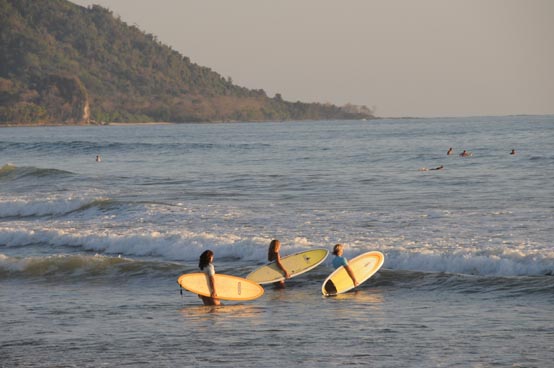
Surfing in Malpaís, Costa Rica: A Quieter Surf Experience on the Nicoya Peninsula
Surfing has shaped the identity of Costa Rica's southern Nicoya…
5 Days Malpaís Itinerary: Surf, Nature & Slow Living on the Nicoya Peninsula
Some destinations encourage you to see as much as possible.…
How to Get to Malpaís from Guanacaste Airport (LIR) and San José Airport (SJO)
Reaching Malpaís is part of what makes it feel so…