Poás Volcano National Park is one of the easiest places in Costa Rica to experience the power of an active volcano without committing to a long or difficult hike. Located in the Central Valley highlands, the park is close enough to Alajuela and Juan Santamaría International Airport (SJO) to visit at the beginning or end of a Costa Rica itinerary.
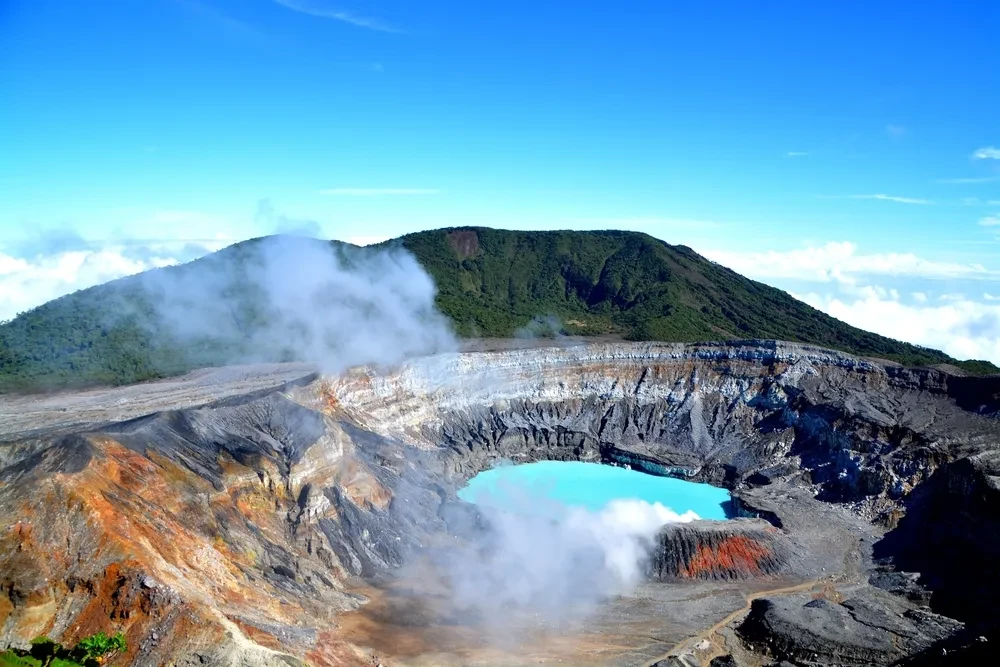
The main attraction is the enormous volcanic crater, where an acidic lake, steam, changing cloud cover, and the surrounding highland landscape create one of the country’s most dramatic natural settings.
However, a successful visit requires planning. Entry is controlled, volcanic activity can affect access, and cloud cover can hide the crater completely.
This guide explains what to expect, how to get there, when to visit, where to stay, and how to combine a visit to Poás with other Central Valley experiences.
Why Poás Volcano National Park Is Special
Poás rises to approximately 2,708 meters (8,885 feet) above sea level in Costa Rica’s Central Valley.
Its elevation creates a landscape that feels completely different from the country’s beaches and tropical lowlands. Coffee plantations, agricultural communities, mountain roads, and cool cloud forest surround the volcano.
The main crater is the park’s defining feature.
Visitors can reach the viewing area without a strenuous mountain hike, making Poás particularly appealing to families, older travelers, and those seeking an impressive volcanic experience without a full day of trekking.
Its location is another major advantage.
Poás can be combined with coffee country, nearby waterfalls, or a stay in Alajuela. It is also one of the most practical day trips from San José.
What to Expect at the Park
A visit to Poás is structured rather than open-ended.
Because this is an active volcanic environment, access is controlled, and safety regulations may change depending on conditions.
The experience centers on the crater viewpoint, reached by a relatively short paved route from the visitor area.
You should expect:
- Scheduled entry
- A short walk to the main viewing area
- Cooler temperatures than in San José or Alajuela
- Rapidly changing cloud conditions.
- Possible volcanic gases or steam
- A visit that may be shorter than a typical national park hiking day
This is important for expectations.
Poás is not primarily a destination for hours of strenuous hiking. Its appeal is the opportunity to get remarkably close to an active volcanic landscape.
The Main Crater
The main crater is the reason most people come.
From the observation area, visitors can look into the volcanic basin and, when conditions cooperate, see the acidic crater lake below.
The appearance can change dramatically.
Some mornings provide clear views across the crater. At other times, clouds move in quickly and obscure almost everything.
Steam and volcanic gases can also alter visibility.
That unpredictability is part of visiting an active volcano.
You are not guaranteed a clear postcard view, even if the weather looks good before you leave your hotel.
Laguna Botos and Forest Areas
Poás also has highland forest environments beyond the main volcanic viewpoint.
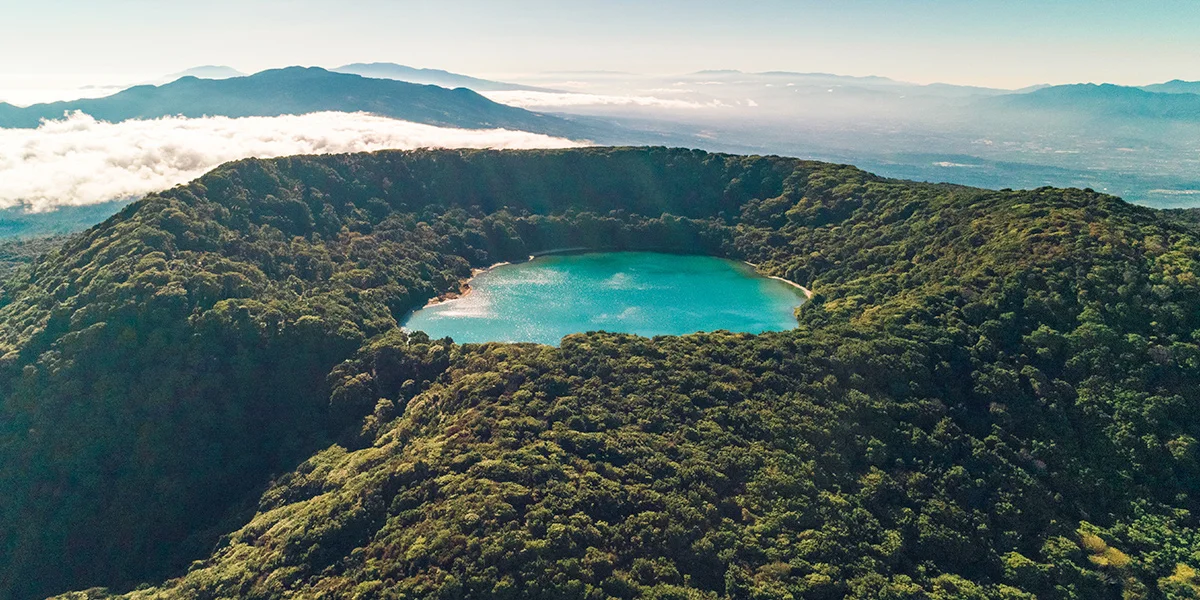
Laguna Botos is a dormant crater lake surrounded by cloud forest, offering a quieter contrast to the active crater.
Trail availability within an active volcanic national park can change depending on safety conditions and park management. Therefore, check which trails are open when you reserve or before traveling rather than assuming every route will be accessible during your visit.
How to Get to Poás Volcano
Poás is particularly convenient for travelers staying in Alajuela or the western Central Valley.
From Alajuela
The drive from Alajuela takes you north into the highlands through agricultural communities and coffee-growing landscapes.
As elevation increases, roads become more winding, and temperatures begin to drop.
Allow roughly an hour under favorable conditions, but leave extra time for mountain traffic, rain, or fog.
For more detailed directions, see How to Get to Poás Volcano from San José or Alajuela.
From San José
Traveling from San José generally takes longer because you must first move through the metropolitan area before climbing toward the volcano.
Traffic can substantially affect the trip.
Therefore, an early departure is particularly useful if you are coming from the capital.
Rental Car or Guided Tour?
Both options can work well.
Rental Car
Driving yourself gives you the most flexibility.
You can visit the volcano early, stop at a coffee farm afterward, have lunch in the highlands, or continue toward another destination.
A rental car is especially useful if Poás is part of a larger Central Valley road trip.
However, the mountain roads can involve curves, fog, rain, and reduced visibility.
Travelers uncomfortable with those conditions may prefer organized transportation.
Guided Tour
A guided excursion simplifies logistics and can add useful geological and cultural context.
It may be a better choice if you:
- Do not want to drive.
- Are staying in San José
- Have limited time
- Want transportation included
- Prefer someone else to manage timing and reservations.
For first-time visitors to Costa Rica, either option can work. The best choice depends mainly on your comfort with driving.
Poás Volcano Tickets and Reservations
Poás is not a national park where you should assume you can arrive and enter.
Visitor access is controlled, and reservation procedures are an important part of the planning process.
Because park regulations can change in response to volcanic activity, capacity, or safety conditions, verify the current process before your trip.
Start with the Poás Volcano Tickets and Reservations Guide before choosing the rest of your day’s schedule.
Do not build a tightly timed itinerary around the volcano until you know your entry time.
Best Time of Day to Visit
Morning is usually the preferred period.
Cloud cover frequently increases as the day progresses, so earlier visits generally give you a better opportunity for crater visibility.
That does not mean a clear view is guaranteed.
Mountain weather can change rapidly at any hour.
Still, if seeing the crater is your primary goal, scheduling one of the earlier available entries usually makes the most sense.
Dry Season
Costa Rica’s dry season generally runs from December through April across much of the Central Valley.
During these months, travelers often experience:
- More predictable road conditions
- Less rainfall
- More opportunities for clear mountain views
- Higher visitor numbers
This is an excellent time to combine a visit to the volcano with scenic drives and outdoor activities.
However, demand is also higher, particularly around Christmas, New Year, and Easter.
Reserve early if your travel dates fall during busy periods.
Green Season
From roughly May through November, the highlands become greener and wetter.
Morning visits can still work very well.
Afternoon showers and clouds become more common, while September and October are often among the wetter months.
The advantage is atmosphere.
Cloud forest, coffee fields, and surrounding hills become intensely green, and visitor numbers may be lower than during peak dry-season travel.
If visiting during the green season, keep your schedule flexible.
For a more detailed seasonal breakdown, see the Poás Volcano Weather Guide.
What to Wear
Do not dress for Poás as if you were visiting a Pacific beach.
The elevation can make the crater considerably cooler than Alajuela or San José.
Bring:
- A light jacket or layer
- Rain protection
- Comfortable walking shoes
- Sun protection
- Water
Even when the day begins sunny, clouds and rain can arrive quickly.
Layering is the easiest approach.
Where to Stay Near Poás Volcano
Where you stay depends on how Poás fits into the rest of your trip.
Alajuela
Alajuela is one of the most practical bases.
It works particularly well if you:
- Arrive at SJO the previous day.
- Want an early volcano visit.
- Plan to rent a car
- Are continuing toward La Fortuna afterward
- Need an airport hotel before or after the trip.
Staying in Alajuela avoids some of the traffic associated with crossing the metropolitan area from central San José.
Highland Lodges
Mountain accommodations closer to Poás provide a different experience.
You can enjoy cooler temperatures, gardens, coffee landscapes, and quieter evenings.
This can be a particularly good choice for couples and travelers who want the volcano to be part of a slower Central Valley stay rather than a rushed day trip.
San José
Staying in San José makes sense if your larger itinerary focuses on museums, restaurants, and urban culture.
However, you will need to leave earlier for Poás because metropolitan traffic can add considerable time.
Coffee Tours Near Poás
Coffee and volcanoes fit naturally together in this region.
The volcanic highlands surrounding Poás are part of Costa Rica’s historic coffee landscape.
A coffee tour after the volcano can turn a relatively short crater visit into a full Central Valley day.
Depending on the farm, tours may include explanations of cultivation, harvesting, processing, roasting, and tasting.
For more ideas, see Best Coffee Tours Near San José.
Poás Volcano and La Paz Waterfall Gardens
Another popular combination pairs Poás with La Paz Waterfall Gardens.
The volcano works best early in the morning, while the waterfall experience can fill the remainder of the day.
This creates a useful contrast:
At Poás, the focus is geology and high-altitude volcanic scenery.
At La Paz, the experience shifts toward forests, waterfalls, and a longer nature visit.
Can You Visit Poás on the Way to La Fortuna?
It can fit into a travel day, but avoid making the schedule too ambitious.
A morning volcano visit, followed by a drive toward La Fortuna, can work if you start early and allow enough daylight.
Mountain roads, weather, traffic, and stops can make travel slower than expected.
If you prefer a relaxed journey, stay one night in Alajuela or the highlands before continuing north.
Poás Volcano vs Arenal Volcano
These two experiences are very different.
Poás provides quick access to an active crater viewpoint.
Arenal Volcano is part of a larger destination centered on rainforest, hiking, hot springs, waterfalls, adventure activities, and extended stays around La Fortuna.
Choose Poás if you want:
- A convenient half-day volcanic experience
- Easy access from SJO
- Minimal hiking
- A Central Valley excursion
Choose Arenal if you want:
- Several days of activities
- Rainforest
- Hot springs
- Hiking
- A full destination rather than a short excursion
Many Costa Rica itineraries can comfortably include both.
Safety at Poás Volcano
Poás is an active volcano, so safety regulations are not optional.
Follow all instructions from park staff and respect closures or restricted areas.
Conditions that can affect a visit include:
- Volcanic gas
- Increased activity
- Weather
- Visibility
- Temporary access restrictions
Never attempt to bypass a closure simply because conditions appear normal.
Volcanic activity is monitored precisely because dangerous changes are not always obvious to visitors.
Travelers with respiratory sensitivities should also take volcanic gases seriously and seek appropriate medical guidance if they have concerns about exposure.
Is Poás Volcano Worth Visiting?
For many travelers, yes.
Poás offers a dramatic natural experience with relatively little physical effort.
That makes it particularly attractive for:
- First-time visitors
- Families
- Baby Boomers
- Travelers with limited time
- People staying near SJO.
- Visitors interested in geology
- Travelers combining volcanoes with coffee country
However, it may be less satisfying if you expect several hours of wilderness hiking.
The crater is the attraction.
If clouds obscure it, the experience can feel much shorter and less dramatic.
Understanding that possibility before visiting helps set realistic expectations.
A Simple Half-Day Itinerary
A practical morning might look like this:
Early morning: Leave Alajuela or San José.
Morning: Enter Poás Volcano National Park at your reserved time.
Late morning: Descend through the coffee-growing highlands.
Lunch: Stop at a local restaurant or mountain café.
Afternoon: Continue with a coffee tour, return to your hotel, or travel toward your next destination.
The key is not trying to fit too many major activities into one day.
Mountain travel can take longer than expected.
Who Should Prioritize Poás?
Poás is particularly useful for travelers who want maximum impact with limited time.
A family can experience a major volcano without committing children to a difficult hike.
Older travelers can enjoy high-altitude scenery with a relatively accessible route.
Travelers landing at SJO can incorporate a nationally significant natural attraction without adding several days to the itinerary.
Coffee enthusiasts can also combine the volcano with the surrounding agricultural landscape.
Few Central Valley attractions offer that combination of accessibility and geological drama.
Final Thoughts
Poás Volcano National Park is one of Costa Rica’s most accessible introductions to the country’s volcanic landscape.
You do not need a multi-day expedition.
You do not need technical hiking ability.
Instead, the challenge is planning correctly.
Reserve your entry, start early, dress for highland weather, allow time for traffic, and understand that cloud cover and volcanic activity can affect what you see.
When conditions cooperate, the reward is remarkable: standing above an active volcanic crater less than a day’s journey from an international airport.
And even when Poás is only one stop on a longer trip, its location makes it easy to connect the experience with coffee farms, waterfalls, Alajuela, San José, or the road to La Fortuna.
For travelers exploring Costa Rica’s Central Valley, Poás is not simply another viewpoint.
It is one of the clearest reminders that the landscape beneath Costa Rica is still very much alive.
Related Posts
Poás Volcano or Arenal Volcano: Which Should You Visit?
Choosing between Poás Volcano and Arenal Volcano comes down to the kind…
How to Get to Poás Volcano from San José or Alajuela
If you are wondering how to get to Poás Volcano from…
Poás Volcano Tickets: Reservation Tips and Entry Guide
Poás Volcano tickets must be purchased through Costa Rica’s official SINAC…