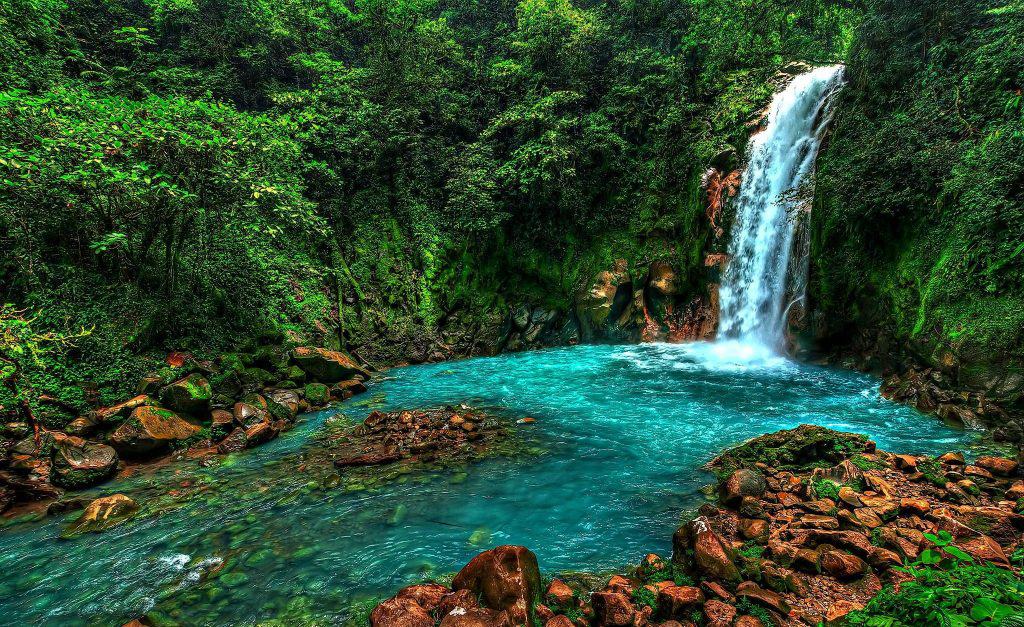
The Science Behind Costa Rica’s Most Surreal River
When you first see Río Celeste inside Tenorio Volcano National Park, it doesn’t look real. The water glows a vivid, almost opaque turquoise — a color so intense it appears digitally enhanced.
For years, local folklore said God dipped his paintbrush into the river while coloring the sky.
The real explanation is just as fascinating — and entirely natural.
This guide explains the science behind the blue color of Río Celeste, how the phenomenon works, what affects its color, and how to plan your visit for the best experience.
Overview: Río Celeste & Tenorio Volcano National Park
Río Celeste is located within Tenorio Volcano National Park in northern Costa Rica, near the small town of Bijagua.
The park protects:
- Tenorio Volcano
- Primary rainforest
- Geothermal features
- The famous turquoise river
The river’s color change occurs at Los Teñideros, where two clear streams meet and suddenly turn into a brilliant blue flow.
Understanding what happens at that confluence is key.
The Science: Why Río Celeste Is Blue
The color of Río Celeste is not due to dye, algae, or pollution. It’s a result of natural mineral chemistry and light scattering.
Step 1: Two Clear Rivers Meet
At Los Teñideros, two rivers converge:
- One river contains dissolved aluminum and silica particles from volcanic rock.
- The other river carries acidic water influenced by geothermal gases from Tenorio Volcano.
Individually, both rivers appear clear.
Step 2: Chemical Reaction
When the two rivers mix, the pH changes. This shift causes dissolved minerals — primarily aluminum, silicon, and oxygen compounds — to clump together into microscopic particles.
These particles are too small to settle but large enough to affect light.
Step 3: Light Scattering (The Key Mechanism)
The newly formed particles scatter sunlight via Mie scattering.
In simple terms:
- Shorter wavelengths of light (blue) scatter more strongly.
- Our eyes perceive the scattered light reflected from the surface as bright turquoise.
The result: a naturally glowing blue river.
This is a physical optical phenomenon — not pigmentation in the water itself.
Why the Color Changes After Heavy Rain
Many travelers ask:
“Why was Río Celeste brown when I visited?”
The color depends heavily on water clarity.
During Heavy Rainfall:
- Sediment increases in the river.
- Mud and debris disrupt light scattering.
- The blue effect becomes muted or disappears.
The mineral reaction still occurs — but suspended sediment interferes with the optical illusion.
For optimal color, visit during stable, dry weather.
Seasonal Impact on Río Celeste’s Color
Dry Season (December–April)
- Most reliable bright blue color
- Lower sediment levels
- Clearer water
- Higher visitor numbers
Best for first-time visitors, prioritizing vivid color.
Green Season (May–November)
- Lush rainforest scenery
- Fewer crowds
- Afternoon rain common
September and October typically bring the heaviest rainfall, which can temporarily dull the blue.
Morning visits after dry evenings offer the best chance of vibrant color during the green season.
For timing guidance, see our full Best Time to Visit Río Celeste guide.
What to See Inside Tenorio Volcano National Park
Understanding the science enhances the visit — but the hike itself is equally rewarding.
Los Teñideros
The exact point where the two rivers merge is where the color transformation occurs.
You can visibly see:
- One clear stream
- Another clear stream
- The instant turquoise change downstream
It is one of the most unique geological features in Costa Rica.
Río Celeste Waterfall
The 30-meter waterfall showcases the river’s color at its most dramatic.
Swimming is not permitted inside the park.
Laguna Azul
A calm, intensely colored section of the river upstream from the waterfall.
Borbollones
Sections of bubbling water are caused by geothermal gas release from underground volcanic activity.
Where to Stay Near Río Celeste
Because Río Celeste is located in a rural area, accommodations are smaller and nature-focused.
Eco-Lodges
- Celeste Mountain Lodge
- Hideaway Río Celeste
- Tenorio Lodge
These offer:
- Forest immersion
- Birdwatching
- Peaceful atmosphere
- Easy access to the park entrance
Ideal for travelers seeking quiet, immersive stays.
Combining Río Celeste with La Fortuna
Many visitors stay in La Fortuna and visit Río Celeste as a day trip (approximately 1–1.5 hours by car).
This allows you to combine:
- Arenal Volcano
- Hot springs
- La Fortuna Waterfall
- Río Celeste
Environmental Considerations
The color phenomenon depends on a delicate mineral balance and water clarity.
Visitors should:
- Stay on marked trails.
- Avoid entering restricted water areas.
- Never introduce chemicals (such as sunscreen) into protected sections.
- Respect park regulations
Swimming is prohibited to protect both safety and ecosystem stability.
Is the Color Guaranteed?
No.
Even in the dry season, cloud cover affects how vibrant the river appears. Bright sunlight enhances the turquoise effect.
Best strategy:
- Arrive early
- Visit during dry or stable weather.
- Stay flexible
Even when the color is softer than expected, the rainforest setting remains impressive.
Why Understanding the Science Makes the Experience Better
Río Celeste is not just beautiful — it is a rare intersection of volcanic chemistry, hydrology, and physics.
The fact that two clear rivers meet and create one of the most striking natural colors in Central America makes the experience more meaningful.
When you stand at Los Teñideros and watch the transformation happen in real time, you are witnessing a living laboratory shaped by Tenorio Volcano.
Nature did not paint the river blue.
It engineered it.
And understanding that makes the moment even more extraordinary.