Can you swim in Río Celeste? Not inside Tenorio Volcano National Park. Costa Rica’s National System of Conservation Areas (SINAC) prohibits visitors from entering the river within the protected park. This includes the famous waterfall pool, Laguna Azul, and other attractions along the main hiking trail.
However, swimming opportunities exist outside the national park, including some privately managed river access areas. These locations have separate access arrangements, and visitors should confirm permission and current water conditions before entering.
Here is what to know about Río Celeste swimming rules, river safety, and alternatives near Bijagua and La Fortuna.
Can You Swim in Río Celeste? Official Park Rules
Tenorio Volcano National Park protects the rainforest, volcanic features, and river system surrounding Río Celeste. Its main attraction is the Misterios del Tenorio hiking trail.
SINAC explicitly states that visitors are not permitted to enter the river. Therefore, swimming, wading, or crossing into the water is not part of the authorized park experience.
These restrictions apply even when the water appears calm and inviting.
Why Is Swimming Prohibited?
The restrictions help protect a sensitive natural environment while reducing visitor risks.
Río Celeste’s unusual color depends on suspended particles and water chemistry. Disturbing river sediments can affect the environment and potentially influence the water’s appearance.
Furthermore, the park contains slippery terrain, moving water, and geothermal features. The regulations are designed for a protected hiking destination, not a recreational swimming facility.
What Happens If You Ignore the Rules?
Visitors must follow posted signs and ranger instructions. Crossing barriers or entering prohibited areas can lead to intervention by park authorities.
Do not assume that an area is accessible simply because other visitors have entered it.
Can You Swim at Río Celeste Waterfall?
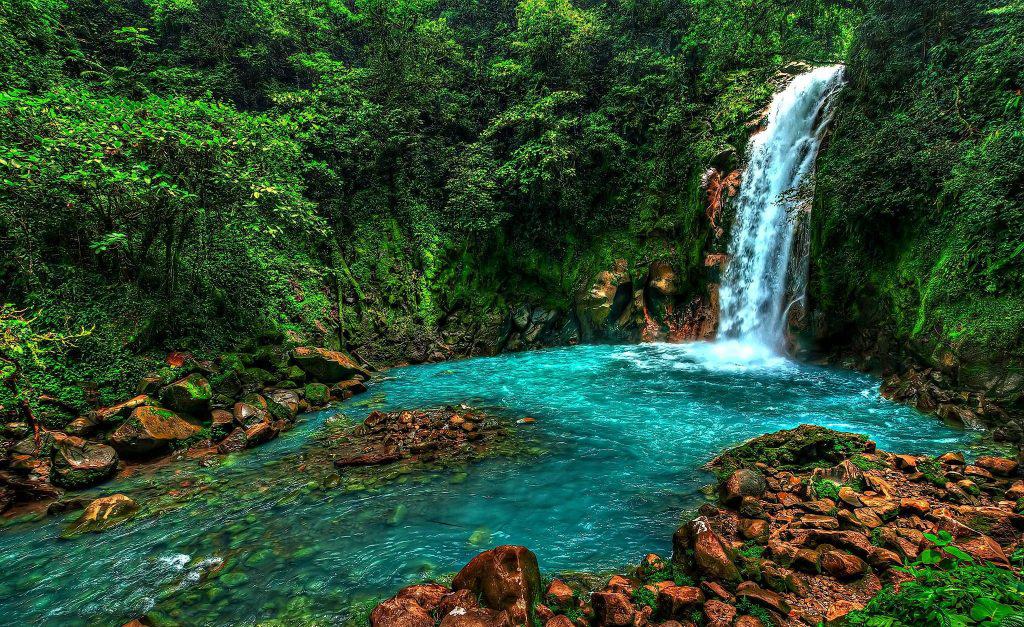
No. Swimming at Río Celeste Waterfall is prohibited.
The waterfall is one of the main attractions inside Tenorio Volcano National Park. Visitors reach its viewing area by descending a steep staircase through the forest.
The turquoise pool below the cascade is for observation, not recreation.
Can You Enter the Waterfall Pool?
No. Visitors should remain within authorized viewing areas and respect barriers.
Even without the swimming prohibition, waterfall pools can contain strong currents, submerged rocks, and unpredictable turbulence.
Can You Photograph the Waterfall?
Yes, from designated viewpoints when access is open.
The waterfall is particularly photogenic when the river is clear enough to display its distinctive turquoise color. However, heavy rainfall can temporarily make the water appear cloudy or brown.
Check current trail access before visiting, since weather and maintenance can affect individual viewpoints.
Can You Swim at Laguna Azul or Los Teñideros?
The swimming prohibition also applies to other attractions along the national park trail.
Laguna Azul
Laguna Azul is a small section of intensely colored water surrounded by rainforest.
Although its appearance may resemble a natural swimming pool, visitors cannot enter it.
Los Teñideros
Los Teñideros is where Río Buenavista and Quebrada Agria meet, creating the conditions responsible for Río Celeste’s turquoise appearance.
This is an observation point rather than a swimming destination.
Borbollones
Borbollones contains geothermal features where volcanic gases escape through the water.
SINAC identifies these as high-temperature volcanic gas emissions. Therefore, visitors should remain on the designated trail and avoid contact with the water.
Is Río Celeste Water Safe for Swimming?
The river’s color alone cannot establish whether it is safe.
Río Celeste’s turquoise appearance results from a natural optical phenomenon involving suspended particles. It does not automatically mean the water is poisonous. Equally, it does not prove that the water is clean or suitable for swimming.
Conditions also vary between different sections of the river.
Is Río Celeste Toxic?
It is inaccurate to describe the entire river as toxic simply because it is blue.
However, water chemistry differs between tributaries, geothermal areas, and downstream sections.
Without location-specific water-quality information, visitors should not make assumptions about chemical exposure or drinking safety.
Is Río Celeste Hot or Acidic?
Some waters associated with the Tenorio volcanic system have unusual chemical characteristics.
Quebrada Agria, for example, is an acidic tributary involved in the river’s color-producing process.
However, this does not mean every section of Río Celeste is hot or strongly acidic.
What About River Currents?
Natural rivers can become dangerous after rainfall, even when the surface appears calm.
Potential hazards include slippery rocks, uneven riverbeds, strong currents, and sudden increases in water levels.
Rainfall upstream can also affect a swimming location when little rain is falling directly overhead.
Can You Drink Río Celeste Water?
Do not drink untreated river water.
A river’s appearance is not a reliable indicator of microbiological or chemical drinking-water quality.
Can You Swim in Río Celeste Outside the National Park?
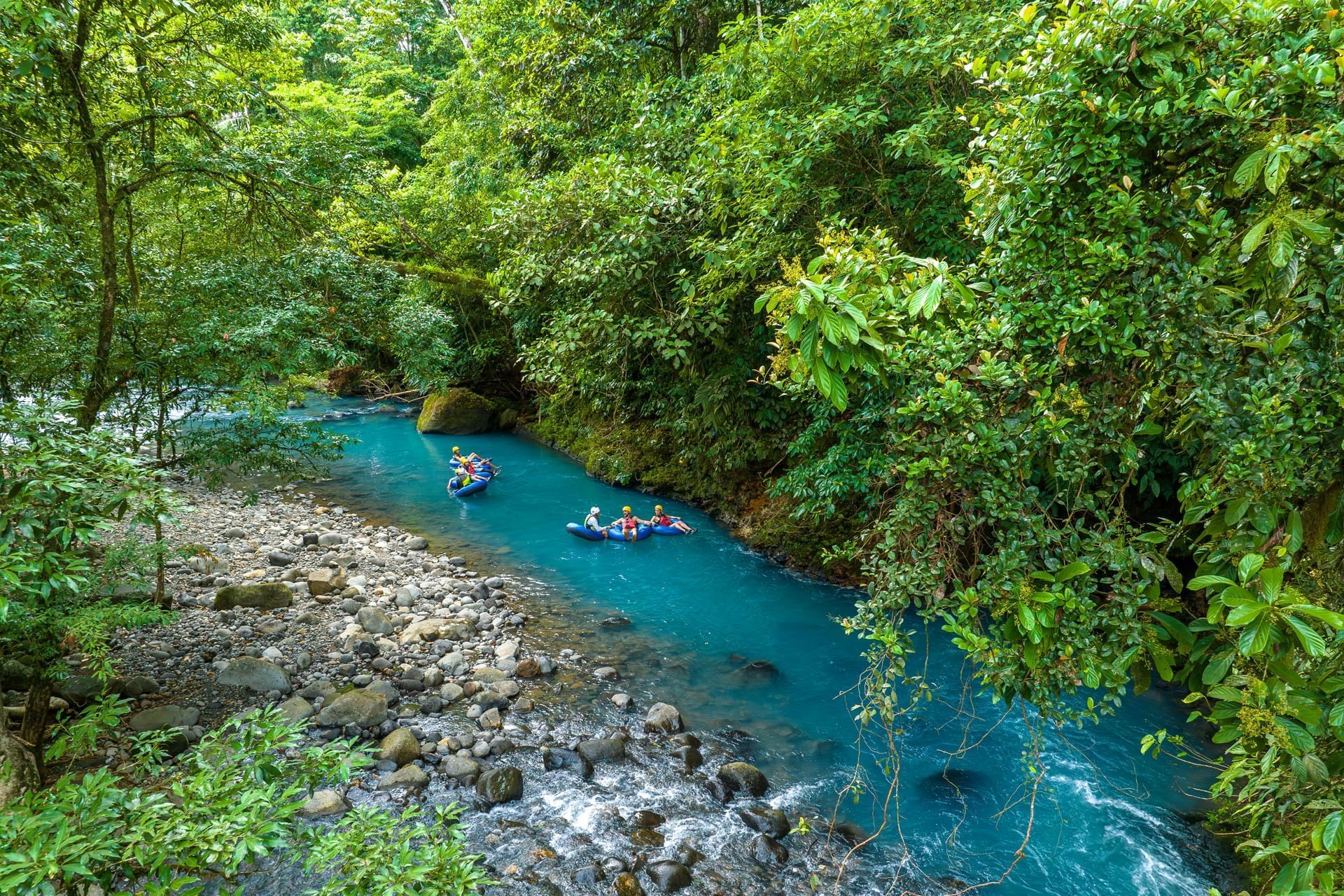
Yes, there are swimming opportunities outside the protected park, but access is location-specific.
The national park prohibition does not automatically establish the rules for every downstream property. However, being outside the park does not guarantee public access or safe swimming conditions.
Some areas are managed by private accommodations, while other riverbanks may involve private land or uncertain access arrangements.
A Verified Private-Property Option: Hideaway Río Celeste
Hideaway Río Celeste advertises river access through trails on its property.
According to the hotel’s published activity information, guests can swim in Río Celeste outside the national park boundary.
The property also advertises an outdoor swimming pool and hot tubs.
This is a useful example of why the distinction between national park regulations and private access matters.
However, confirm the hotel’s current swimming policy, guest eligibility, trail availability, and river conditions before booking. The hotel’s description does not guarantee safe conditions on every day.
Do You Need Permission to Access the River?
Potentially, yes.
Some access routes cross private property. Visitors should obtain permission where required and respect gates, signs, and property boundaries.
Never assume that an informal path leads to a public swimming area.
Are There Free Río Celeste Swimming Spots?
Travel websites and social media sometimes mention free swimming areas outside Tenorio Volcano National Park.
However, directions, property access, fees, and local conditions can change.
For that reason, this guide does not recommend an unofficial free swimming location without reliable confirmation of its current access arrangements.
If you hear about a free river spot, ask a knowledgeable local operator or the relevant property manager whether access is permitted.
Then assess the conditions independently. A location being free does not make it safe.
Swimming Near Río Celeste: Practical Alternatives
If swimming is an important part of your itinerary, consider an established facility rather than relying on an informal riverbank.
Hotel Pools Near Bijagua
Some accommodations around Bijagua offer swimming pools or other water-based facilities.
A hotel pool can be particularly convenient after the national park hike, especially for families.
Before booking, confirm whether the pool is available to your room category and whether day visitors are admitted.
Privately Managed River Access
An accommodation or operator that explicitly permits river access may offer a more straightforward option.
However, ask whether swimming is currently allowed, where guests may enter, and whether staff monitor conditions.
Managed access should not be confused with a guarantee of lifeguard supervision.
Hot Springs Near La Fortuna
Travelers continuing to La Fortuna can visit a managed hot spring facility.
These attractions provide a different experience from Río Celeste. They are not part of Tenorio Volcano National Park.
Choose an established operator and verify admission requirements, pool facilities, and any age restrictions.
Río Celeste vs La Fortuna Waterfall: Where Can You Swim?
These two destinations offer different waterfall experiences.
| Attraction | Swimming | Main experience |
|---|---|---|
| Río Celeste Waterfall | Prohibited inside the national park | Rainforest hiking, turquoise river, volcanic features |
| La Fortuna Waterfall | Permitted in designated areas when conditions allow | Waterfall visit, steep staircase, authorized swimming areas |
The official La Fortuna Waterfall operator, ADIFORT, confirms that visitors may swim in the designated freshwater area.
However, visitors must respect current conditions and instructions on-site.
La Fortuna Waterfall also involves a substantial staircase, so it is not necessarily easier for travelers with mobility limitations.
Río Celeste for Families Who Want to Swim
Río Celeste is primarily a hiking and sightseeing attraction.
Families should plan around the trail rather than expecting a swimming stop inside the park.
Families with Young Children
The full trail can be demanding for younger children, especially when muddy.
The waterfall staircase adds another physical challenge.
After the hike, a hotel pool may be more convenient than searching for river access.
Families with Teenagers
Teenagers who enjoy hiking may appreciate the waterfall, rainforest, and unusual geology.
However, swimming should be planned as a separate activity.
Water Safety for Children
Children require close supervision around rivers, including shallow sections.
Strong currents, submerged rocks, and changing water levels can create hazards that are difficult to recognize from shore.
Best Time to Swim Near Río Celeste
Rainfall affects rivers throughout the Bijagua and Tenorio region.
Even when a privately managed location allows swimming, conditions can change rapidly.
During Rainy Conditions
Heavy rain can increase river flow and carry sediment downstream.
Avoid entering rivers during flooding, after intense upstream rainfall, or when currents are uncertain.
During Relatively Drier Conditions
Lower water levels may improve visibility, but they do not eliminate hazards.
Slippery rocks and strong currents can remain dangerous during otherwise pleasant weather.
Can You Swim After Heavy Rain?
There is no universal waiting period that guarantees safe conditions.
Instead, rely on current local assessments and avoid entering the water when conditions are unclear.
How to Enjoy Río Celeste Without Swimming
The national park offers several reasons to visit beyond the possibility of entering the water.
The main trail connects the waterfall, a volcano viewpoint, Laguna Azul, Borbollones, and Los Teñideros.
Together, these attractions provide an opportunity to experience rainforest scenery and learn about the region’s unusual geology.
Wildlife sightings are also possible, although they are never guaranteed.
Suggested Río Celeste Itinerary With a Swimming Alternative
Start your morning at Tenorio Volcano National Park with admission reserved through the official SINAC system.
Allow approximately three to four hours to explore the main trail at a comfortable pace.
Visit the waterfall viewpoint, then continue toward Laguna Azul, Borbollones, and Los Teñideros if conditions permit.
After the hike, have lunch outside the park.
If your accommodation offers a pool, return for a swim and a relaxed afternoon. Alternatively, arrange access to a verified private swimming facility.
Travelers heading to La Fortuna can schedule a separate hot spring or waterfall experience on another day.
Common Mistakes About Swimming in Río Celeste
One common mistake is assuming that the famous waterfall pool is open for swimming because it appears in travel photographs.
Another is confusing locations outside the national park with the protected visitor trail.
Travelers may also follow outdated directions to informal river access points without checking property rights or safety conditions.
Finally, do not assume that clear turquoise water means a river is safe. Water appearance alone cannot reveal current strength, underwater hazards, or water quality.
Frequently Asked Questions About Swimming in Río Celeste
Can you swim in Río Celeste?
Not inside Tenorio Volcano National Park. Some access outside the park permits swimming under separate arrangements.
Can you swim at Río Celeste Waterfall?
No. The waterfall pool is inside the national park, where entering the river is prohibited.
Why is swimming prohibited?
The restrictions support environmental protection and visitor safety.
Can you swim at Laguna Azul?
No. Laguna Azul is part of the protected national park visitor route.
Can you swim at Los Teñideros?
No. Visitors must observe the confluence from authorized areas.
Can you swim at Borbollones?
No. This geothermal area is not a swimming location.
Is Río Celeste water toxic?
The river’s blue appearance does not establish toxicity. Water chemistry varies by location.
Is Río Celeste acidic?
Quebrada Agria is an acidic tributary, but not every section of Río Celeste has the same chemistry.
Is Río Celeste hot?
The entire river is not a hot spring. Certain geothermal features have elevated temperatures.
Is Río Celeste safe for swimming?
Safety depends on the specific location, current conditions, and access rules. Swimming is prohibited inside the park.
Can you swim outside the national park?
Yes, some privately managed locations advertise swimming access. Confirm current permission and conditions.
Are there free swimming spots?
Informal locations are mentioned online, but current legal access and safety should be verified before visiting.
Are there public swimming areas near Bijagua?
Availability and access arrangements require local confirmation. Do not assume an informal riverbank is publicly accessible.
Can you swim during the rainy season?
Only where swimming is authorized and current conditions permit. Heavy rainfall can make river entry dangerous.
Is Río Celeste suitable for families?
Yes, for families comfortable with rainforest hiking and stairs. Swimming inside the park is not an option.
Can you swim at La Fortuna Waterfall instead?
Yes, in authorized areas when conditions allow, according to the waterfall’s official operator.
Are there hot springs near Río Celeste?
Managed hot spring facilities are available around La Fortuna, which requires additional travel.
Is Río Celeste worth visiting if you cannot swim?
Yes, particularly for travelers interested in waterfalls, rainforest hiking, and natural geological phenomena.
Final Thoughts: Can You Swim in Río Celeste?
The answer to can you swim in Río Celeste depends on which section of the river you mean.
Inside Tenorio Volcano National Park, swimming and entering the river are prohibited. This includes the waterfall, Laguna Azul, and the other attractions along the main trail.
Outside the park, certain privately managed locations offer swimming access. However, permission and current conditions must be checked before entering the water.
For most visitors, the best approach is to enjoy Río Celeste as a rainforest hiking destination and plan swimming separately.
That way, you can appreciate the river’s unusual beauty while respecting the rules that protect it.
Related Posts
Río Celeste for Families: What Parents Should Know
Río Celeste for families can be a rewarding experience, especially…
Río Celeste vs La Fortuna Waterfall
Choosing between Río Celeste vs La Fortuna Waterfall comes down…
Is Río Celeste Worth Visiting? An Honest Guide
Is Río Celeste worth visiting? Yes, especially if you enjoy…