Manzanillo, Costa Rica, is one of the most peaceful and nature-focused destinations on the country’s southern Caribbean coast.
At the very end of Costa Rica’s coastal road, where the pavement narrows and the jungle begins to reclaim the landscape, you’ll find a small community that feels far removed from the country’s more developed beach destinations. Unlike resort towns packed with hotels, nightlife, and tour operators, Manzanillo moves at its own pace. Travelers come here for wildlife, quiet beaches, and a strong connection to nature rather than entertainment or convenience.
Having spent years exploring Costa Rica’s coastlines, I often describe Manzanillo as the Caribbean at its most authentic. While Puerto Viejo offers a lively atmosphere and Cahuita balances nature with small-town charm, Manzanillo feels noticeably wilder. As a result, it appeals to travelers seeking tranquility, biodiversity, and a slower pace of life.
This guide covers everything you need to know about visiting Manzanillo, including where to stay, what to do, how to get there, and the best time to experience this remarkable corner of Costa Rica.
Overview of Manzanillo and the Surrounding Area
Manzanillo sits approximately 12 kilometers south of Puerto Viejo de Talamanca, close to Costa Rica’s border with Panama. The community is part of the Gandoca-Manzanillo Wildlife Refuge, one of the country’s most important protected coastal ecosystems.
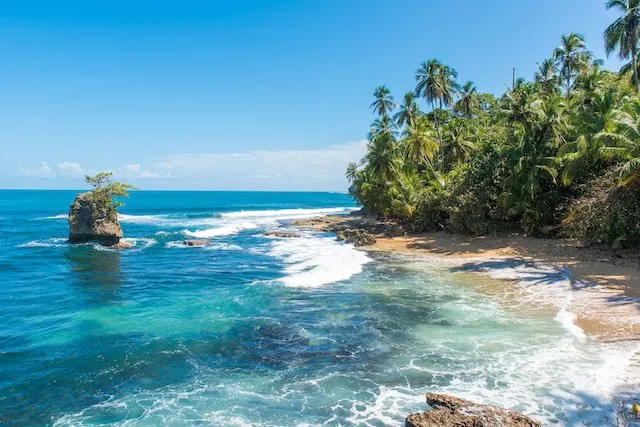
The surrounding landscape combines rainforest, mangroves, coral reefs, and golden-sand beaches. In addition, the calm Caribbean waters create favorable conditions for snorkeling during certain times of the year.
Although Manzanillo attracts visitors from around the world, it still feels more like a local community than a tourist destination. Homes, eco-lodges, and small businesses are spread throughout the area, while the beach remains largely free from large-scale development.
Consequently, visitors often find themselves immersed in nature from the moment they arrive.
The Basics of Manzanillo, Costa Rica
Part of Manzanillo’s appeal is its simplicity.
Visitors will find a small grocery store, a handful of restaurants, and limited commercial infrastructure. However, larger supermarkets, pharmacies, banks, and medical services are located in nearby Puerto Viejo, which is roughly a 20-minute drive away.
Unlike larger destinations, Manzanillo has no clearly defined neighborhoods. Instead, accommodations are scattered along the beachfront and the road connecting the village with Punta Uva.
Nightlife is also minimal. Rather than bars and clubs, evenings revolve around quiet dinners, conversations on outdoor terraces, and the sound of waves breaking along the shore. Travelers looking for live music and a more social atmosphere can easily visit Puerto Viejo before returning to the peace of Manzanillo.
How to Get to Manzanillo
Most travelers begin their journey at Juan Santamaría International Airport (SJO) near San José.
From there, several transportation options are available depending on your budget, schedule, and travel style.
Rental Car
For travelers who value flexibility, renting a car is often the best option.
The drive from San José to Manzanillo typically takes between four and a half and five hours. The route follows Highway 32 through Braulio Carrillo National Park before continuing south along the Caribbean coast.
Because the roads are paved and generally well-maintained, driving is relatively straightforward. Furthermore, having a vehicle allows visitors to explore nearby destinations such as Punta Uva, Cahuita, and Puerto Viejo at their own pace.
Shuttle Services
Alternatively, shared and private shuttles offer a comfortable, stress-free way to reach Manzanillo.
These services typically operate daily from San José and include drop-offs throughout the southern Caribbean region. As a result, they are particularly popular among couples and solo travelers who prefer not to drive.
Public Bus
Budget-conscious travelers may prefer the public bus system.
Direct buses connect San José with Puerto Viejo, after which local buses and taxis continue south to Manzanillo. Although this option requires more time and flexibility, it remains the most affordable way to reach the area.
Where to Stay in Manzanillo, Costa Rica
Accommodation in Manzanillo reflects the area’s nature-focused character.
Rather than large resorts, visitors will find eco-lodges, boutique properties, beachfront cabins, and private vacation rentals.
Jungle Eco-Lodges
Many travelers choose eco-lodges that blend seamlessly into the surrounding rainforest.
Properties such as Almonds & Corals Boutique Hotel provide opportunities to wake up to birdsong, spot monkeys from your balcony, and enjoy a deeper connection with the natural environment.
Consequently, these accommodations are especially popular among couples, photographers, and wellness travelers.
Beachfront Cabins
Small beachfront cabins offer another appealing option.
Many provide direct beach access, allowing guests to begin each day with an ocean view and end it with spectacular Caribbean sunsets.
Vacation Rentals
Families and long-term visitors often prefer vacation rentals.
In addition to providing more privacy, these properties typically include kitchens, outdoor living areas, and enough space for extended stays.
Where to Eat in Manzanillo Costa Rica
Dining in Manzanillo is simple, authentic, and deeply influenced by Caribbean traditions.
Local restaurants serve fresh seafood, coconut rice and beans, fried plantains, and other regional specialties. Rather than focusing on trendy concepts or elaborate menus, most establishments prioritize fresh ingredients and relaxed hospitality.
For visitors seeking greater variety, Puerto Viejo offers a wider selection of international restaurants, cafés, bakeries, and cocktail bars. Nevertheless, many travelers appreciate Manzanillo’s smaller food scene because it feels more connected to the local culture.
What to Do in Manzanillo
Nature is undoubtedly the main attraction in Manzanillo.
Explore the Gandoca-Manzanillo Wildlife Refuge
The wildlife refuge protects rainforest, wetlands, beaches, and coral reefs. Trails pass through dense forest and lead to remote sections of coastline that feel remarkably untouched.
Along the way, visitors frequently encounter monkeys, sloths, tropical birds, and other wildlife.
Snorkeling and Reef Exploration
When ocean conditions are calm, snorkeling becomes one of the area’s most rewarding activities.
In fact, some of the Caribbean coast’s best reef environments can be found near Manzanillo. Visibility varies throughout the year, although September and October often provide excellent conditions.
Wildlife Watching
Wildlife viewing opportunities extend far beyond the refuge trails.
Howler monkeys, white-faced capuchins, sloths, and countless bird species are commonly observed throughout the area. In addition, protected coastal waters occasionally attract manatees.
Kayaking and Beach Walks
For travelers seeking a slower pace, kayaking and beach walks provide a perfect alternative.
The coastline stretches for miles, offering countless opportunities to explore hidden coves and quiet sections of shoreline.
Best Time to Visit Manzanillo
Unlike Costa Rica’s Pacific coast, the Caribbean follows a different weather pattern.
As a result, travelers often find good weather during periods when other parts of the country experience significant rainfall.
Drier Months
September, October, February, and March frequently bring some of the region’s best weather.
Consequently, these months are excellent for snorkeling, beach days, photography, and wildlife viewing.
Wetter Months
From May through August and again from November through January, rainfall tends to increase.
However, showers often arrive in short bursts rather than lasting all day. Furthermore, the rainforest becomes especially lush and beautiful during these months.
Pace and Lifestyle in Manzanillo
Life in Manzanillo moves slowly—and that’s precisely the point.
There are no shopping districts, large resorts, or busy commercial areas. Instead, daily life revolves around the beach, the forest, and the rhythm of the Caribbean Sea.
For many visitors, that simplicity is the destination’s greatest strength.
As a result, Manzanillo is especially popular with nature lovers, retirees, couples, wellness travelers, and independent explorers looking to disconnect from busier tourist areas.
Things to Be Cautious Of in Manzanillo, Costa Rica
Although Manzanillo is generally peaceful and welcoming, travelers should keep a few practical considerations in mind.
Medical services are limited locally, with more comprehensive facilities located in Puerto Viejo and Limón. In addition, some roads and beach areas have limited lighting after dark.
Visitors should also be aware of strong sun exposure and occasional rip currents during rough ocean conditions. Therefore, reef-safe sunscreen, travel insurance, and basic ocean awareness are strongly recommended.
Is Manzanillo Worth Visiting?
Manzanillo is not for everyone.
Travelers seeking luxury resorts, extensive nightlife, and a packed activity schedule may find it too quiet. However, those looking for wildlife, pristine beaches, and one of Costa Rica’s most biodiverse coastal environments often fall in love with the area.
It isn’t flashy. It isn’t heavily developed. And it certainly isn’t crowded.
Instead, Manzanillo offers something increasingly rare: a chance to experience Costa Rica’s Caribbean coast in a way that still feels natural, authentic, and wonderfully unhurried.
Related Posts
Manzanillo vs Puerto Viejo: Which Caribbean Beach Town Should You Visit?
Trying to decide between Manzanillo vs Puerto Viejo? You’re not…
Gandoca-Manzanillo Wildlife Refuge, Costa Rica
Gandoca Manzanillo Wildlife Refuge protects one of the most untouched…
Manzanillo for Couples: A Romantic Caribbean Escape in Costa Rica
At the far southern end of Costa Rica’s Caribbean coast,…