Using Playa Hermosa as a base for exploring Guanacaste can work well if most of your trip is focused on the northern part of the province.
The town itself is small and beach-oriented, but its location puts you close to Playas del Coco, the Gulf of Papagayo, Guanacaste Airport (LIR), and several inland attractions. That makes it possible to stay in one place while alternating beach days with boating, national parks, nearby coastal towns, and countryside excursions.
The important limitation is geography. Playa Hermosa is not equally convenient for every destination in Guanacaste. It works best for northern Guanacaste, rather than for repeated day trips to places much farther south, such as Nosara or Sámara.
For travelers who prefer unpacking once and exploring selectively, however, Playa Hermosa can be a practical Guanacaste beach base.
Where Playa Hermosa Sits in Guanacaste
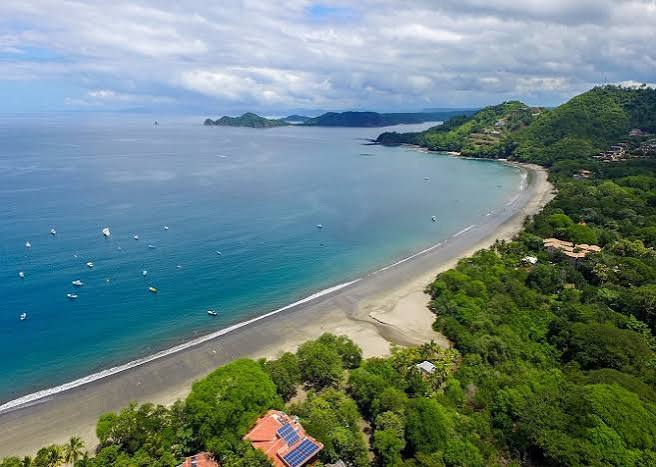
Playa Hermosa is on Guanacaste’s northern Pacific coast, close to Playas del Coco and the Gulf of Papagayo.
Costa Rica’s tourism authority describes Playa Hermosa as a quieter beach with light gray sand and generally gentle waves, with swimming and walking among its common activities. Those are general beach characteristics, not a guarantee of calm or safe swimming on any particular day.
Playas del Coco is only about 5–6 kilometers away. Current routing estimates put the taxi journey at roughly nine minutes, and a direct public bus currently connects the two communities.
That proximity is one of Playa Hermosa’s biggest practical advantages.
You can stay in the quieter beach community without giving up easy access to a larger town.
Why Playa Hermosa Works as a Base
The main advantage isn’t having dozens of attractions in town.
It’s having several different types of experiences within a manageable radius.
A week here might include a couple of uncomplicated beach days, one boating or snorkeling excursion, an evening in Coco, a nearby beach outing, and a full day inland at Rincón de la Vieja.
You don’t need to move hotels each time your plans change.
That can be particularly useful for families, couples, older travelers, and anyone who prefers a slower itinerary.
At the same time, Playa Hermosa shouldn’t be treated as a launch point for the entire province. Once your plans regularly involve several hours of driving in each direction, changing bases becomes more sensible.
Use Playas del Coco as Your Nearby Service Hub
Playas del Coco is close enough that you can use it almost as an extension of Playa Hermosa.
Coco is the more developed community, with a larger concentration of restaurants, shops, tourism services, and marine activities.
For travelers staying in Playa Hermosa, that can mean heading into Coco for:
- A larger selection of restaurants
- Grocery shopping and errands
- Diving and boat excursions
- A livelier evening
- Additional services during longer stays
Then you can return to Playa Hermosa afterward.
Because the towns are roughly five kilometers apart, this arrangement is considerably easier than using two destinations separated by an hour or more.
If you’re deciding which town should actually be your base, our Playa Hermosa vs. Playa del Coco comparison breaks down the differences.
Explore Nearby Beaches Without Turning It Into a Road Trip
One of the easier ways to use Playa Hermosa as a base is to explore the nearby coast.
You don’t need to drive across Guanacaste to experience a different beach.
Playa Panamá
Playa Panamá lies nearby along the Gulf of Papagayo corridor and can work well for a short coastal outing.
The key is not to oversell it as automatically calm or family-safe. Like Playa Hermosa, actual swimming conditions depend on weather, swell, currents, and the conditions you find that day.
Playas del Coco
Coco is useful for more than restaurants and errands.
Its beach and marine-tour infrastructure create a different coastal experience from Playa Hermosa, and many boating, fishing, and diving activities are associated with the town.
Papagayo Area
Heading north gives you access to the broader Gulf of Papagayo region.
This area includes public beaches, resort zones, boating opportunities, and scenic coastal drives, but individual beach access should be checked before departure. Not every cove visible on a map has equally simple road access or parking.
For some travelers, a boat excursion can be an easier way to experience the coastline than trying to visit several beaches independently.
Use Playa Hermosa for Marine Excursions
A day trip doesn’t always require driving inland.
Playa Hermosa and nearby Coco can serve as starting points for marine experiences around the Gulf of Papagayo.
Coco is particularly useful for organized diving and boat excursions. That allows you to spend an active morning on the water without changing hotels or committing to another overnight destination.
Snorkeling conditions vary by site and by day, so don’t assume that shore snorkeling from Playa Hermosa will always provide clear visibility.
For a more detailed look at the options, see our Snorkeling and Diving in Playa Hermosa guide.
Rincón de la Vieja Works as a Full-Day Excursion
One of the strongest inland contrasts to a Playa Hermosa stay is Rincón de la Vieja National Park.
The park protects an active volcanic landscape rather than a typical beach or rainforest environment. Geothermal features, dry forest, waterfalls, and longer hiking routes make it feel completely different from the coast.
Las Pailas Sector
For many first-time visitors, Las Pailas is the most straightforward sector.
SINAC’s current Spanish-language park page lists Las Pailas as open Tuesday through Sunday from 8:00 a.m. to 3:00 p.m., with Monday closed. Entrance tickets are sold through SINAC’s online reservation system.
This is important because some older English-language SINAC pages still show outdated hours. The current Spanish park page should take precedence when planning.
Las Pailas is known for volcanic manifestations such as fumaroles, mud features, and other geothermal activity.
Longer waterfall hikes are also available, but they shouldn’t be presented as short or suitable for everyone.
Santa María Sector
Santa María offers a quieter, more remote park experience and includes natural hot springs.
SINAC’s current Spanish-language page lists Santa María as open Thursday through Monday from 8:00 a.m. to 3:30 p.m., with Tuesday and Wednesday closed.
This sector’s natural hot springs should not be confused with the commercial hot-spring pools, volcanic mud treatments, and spa facilities offered by private properties in the wider Rincón de la Vieja area.
Those are separate experiences.
If you want to combine the national park with a private thermal attraction, plan them as two different stops.
Add a Countryside or Waterfall Day
Northern Guanacaste also has private reserves, ranches, waterfalls, horseback-riding experiences, adventure parks, and thermal attractions outside the national park.
These can be useful if your group has mixed interests.
One traveler may want to hike, while another may prefer a shorter nature activity or a thermal pool experience.
The important part is choosing the actual destination before estimating how easy the day will be.
“Near Rincón de la Vieja” can cover a fairly wide area, and attractions that look close on a regional map may use different access roads.
Do You Need a Rental Car?
Not necessarily.
If most of your trip will involve Playa Hermosa, Coco, and organized tours with transportation, you can stay here without renting a vehicle.
There is currently a direct bus between Playa Hermosa and Playas del Coco, and taxis cover the short distance as well.
However, a rental car becomes much more useful if your goal is exploring Guanacaste from Playa Hermosa.
It allows you to:
- Leave for day trips on your own schedule
- Visit nearby beaches independently
- Combine several stops in one day
- Reach inland attractions more easily
- Avoid depending on tour pickup schedules
Private transfers are another option for travelers who don’t want to drive.
Ride-hailing may sometimes be available, but I wouldn’t make it the only transportation plan for a time-sensitive excursion unless you’ve confirmed current local availability.
How Many Playa Hermosa Day Trips Make Sense?
Fewer than you may initially think.
If you choose Playa Hermosa because you want a beach vacation, spending every morning packing a day bag and every afternoon driving back defeats part of the purpose.
A balanced five-day stay might include:
- Two primarily beach-focused days
- One marine excursion
- One major inland day trip
- One flexible day for Coco or another nearby beach
Our 5 Days in Playa Hermosa itinerary shows how that can work in practice.
With a longer stay, you can add more without turning the trip into a commute.
Who Benefits Most From Using Playa Hermosa as a Base?
Playa Hermosa is particularly useful for travelers who want variety but don’t want to change accommodations constantly.
Families may appreciate having the same room, kitchen, or rental throughout the trip.
Couples can alternate active excursions with quieter beach days.
Baby Boomers and multi-generational groups may prefer avoiding repeated hotel transfers.
Independent travelers with rental cars also gain flexibility without giving up a beach setting.
The common factor isn’t age.
It’s the preference for one comfortable base combined with selective exploration.
When Playa Hermosa Is Not the Best Base
Playa Hermosa doesn’t work for every Guanacaste itinerary.
If you want restaurants and nightlife within walking distance every evening, Playas del Coco may be a better fit.
If surfing is a major priority, other destinations offer stronger access to established surf breaks.
If most of your trip revolves around Tamarindo, Playa Grande, Nosara, or the southern Nicoya Peninsula, it makes little sense to drive back to Playa Hermosa every night.
In those cases, splitting your stay between northern Guanacaste and another destination will usually reduce driving.
You Don’t Have to Leave Playa Hermosa Every Day
This may be the strongest argument for choosing a beach town as your base.
If plans change, staying put is still a valid vacation day.
Playa Hermosa is a destination in its own right, with beach time, swimming when conditions are appropriate, walks, dining, and access to the surrounding coast.
You don’t need an excursion every morning to justify staying there.
That flexibility is particularly useful during longer trips, when weather, energy levels, or family preferences can change.
Final Thoughts
Choosing Playa Hermosa as a base for exploring Guanacaste works best when you define Guanacaste realistically.
It is a practical base for northern Guanacaste.
Playas del Coco is only a few kilometers away. The Gulf of Papagayo provides nearby coastal options and marine excursions. Rincón de la Vieja can work as a full-day inland adventure. Meanwhile, Playa Hermosa gives you a beach to return to when you don’t feel like exploring at all.
What it doesn’t do is make every destination in Guanacaste conveniently reachable.
Once your itinerary extends repeatedly toward the southern Nicoya Peninsula or other distant regions, changing hotels becomes more efficient.
For travelers focused on northern Guanacaste, however, Playa Hermosa offers a useful combination: a beach stay that doesn’t require you to remain at the beach every day.
Related Posts
Snorkeling and Diving in Playa Hermosa: Quiet Water, Easy Access, and Underwater Calm
Snorkeling and diving in Playa Hermosa work a little differently from…
Playa Hermosa vs. Playa del Coco: How to Choose the Right Guanacaste Beach Town for You
If you're deciding between Playa Hermosa vs Playa del Coco, the…
Playa Hermosa Guanacaste: A Calm Beach Base with Easy Access to Everything
Playa Hermosa Guanacaste is one of those destinations that quietly makes…