Snorkeling and diving in Playa Hermosa work a little differently from a trip built around one of Costa Rica’s major dive destinations. Playa Hermosa itself is not a large diving hub. Instead, its advantage is location: you can stay beside a quieter Guanacaste beach while using nearby Playas del Coco and the Gulf of Papagayo to reach a wider range of dive and snorkeling sites.
That distinction matters.
If your priority is walking out of your hotel and choosing among numerous dive operators, another base may make more sense. However, if you want to spend part of your vacation underwater and the rest somewhere quieter, Playa Hermosa can be an excellent compromise.
Families can start with casual snorkeling. Certified divers can arrange boat dives around the Gulf of Papagayo and farther afield. Couples and solo travelers can return from a morning on the water to a slower afternoon at the beach.
You get access to the marine side of Guanacaste without having to make diving the entire vacation.
Why Playa Hermosa Works as a Snorkeling and Diving Base
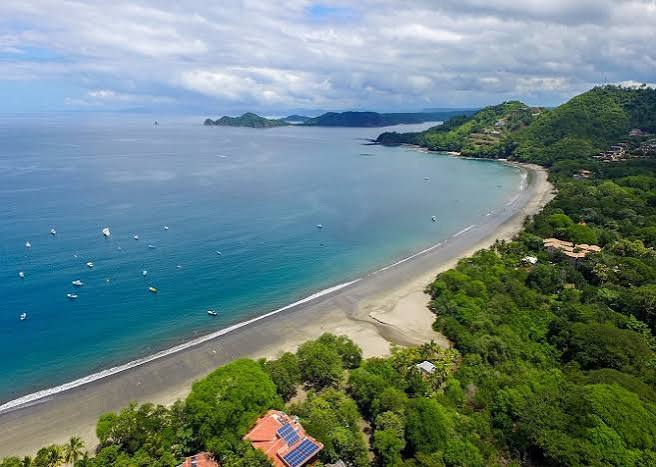
Playa Hermosa sits on a bay near Playas del Coco in northern Guanacaste. Costa Rica’s official tourism information describes the beach as having generally small waves and highlights swimming and diving among the activities available in the area.
However, “generally small waves” shouldn’t be translated into a promise of perfectly calm water.
Wind, tides, swell, currents, and seasonal conditions can all affect what you encounter on a particular day. The same applies to underwater visibility.
For Playa Hermosa diving, the more important advantage is proximity to the broader Guanacaste diving region.
PADI describes Guanacaste’s underwater environment as being characterized by volcanic formations, including arches, caverns, and tunnels. It also identifies Playa Hermosa as one of the province’s diving areas and notes that offshore destinations such as the Catalina Islands expand the range of experiences available to divers.
That makes Playa Hermosa useful as a base rather than a destination where every dive necessarily begins directly from the beach.
Can You Snorkel From Playa Hermosa Beach?
Yes, but expectations matter.
Snorkeling in Playa Hermosa Guanacaste can be a simple addition to a beach day when conditions cooperate. You don’t necessarily need to turn every snorkeling session into a half-day excursion.
However, shore snorkeling is inherently variable.
Visibility can change with waves, sediment, rainfall, currents, and other ocean conditions. A spot that looks clear one morning may be considerably less interesting the following afternoon.
For that reason, Playa Hermosa beach is better approached as an opportunity for casual snorkeling rather than a guaranteed underwater attraction.
If you’re traveling with children or trying snorkeling for the first time, check local conditions before entering and stay within your abilities. A sheltered-looking bay can still experience changing Pacific conditions.
Travelers whose main objective is seeing more marine life should consider an organized boat excursion rather than relying entirely on snorkeling from shore.
Where Does Most Diving Near Playa Hermosa Take Place?
For more serious diving near Playa Hermosa Costa Rica, the surrounding Gulf of Papagayo becomes much more important.
The coastline contains numerous rocky and volcanic underwater environments rather than the extensive tropical coral reefs travelers sometimes imagine when they hear “Costa Rica diving.”
PADI describes Guanacaste diving as particularly notable for its volcanic formations and pelagic marine life. It also notes that some nearshore sites have little or no current and can suit novice and intermediate divers, while other offshore areas provide different conditions and experiences.
Playas del Coco is another important part of the equation.
Its location and established marine-tourism infrastructure make it a useful departure area for exploring dive sites around the Gulf of Papagayo.
So, staying in Playa Hermosa doesn’t mean limiting yourself to what is immediately in front of the beach.
Think of the entire surrounding coastline as your diving area.
What Can You See While Diving in Guanacaste?
This is where expectations should become more interesting—but also more careful.
Guanacaste isn’t primarily known for colorful coral gardens. Its underwater appeal comes largely from volcanic terrain and the marine life moving through the eastern Pacific.
Depending on the site, season, conditions, and simple luck, divers in the region may encounter rays, moray eels, sharks, schools of fish, and other marine species. PADI particularly emphasizes pelagic encounters as one of Guanacaste’s diving attractions.
The Catalina Islands are especially well known for the possibility of encountering giant manta rays during parts of the year.
But none of these animals should be treated as guaranteed sightings.
Wildlife doesn’t follow a tour schedule.
That’s why it’s better to ask a reputable local dive operator what has been seen recently than to choose a trip based on a long list of animals advertised online.
What About Reef Sharks?
The original version of this article described reef sharks as “harmless and common.” I would not publish that wording.
Shark encounters are one of the attractions of diving in parts of Guanacaste, and PADI lists reef sharks among marine life encountered at sites in the Gulf of Papagayo region.
However, describing a wild animal as harmless creates an unnecessary guarantee.
A better approach is simply to treat shark sightings like any other wildlife encounter: follow the dive professional’s instructions, maintain appropriate distance, and don’t chase or touch marine animals.
For many divers, seeing a shark underwater can be one of the most memorable parts of the experience.
It doesn’t need exaggerated language in either direction.
Is the Dry Season the Best Time for Playa Hermosa Diving?
This claim also needs some nuance.
December through April is Guanacaste’s dry season, and PADI identifies it as a particularly popular period for combining diving with a Pacific-coast vacation.
But saying that underwater conditions are simply “best” throughout those months can be misleading.
Costa Rica’s Pacific diving is influenced by currents, winds, nutrient-rich water, and seasonal ocean patterns. Better visibility, warmer water, calmer seas, and more marine life do not necessarily peak at exactly the same time.
In fact, some of the conditions that reduce tropical-looking visibility can contribute to the productive marine environment that makes diving here interesting.
So, rather than choosing your dates solely for maximum visibility, decide what matters most to you.
If you’re combining diving with a broader beach vacation, the dry season can be very convenient.
If diving is the main purpose of your trip, ask operators about current water temperature, visibility, recent wildlife activity, and the sites they’re recommending for your experience level.
Is Playa Hermosa Good for Beginner Divers?
It can be a convenient base for beginners, but the appropriate dive site matters more than the town where you sleep.
PADI notes that some Guanacaste sites closer to shore have little or no current and can work for novice and intermediate divers.
That doesn’t mean every site around the Gulf of Papagayo is beginner-friendly.
Currents, depth, surge, visibility, and entry conditions vary.
If you’re newly certified, tell the operator how many dives you’ve completed and when you last dived. Don’t select a site simply because photographs look impressive.
Travelers who aren’t certified but want to try scuba should use a recognized introductory program with a qualified dive professional rather than treating scuba as another casual beach rental.
Playa Hermosa Snorkeling for Families
Families may find Playa Hermosa particularly useful because snorkeling doesn’t have to dominate the vacation.
On a suitable day, you can spend some time exploring close to shore and then return to swimming, walking, or simply relaxing on the beach.
Older children who are comfortable in the water may also enjoy an organized snorkeling excursion.
However, age alone doesn’t determine whether a snorkeling trip is appropriate. Swimming ability, confidence, flotation equipment, ocean conditions, boat logistics, and the operator’s policies all matter.
Parents should ask those questions before booking.
This is one situation where the quieter pace of Playa Hermosa becomes useful. If conditions aren’t right for snorkeling today, you haven’t lost the day. You’re still at the beach.
Where to Stay for Snorkeling and Diving in Playa Hermosa
Accommodation doesn’t need to be dive-specific.
For couples and solo travelers, a smaller hotel near the beach can make mornings and evenings simple. You can leave for an excursion and return without feeling as though you’re staying inside a diving operation.
Families and groups may prefer vacation rentals because kitchens, multiple bedrooms, laundry facilities, and additional living space become valuable during longer stays.
Location also matters.
Beach-adjacent accommodations make it easier to walk to meals and enjoy the shore after a morning excursion. Hillside properties can provide more privacy and expansive views, but you’ll probably appreciate having a car.
If you’re planning several days of diving, ask your operator where departures take place before choosing accommodation. Staying in Playa Hermosa is less convenient if every morning requires an unnecessarily complicated transfer.
Leave Time for the Beach
One reason to choose Playa Hermosa instead of treating your trip as a dedicated dive vacation is the time between excursions.
You don’t need another major activity immediately after getting off the boat.
Have lunch. Read. Walk the beach. Take a nap. Return to the shore before sunset.
Swimming can also be enjoyable when current conditions are appropriate.
If you want more time on the water without scuba equipment, kayaking and paddleboarding are possibilities around the broader Playa Hermosa area when wind and sea conditions allow.
The point isn’t to create another checklist.
It’s to enjoy the coast you’re already staying on.
Snorkeling, Yoga, and a Slower Playa Hermosa Trip
Playa Hermosa also works particularly well for travelers combining marine activities with wellness.
You could dive one morning, leave the following day open, and incorporate yoga, walking, or gentle swimming before returning to the water.
Our Yoga Trip to Playa Hermosa explores that slower approach in more detail.
This balance can be especially appealing if you’re traveling with someone who doesn’t dive. One person can spend the morning offshore without requiring the entire vacation to revolve around scuba.
Add an Inland Day Trip
After several ocean days, inland Guanacaste can feel completely different.
Rincón de la Vieja National Park brings volcanic terrain, forest trails, waterfalls, and geothermal features into the itinerary.
Just remember that scuba divers need to think about altitude after diving, not only flying.
Divers Alert Network notes that ascending to altitude after diving can increase decompression stress. Divers planning inland travel after scuba should therefore discuss their itinerary with their dive professional and follow appropriate post-dive guidance.
That consideration is particularly important when combining scuba with mountainous destinations.
Putting your inland excursion before your diving days is one simple way to avoid creating unnecessary scheduling complications.
Don’t Forget About Flying After Diving
Playa Hermosa’s proximity to Guanacaste Airport makes departure convenient, but divers shouldn’t schedule their final dive too close to their flight.
Divers Alert Network currently recommends a minimum surface interval of 12 hours after a single no-decompression dive and 18 hours after multiple dives in a day or diving over multiple days before flying. Diving requiring decompression calls for a substantially longer interval. Longer waits further reduce decompression risk.
Your dive computer, certification training, dive profile, operator, and individual circumstances may call for greater conservatism.
An easy solution is to make the final day of your vacation a beach day.
It’s hardly a sacrifice in Playa Hermosa.
Playa Hermosa vs Playas del Coco for Divers
If scuba is the primary purpose of your entire vacation, staying closer to a major dive operator or departure point may be more convenient.
If diving is only one part of the trip, Playa Hermosa becomes more compelling.
You can access the broader diving region while returning to a quieter community at the end of the day.
That is the fundamental difference.
Coco gives you more activity and services. Playa Hermosa gives you a slower base.
Our Playa Hermosa vs Playas del Coco comparison can help if you’re deciding between the two.
Who Is Snorkeling and Diving in Playa Hermosa Best For?
Snorkeling and diving in Playa Hermosa make the most sense for travelers who want marine experiences without turning their entire vacation into a dive trip.
Families can combine easy beach days with snorkeling excursions. Couples can spend a morning diving and still have a relaxed afternoon together. Solo travelers can explore the Gulf of Papagayo while staying somewhere quieter at night.
Certified divers who want several intensive dive days may prioritize proximity to their preferred operator instead.
Playa Hermosa’s strength is balance.
You have access to one of Guanacaste’s established diving regions, but you can step away from the equipment, boats, and schedules when the day’s diving is over.
For a trip built around both the Pacific and the pleasure of slowing down beside it, that combination works remarkably well.
Related Posts
Playa Hermosa as a Base for Exploring Guanacaste: Calm, Central, and Surprisingly Strategic
Using Playa Hermosa as a base for exploring Guanacaste can work well…
Playa Hermosa vs. Playa del Coco: How to Choose the Right Guanacaste Beach Town for You
If you're deciding between Playa Hermosa vs Playa del Coco, the…
Coworking Near Playa Hermosa: What Remote Work Really Looks Like on Guanacaste’s Quiet Coast
If you're searching for coworking near Playa Hermosa, there is one…