Long before Costa Rica became known around the world for national parks and ecotourism, a small stretch of forest at the southern tip of the Nicoya Peninsula changed the country’s future.
In 1963, Cabo Blanco became Costa Rica’s first protected nature reserve. At a time when large areas of forest were still being cleared for agriculture and cattle ranching, protecting this corner of the peninsula was considered an ambitious—and by some, unrealistic—idea. More than sixty years later, that decision is widely recognized as the beginning of Costa Rica’s conservation movement.
Today, Cabo Blanco remains one of the country’s most rewarding places to experience nature much as it once existed. Dense forest stretches toward rugged cliffs, secluded beaches replace developed coastlines, and wildlife moves through habitats that have been protected for generations.
For travelers staying in Montezuma, visiting Cabo Blanco is about much more than completing a hike. It is an opportunity to explore the landscape that helped shape Costa Rica’s reputation as one of the world’s leading conservation destinations.
Why Cabo Blanco Is So Important
Many visitors arrive expecting another beautiful nature reserve.
Instead, they discover one of the most significant places in Costa Rica’s environmental history.
Before Cabo Blanco was established, conservation was not yet a national priority. The reserve demonstrated that protecting forests could preserve wildlife while also creating opportunities for scientific research and responsible tourism. It became the model that later inspired the creation of dozens of national parks and protected areas across the country.
That history gives every visit an additional layer of meaning.
Walking through Cabo Blanco is not simply a recreational activity. It is an opportunity to experience the landscape that helped define modern conservation in Costa Rica.
A Different Side of the Nicoya Peninsula
Travelers often associate the Nicoya Peninsula with beaches, surfing, and dry tropical weather.
Cabo Blanco reveals another side of the region.
The reserve protects one of Central America’s last significant remnants of tropical dry forest, an ecosystem that changes dramatically throughout the year. During the dry season, many trees shed their leaves, allowing sunlight to reach the forest floor and making wildlife easier to spot. When the rains return, the landscape transforms into a dense green canopy that feels almost unrecognizable compared with only a few months earlier.
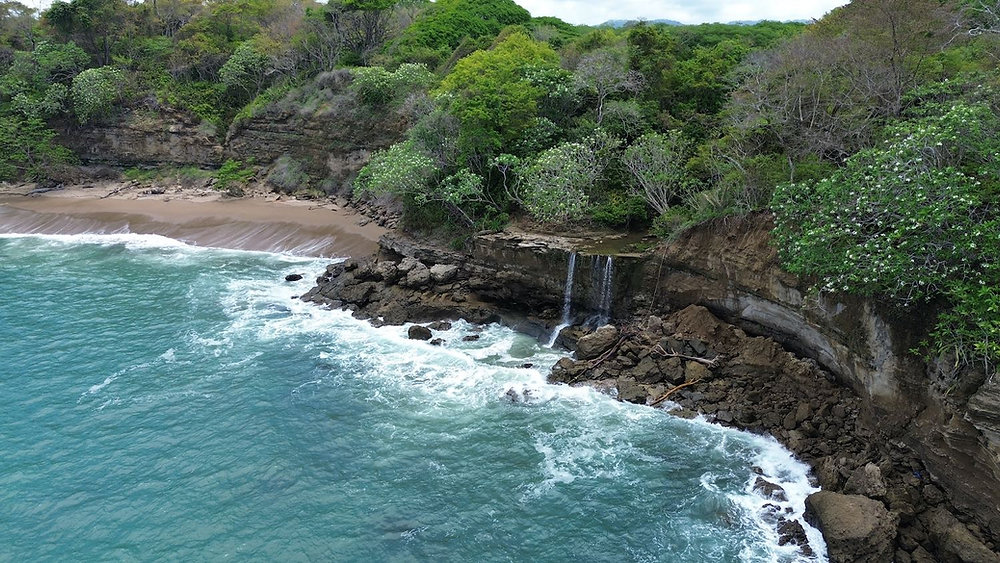
The forest eventually gives way to dramatic coastal scenery, where cliffs overlook the Pacific and isolated beaches remain largely untouched by development.
That contrast between forest and ocean is one of Cabo Blanco’s defining characteristics.
Wildlife Comes Before the Hike
Many people visit Cabo Blanco hoping to see monkeys or colorful birds.
Some leave talking instead about the forest itself.
Wildlife sightings are certainly possible. White-faced capuchins, howler monkeys, coatis, armadillos, iguanas, and a wide variety of tropical birds all live within the reserve. However, unlike smaller wildlife parks where animals have become accustomed to constant human activity, Cabo Blanco remains relatively wild.
That means encounters feel more natural—and less predictable.
You may hear howler monkeys echoing through the canopy long before you see them. A movement in the trees might reveal a troop of capuchins crossing overhead, while patient birdwatchers are often rewarded with species that casual hikers walk past.
The reserve encourages a slower style of exploration, where paying attention becomes just as important as covering distance.
Hiking Through Costa Rica’s First Nature Reserve
Exploring Cabo Blanco means experiencing the forest on foot.
Several trails wind through the reserve, each offering a slightly different perspective on the landscape. Some remain entirely beneath the forest canopy, while others eventually reach remote sections of coastline where the Pacific feels remarkably untouched.
The hiking is more demanding than many visitors expect.
Uneven terrain, tropical heat, and long stretches without services require a reasonable level of preparation. Yet the physical effort also contributes to the experience. The farther you walk, the quieter the forest becomes, and the fewer reminders remain of the towns just beyond the reserve’s boundaries.
The Coastline Is Part of the Experience
Although the forest receives most of the attention, Cabo Blanco also protects an extraordinary stretch of Pacific coastline.
As hiking trails approach the ocean, dense vegetation suddenly opens to reveal secluded beaches framed by rocky headlands and powerful surf. These are not beaches designed for swimming or spending the afternoon beneath umbrellas.
Instead, they feel isolated and remarkably untouched.
Watching waves crash against the shoreline while surrounded by protected forest offers a powerful reminder that Cabo Blanco preserves entire ecosystems rather than individual attractions.
The ocean and the forest have always belonged together here.
When Should You Visit Cabo Blanco?
Every season offers something different.
From December through April, lower rainfall creates more comfortable hiking conditions and makes trails easier to navigate. Wildlife can also be easier to observe because the forest becomes more open as many trees lose their leaves.
The green season transforms the reserve.
Fresh vegetation returns, the forest becomes noticeably denser, and the landscape takes on a completely different character. Bird activity often increases, while the rainforest atmosphere becomes more dramatic after periods of rain.
Regardless of the season, arriving early in the morning usually provides the most comfortable temperatures and the best opportunities for wildlife observation.
Staying Near the Reserve
Montezuma is the most convenient base for exploring Cabo Blanco.
The short drive allows visitors to arrive early before temperatures rise and before trails become busier later in the morning. It also makes it easy to combine a morning in the reserve with an afternoon back in town.
Accommodation choices range from small boutique hotels within walking distance of restaurants to secluded eco-lodges surrounded by forest.
Travelers who prioritize easy access to the reserve generally find Montezuma more practical than staying farther north on the peninsula.
A Different Kind of Nature Experience
Cabo Blanco is not designed around convenience.
Facilities remain intentionally limited, wildlife follows its own schedule, and the reserve asks visitors to adapt to the environment rather than the other way around.
That is precisely what makes the experience memorable.
Instead of moving between viewpoints built for tourism, you spend hours immersed in an ecosystem that has been protected for decades. Every sound, every movement in the canopy, and every glimpse of the coastline feels earned rather than staged.
It is a place that rewards curiosity more than speed.
Is Cabo Blanco Worth Visiting?
Absolutely, especially if your idea of travel includes understanding the places you visit rather than simply seeing them.
Cabo Blanco is more physically demanding than many of Costa Rica’s better-known parks, and wildlife sightings require patience. Yet those challenges are part of its appeal.
The reserve feels authentic because it has remained focused on conservation rather than entertainment.
For travelers staying in Montezuma, it provides the perfect complement to the town’s beaches and waterfalls. Together, they showcase two very different sides of the Nicoya Peninsula: one shaped by rivers and the Pacific Ocean, the other by decades of environmental protection.
Final Thoughts
Cabo Blanco is more than Costa Rica’s first protected area.
It is the place where the country’s conservation story truly began.
Walking beneath its dry tropical forest, listening to monkeys in the canopy, and reaching a remote Pacific beach offers far more than a day of hiking. It provides a glimpse into the landscape that inspired one of the world’s most successful conservation models.
More than sixty years after its creation, Cabo Blanco continues to prove that protecting nature and sharing it responsibly with visitors can go hand in hand.
For anyone exploring Montezuma and the Nicoya Peninsula, it remains one of the most meaningful places to experience Costa Rica’s wild side.
Families with older children who enjoy hiking can find it rewarding, but expectations should be set appropriately
Related Posts
Montezuma vs Santa Teresa: Which Nicoya Peninsula Beach Town Is Right for You?
At first glance, Montezuma and Santa Teresa don't seem all…
Montezuma Waterfall: Costa Rica’s Most Famous Jungle Escape
Some places become famous because they are spectacular. Others become…