Birdwatching in Caño Negro Wildlife Refuge offers an opportunity to observe wetland birds in northern Costa Rica, near the Nicaraguan border. The refuge protects a network of lagoons, rivers, marshes, and seasonally flooded forests within the Río Frío watershed. These habitats attract resident waterbirds and migratory species at different times of the year.
Most visitors explore the area by boat, watching for herons, kingfishers, anhingas, and other birds along the waterways. The jabiru stork is a particular attraction, although sightings are uncommon and never guaranteed.
Because water levels change throughout the year, birdwatching conditions vary considerably. Understanding these seasonal patterns can help you choose when to visit, select an appropriate guide, and prepare for a rewarding excursion.
Why Birdwatching in Caño Negro Wildlife Refuge Is Special
Caño Negro differs from Costa Rica’s mountain forests and coastal birdwatching destinations because its habitats depend heavily on seasonal flooding.
The refuge lies in the lower Río Frío watershed, where rainfall influences the movement of water between rivers, lagoons, and surrounding vegetation.
During wetter periods, water spreads across low-lying areas and creates additional aquatic habitat. As conditions become drier, shallow lagoons and exposed feeding areas may become easier to observe.
These changes influence where birds search for food, rest, and move between habitats.
For example, herons and egrets often feed in shallow water. Meanwhile, kingfishers hunt along waterways, and anhingas dive beneath the surface in search of fish.
Trees and riverside vegetation provide additional habitat for birds that perch, nest, or shelter away from open water.
As a result, a single excursion can introduce visitors to several bird groups with different feeding behaviors.
The refuge also holds international importance. Costa Rica established Caño Negro Wildlife Refuge in 1984, and the wetlands received Ramsar recognition in 1991.
However, protected status does not guarantee sightings or stable bird populations. Habitat conditions, weather, migration, and human activities continue to influence the ecosystem.
Birds You Can See in Caño Negro
Caño Negro supports hundreds of recorded bird species across its wetland and surrounding habitats.
However, the species visible during a particular visit depend on the season, water levels, and observation conditions.
Rather than expecting a fixed checklist, it helps to understand the different groups of birds that use the refuge.
Wading Birds and Storks
Wading birds are among the most noticeable inhabitants of Caño Negro’s shallow wetlands.
Their long legs allow them to search for food in water where many swimming birds cannot easily feed.
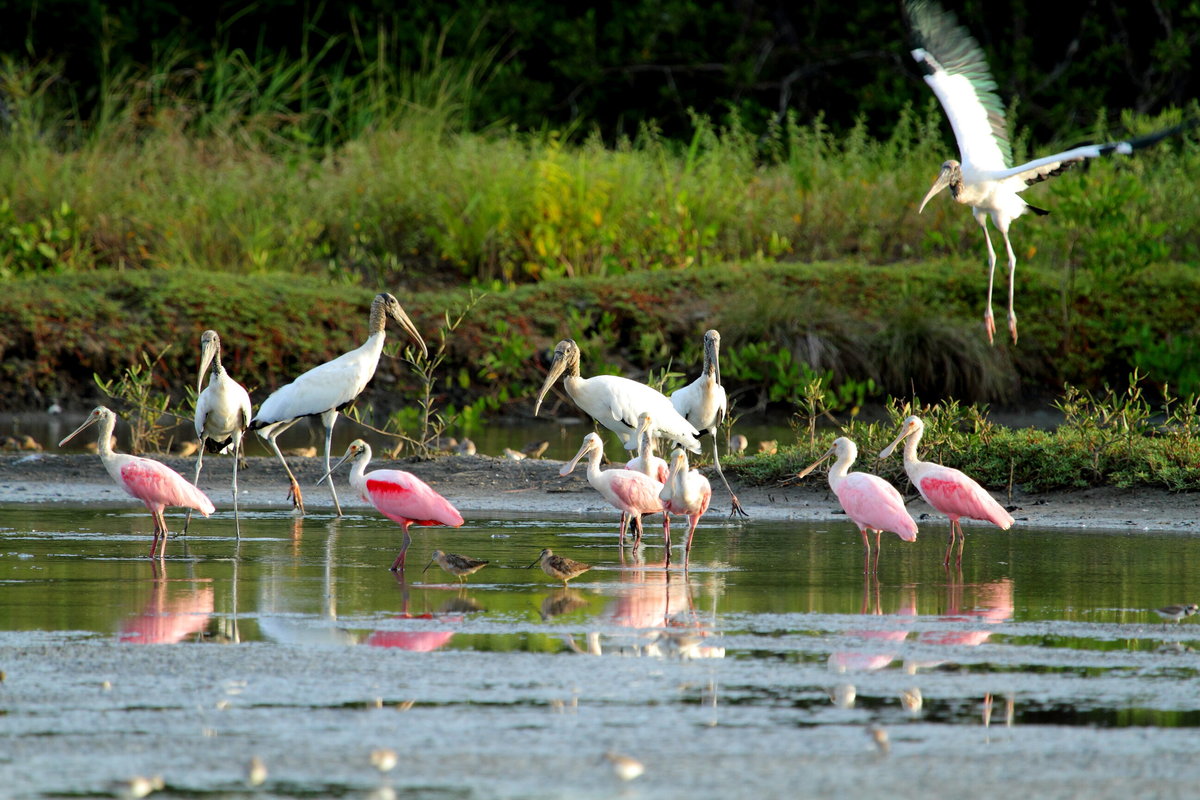
Species associated with the refuge include the great blue heron, snowy egret, roseate spoonbill, wood stork, and several other herons and egrets.
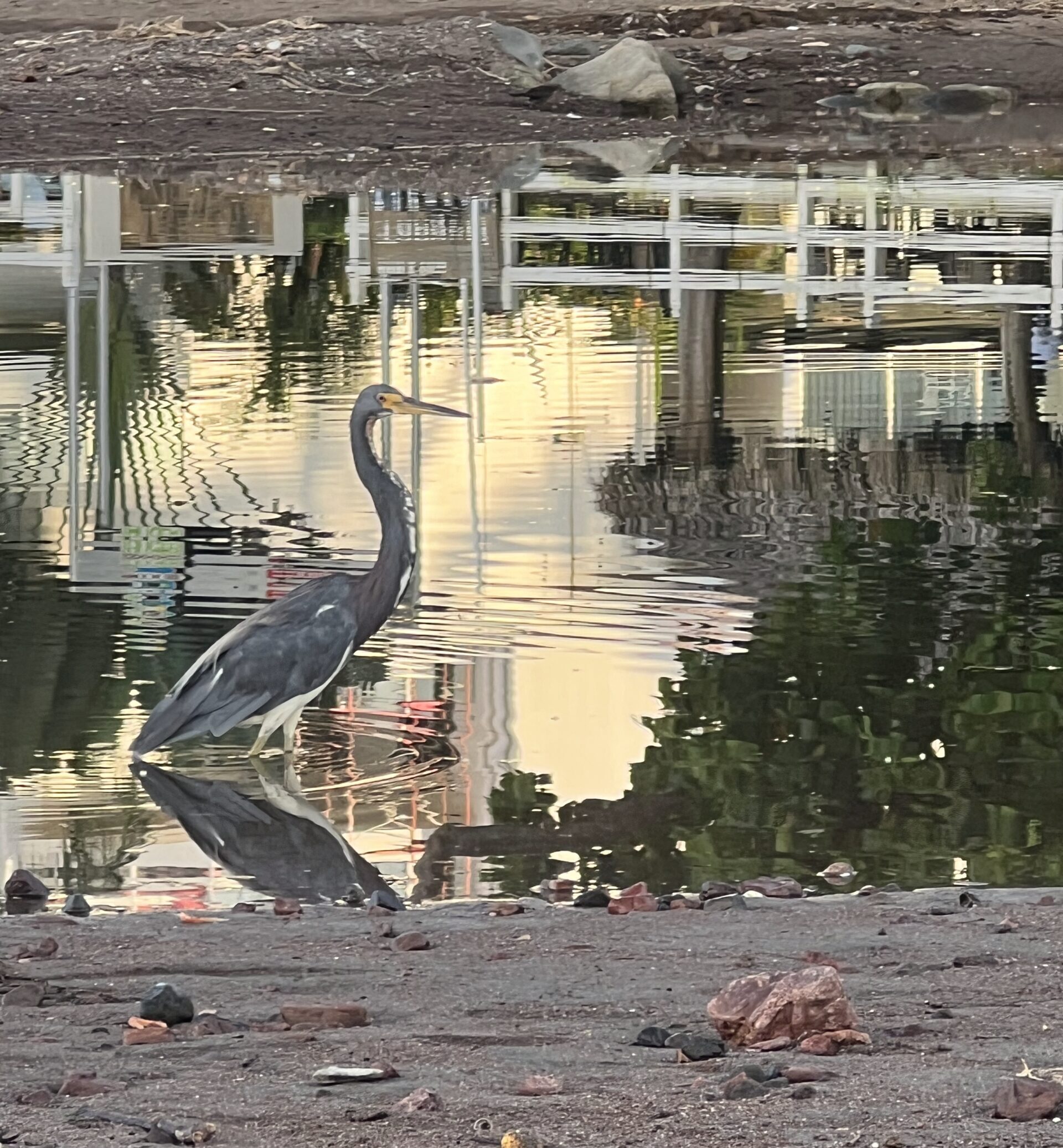
Great blue herons often stand quietly near water, waiting to capture fish or other prey.
Snowy egrets are smaller white herons with dark legs and distinctive yellow feet. They may actively disturb shallow water while searching for food.
Roseate spoonbills have broad, spoon-shaped bills that they sweep through water to locate prey.
Wood storks use their sensitive bills to detect food while wading.
However, these species do not all occur in the same numbers or follow identical seasonal patterns.
Their visibility changes as feeding areas expand or contract.
Diving and Swimming Birds
Some birds search for food beneath the water rather than along its edges.
Anhingas and neotropic cormorants are two examples associated with Caño Negro’s waterways.
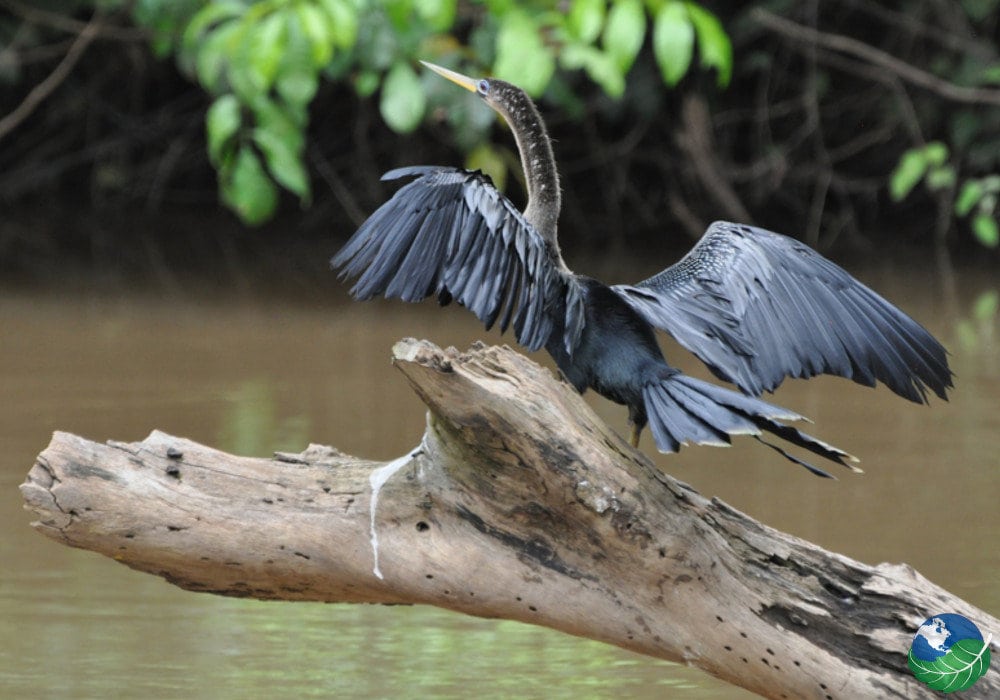
Anhingas have long necks and pointed bills. They often swim with much of their body submerged before diving after fish.
After leaving the water, they may perch with their wings spread.
Neotropic cormorants also dive for fish, although their body shape and bill differ from those of anhingas.
Observing these birds can help visitors understand how different species use the same aquatic environment.
Kingfishers and Riverbank Birds
Kingfishers are another reason birdwatchers pay attention to riverside branches.
These birds often perch above water while searching for fish or other aquatic prey.
Several kingfisher species occur in Costa Rica, including the ringed, Amazon, green, and American pygmy kingfishers.
However, not every species is equally likely to appear on a standard Caño Negro excursion.
Their size, preferred habitat, and visibility differ.
The ringed kingfisher is relatively large and may be easier to notice. Smaller species can be difficult to locate among vegetation.
Therefore, binoculars and an experienced guide are particularly useful.
Migratory Birds
Caño Negro also provides habitat for migratory species.
Some birds travel between breeding areas in North America and nonbreeding habitats farther south. Others move regionally or respond to changing environmental conditions.
Migratory birds associated with the wider wetland region include ospreys, certain warblers, swallows, and shorebirds.
However, migration schedules vary by species.
Some birds spend extended periods in Costa Rica, while others appear mainly during migration.
Additionally, local movements caused by changing water levels should not be confused with long-distance migration.
For this reason, birdwatchers interested in particular species should review recent observations rather than relying on a general migration calendar.
The Jabiru Stork: A Special Birdwatching Target
The jabiru stork (Jabiru mycteria) is one of the most recognizable birds associated with Caño Negro.
This exceptionally large stork has predominantly white plumage, a black head and neck, and a conspicuous red band near the base of its neck.
Its size and appearance make it a memorable sight.
Jabirus depend on wetland environments where they can search for aquatic prey.
Caño Negro is an important area for the species in Costa Rica, where its distribution is limited.
However, its global conservation status should not be confused with its national rarity. A species can have a relatively secure global classification while remaining uncommon within one country.
Visitors should also understand that jabirus are not reliably visible on every tour.
Water levels, feeding behavior, breeding activity, and the birds’ movements influence their location.
If seeing a jabiru is a priority, ask a knowledgeable local guide about recent observations and appropriate viewing opportunities.
Even then, treat a sighting as a possibility rather than a promise.
Most importantly, never approach nesting birds or encourage a boat operator to disturb them.
Resident Birds vs. Migratory Birds
Understanding the difference between resident and migratory species makes birdwatching more informative.
Resident birds occur in the region throughout the year, although they may move between habitats as environmental conditions change.
Migratory birds travel seasonally between different geographical regions.
Some migrants spend the northern winter in Costa Rica. Others pass through during migration or appear only occasionally.
However, seasonal movements are not always straightforward.
For example, a resident waterbird may disappear from a familiar observation area because falling water levels have changed its feeding habitat.
That does not necessarily mean it has migrated.
Likewise, the arrival of migratory birds does not guarantee that overall species diversity will be higher on a particular tour.
Observation conditions and the amount of time spent searching also affect the number of species recorded.
For dedicated birders, keeping separate notes about resident species, migrants, and habitat conditions can make each visit more useful.
Best Time for Birdwatching in Caño Negro Wildlife Refuge
Birdwatching is possible throughout the year, but seasonal flooding changes the experience.
The best period depends on your target species, preferred conditions, and the type of tour you choose.
Dry Season: December to April
Northern Costa Rica generally experiences drier conditions during these months, although rainfall varies from year to year.
As water levels decline, some lagoons become shallower and expose feeding areas.
This can make certain wading birds easier to observe.
However, lower water levels may also restrict boat navigation.
Some channels become difficult to enter, and tours may need to follow alternative routes.
Therefore, the dry season does not automatically provide better access or more sightings.
Rainy Season: May to November
During wetter periods, rainfall increases water levels across parts of the Río Frío wetland system.
Flooded vegetation expands, and aquatic habitats become more connected.
As a result, birds may spread across a larger area.
Some species become harder to locate, while others may use habitats that are unavailable during lower-water periods.
Rain and changing river conditions can also influence tour schedules.
However, the rainy season does not necessarily prevent birdwatching.
Migration Periods
Many migratory birds that breed farther north occur in Costa Rica during portions of the northern autumn, winter, and spring.
However, arrival and departure dates differ among species.
For example, an osprey may follow a different seasonal pattern from a migratory warbler or shorebird.
Additionally, some species are passage migrants rather than long-term winter visitors.
For the most useful information, review recent local checklists and ask guides about current conditions.
Avoid choosing travel dates based on a single species unless reliable seasonal records support that decision.
Best Time of Day for Birdwatching
Early morning is often a practical time for birdwatching in Caño Negro.
Temperatures may be more comfortable, and softer light can help photographers.
Some species are also active during the morning as they search for food.
However, bird activity varies.
Waterbirds may continue feeding throughout the day, depending on water conditions and prey availability.
Likewise, weather and wind can affect visibility at any hour.
Therefore, morning tours are often a sensible choice, but they do not guarantee better sightings.
If you have a particular target species, ask your guide which departure time is most appropriate.
What to Expect on a Caño Negro Birdwatching Tour
Guided boat tours are a common way to observe birds around Caño Negro.
The boats travel through waterways where visitors can look for birds along riverbanks, in trees, and across open water.
A knowledgeable guide can help identify species by appearance, behavior, and calls.
However, tour formats differ.
Some excursions focus on general wildlife, while others give bird identification and photography more attention.
Departure points also vary. Caño Negro village and Los Chiles are separate locations, and not every excursion uses the same section of the Río Frío.
Before booking, confirm the meeting point, duration, transportation arrangements, and safety equipment.
General Wildlife Tour vs. Dedicated Birdwatching Tour
A general wildlife excursion may include birds, monkeys, caimans, turtles, and wetland scenery.
This format often suits first-time visitors who want a broad introduction to the region.
A dedicated birdwatching excursion may spend more time identifying species, observing behavior, and searching suitable habitats.
Specialist guides may also help visitors distinguish similar birds and maintain a checklist.
However, a specialist tour does not guarantee rare sightings.
Travelers with specific birding goals should communicate them before booking.
Birdwatching Photography Tips
Photographing birds from a boat presents different challenges from photography on land.
The boat may move, lighting can change quickly, and vegetation may partially hide a subject.
However, a few preparations can improve your results.
Use a Telephoto Lens
A telephoto lens allows you to photograph birds without approaching them too closely.
The ideal focal length depends on the camera, subject distance, and lighting.
Therefore, there is no single lens that every visitor needs.
Account for Boat Movement
Even when a boat appears stationary, water movement can affect sharpness.
A faster shutter speed may help when photographing moving birds or working from an unstable platform.
However, camera settings should match the available light and your equipment.
Keep gear secure, particularly while boarding or changing positions.
Protect Equipment from Rain and Humidity
Humidity and unexpected rain can affect cameras and lenses.
Bring suitable waterproof protection and a clean lens cloth.
Additionally, avoid changing lenses unnecessarily when conditions are wet or dusty.
Photograph Birds Responsibly
A good photograph should not require disturbing an animal.
Avoid asking guides to chase birds or approach nests.
Instead, use distance, patience, and appropriate equipment.
Do not use flash or recorded bird calls when they may disturb sensitive species.
Likewise, never enter restricted areas to obtain a better photograph.
What to Bring for Birdwatching in Caño Negro
You do not need professional equipment to enjoy the refuge.
However, a few items can make identification and observation easier.
- Binoculars for identifying distant birds.
- A field guide or bird identification app.
- Camera with a zoom lens, if desired.
- Lightweight clothing suitable for humid conditions.
- Hat and sunscreen.
- Insect repellent.
- Drinking water.
- Light rain jacket.
- Waterproof protection for electronics.
- Notebook or digital bird checklist.
Avoid bringing more equipment than you can safely manage on a small boat.
If you plan to photograph birds, ask the operator about available space and seating arrangements.
How to Use eBird for Caño Negro Birdwatching
EBird, developed by the Cornell Lab of Ornithology, is a useful resource for preparing a birdwatching trip.
The platform allows birdwatchers to explore observations, regional checklists, and seasonal records.
Before visiting Caño Negro, you can use eBird to research species that have been reported in the area.
You can also review recent observations to understand which birds other visitors have recorded.
However, eBird data requires interpretation.
A reported sighting does not mean a bird will remain in the same location.
Additionally, checklist totals depend on observer effort, identification skills, and reporting patterns.
For this reason, use eBird as a planning resource rather than a guarantee of current wildlife presence.
After your visit, consider submitting an accurate checklist with the correct location and observation details.
Responsible Birdwatching and Conservation
Caño Negro’s wetlands support birds that depend on suitable feeding, resting, and breeding habitats.
However, wildlife observation can cause disturbance when visitors approach too closely or ignore refuge regulations.
Responsible birdwatching begins with maintaining appropriate distances.
Avoid feeding birds, approaching nests, or making unnecessary noise.
Boat operators should also navigate carefully around sensitive areas.
Additionally, recorded bird calls can influence territorial or breeding behavior. Avoid using playback unless it is permitted and appropriate for the circumstances.
Respecting these guidelines helps reduce unnecessary disturbance.
Is Birdwatching in Caño Negro Wildlife Refuge Worth It?
Caño Negro is particularly suitable for travelers interested in wetland birds, migration, and wildlife photography.
Beginners can learn to identify common waterbirds, while experienced birders may appreciate the variety of habitats and opportunities to search for less frequently observed species.
However, the refuge requires realistic expectations.
Water levels affect navigation, weather can influence visibility, and rare birds may not appear.
Additionally, travelers staying in La Fortuna should account for the drive to the tour departure point.
For those who enjoy observing birds rather than rushing between attractions, Caño Negro can be a worthwhile addition to a northern Costa Rica itinerary.
Frequently Asked Questions
Is Caño Negro Wildlife Refuge Good for Birdwatching?
Yes. Its wetlands support a wide variety of resident and migratory birds, including herons, egrets, storks, kingfishers, anhingas, and other aquatic species.
How Many Bird Species Are Found in Caño Negro?
Official refuge descriptions report more than 300 bird species. However, totals can vary according to the geographic area, recording period, and checklist source.
Can You See Jabiru Storks in Caño Negro?
Jabiru storks occur in the region, but sightings are not guaranteed. Their visibility depends on habitat conditions, seasonal movements, and individual behavior.
What Is the Best Month for Birdwatching in Caño Negro?
There is no single best month for every species. Lower-water periods may expose feeding areas, while wetter conditions create different habitats. Migration timing also varies.
Are Birdwatching Tours Available from La Fortuna?
Yes, some operators offer excursions from La Fortuna. However, transportation, departure locations, schedules, and inclusions vary.
Do You Need a Guide for Birdwatching in Caño Negro?
A guide is not necessary for every bird observation in the surrounding region. However, guided boat tours are a common way to explore waterways and can improve identification and interpretation.
Is Caño Negro Suitable for Beginner Birdwatchers?
Yes. Beginners can enjoy observing waterbirds and learning identification techniques. However, boat safety, weather, and individual accessibility needs should be considered.
Can You Photograph Birds from a Boat?
Yes. However, boat movement, lighting, and distance can affect results. A zoom lens and careful equipment handling are helpful.
Final Thoughts
Birdwatching in Caño Negro Wildlife Refuge provides an opportunity to observe how birds use a changing wetland landscape.
Herons, kingfishers, storks, anhingas, and migratory species occupy different habitats according to their feeding behavior and seasonal movements.
However, the most productive visit is not necessarily the one with the longest species list.
Understanding the refuge’s ecology, observing birds without disturbing them, and choosing an appropriate guide can make the experience more informative.
For travelers interested in Costa Rica’s wetland birds, Caño Negro deserves consideration as part of a northern Costa Rica itinerary.
Related Posts
Caño Negro Birdwatching: Seasons & Expert Birding Tips
Caño Negro birdwatching offers something different from the cloud forests and…
Birds of Caño Negro: Species & Best Birdwatching Spots
The birds of Caño Negro include large storks, colorful spoonbills, secretive herons,…
Is Caño Negro Worth Visiting? An Honest Visitor Guide
Is Caño Negro worth visiting? Yes, particularly if you enjoy wildlife, birdwatching, and exploring natural habitats at a relaxed pace. However, it is not the right excursion for every Costa Rica itinerary. Located in northern Costa Rica, Caño Negro Wildlife Refuge protects freshwater wetlands, lagoons, and seasonal floodplains. Instead of hiking to waterfalls or volcano viewpoints, visitors explore waterways by boat while looking for birds, reptiles, and monkeys. The experience requires patience. Wildlife sightings are unpredictable, and reaching the refuge from La Fortuna takes time. Still, for travelers interested in biodiversity, Caño Negro offers something quite different from the Arenal region. This guide explains what makes Caño Negro special, what to expect on a boat tour, and when the journey is worth the effort. What Is Caño Negro Wildlife Refuge? Caño Negro Wildlife Refuge is a protected wetland area in northern Alajuela Province, near Costa Rica's border with Nicaragua. The refuge lies within the Río Frío watershed and includes marshes, lagoons, rivers, and seasonal floodplains. Its changing water levels support a wide variety of aquatic wildlife. The National System of Conservation Areas (SINAC) manages the refuge. Caño Negro also holds international recognition under the Ramsar Convention, which identifies wetlands of global ecological importance. Unlike a permanent lake, parts of the wetland expand and contract as rainfall and river levels change. Consequently, the landscape and wildlife-viewing conditions vary throughout the year. Most travelers visit on guided boat excursions. These trips provide access to waterways where visitors can observe wildlife without extensive hiking.…