Caño Negro birdwatching offers something different from the cloud forests and tropical rainforests that attract many visitors to Costa Rica. Here, the focus shifts from dense forest canopies to freshwater wetlands, shallow lagoons, riverbanks, and seasonal floodplains.
Located in northern Costa Rica, Caño Negro Wildlife Refuge provides habitat for resident waterbirds and seasonal migrants. Its changing water levels create different feeding opportunities throughout the year.
For experienced birdwatchers, the appeal lies in understanding these habitats. A productive visit involves more than identifying species. It means watching how birds use the wetlands and adapting your plans to local conditions.
Where Is Caño Negro Wildlife Refuge?
Caño Negro Wildlife Refuge lies in northern Alajuela Province, near Costa Rica’s border with Nicaragua.
The protected area forms part of the Río Frío watershed. Its landscape includes marshes, lagoons, river channels, and seasonally flooded vegetation.
The refuge is managed by Costa Rica’s National System of Conservation Areas (SINAC). It is also recognized under the Ramsar Convention as a Wetland of International Importance.
Although travelers often associate the area with Los Chiles, Caño Negro village is a separate community. Birding excursions may depart from different locations, depending on the operator and water conditions.
Many visitors arrive from La Fortuna, near Arenal Volcano. However, birdwatchers planning several field sessions may prefer staying closer to the wetlands.
Why Caño Negro Matters for Wetland Birds
Freshwater wetlands support birds with very different feeding strategies.
Herons search shallow water for fish and amphibians. Jacanas move across floating vegetation, while kingfishers watch for prey from branches above the water.
Meanwhile, larger wading birds depend on suitable water depths and accessible feeding areas.
Caño Negro’s seasonal flooding creates a changing mixture of habitats. As water levels rise, birds can spread into flooded areas. When water recedes, exposed edges and shallow pools may become useful feeding grounds.
The refuge also supports migratory birds. Some species spend part of the northern winter in Central America, while others pass through during seasonal movements.
However, migration, wintering, and local breeding are different ecological patterns. Understanding those differences helps birdwatchers plan more effectively.
What Makes Caño Negro Birdwatching Different?
Freshwater Wetland Specialization
Many Costa Rica birding itineraries emphasize forest habitats.
Monteverde is associated with cloud forest species, while Sarapiquí attracts visitors interested in lowland rainforest birds.
Caño Negro adds freshwater wetland habitats to that itinerary.
Instead of searching only through foliage, birdwatchers can examine open water, marsh edges, floating vegetation, and exposed riverbanks.
These habitats support birds that may be difficult to encounter during forest-focused excursions.
However, visibility varies. Tall vegetation, flooded forest, and distant feeding areas can still make identification challenging.
Seasonal Water-Level Changes
Water levels influence where birds feed and how easily visitors can observe them.
During relatively drier periods, receding water may expose shallow feeding areas. Certain wading birds can become easier to locate in these conditions.
By contrast, higher water levels may open additional habitat while spreading birds across a larger area.
Neither situation benefits every species equally.
Therefore, serious birdwatchers should consider recent habitat conditions rather than assuming that one season always produces the best results.
Boat-Based Observation
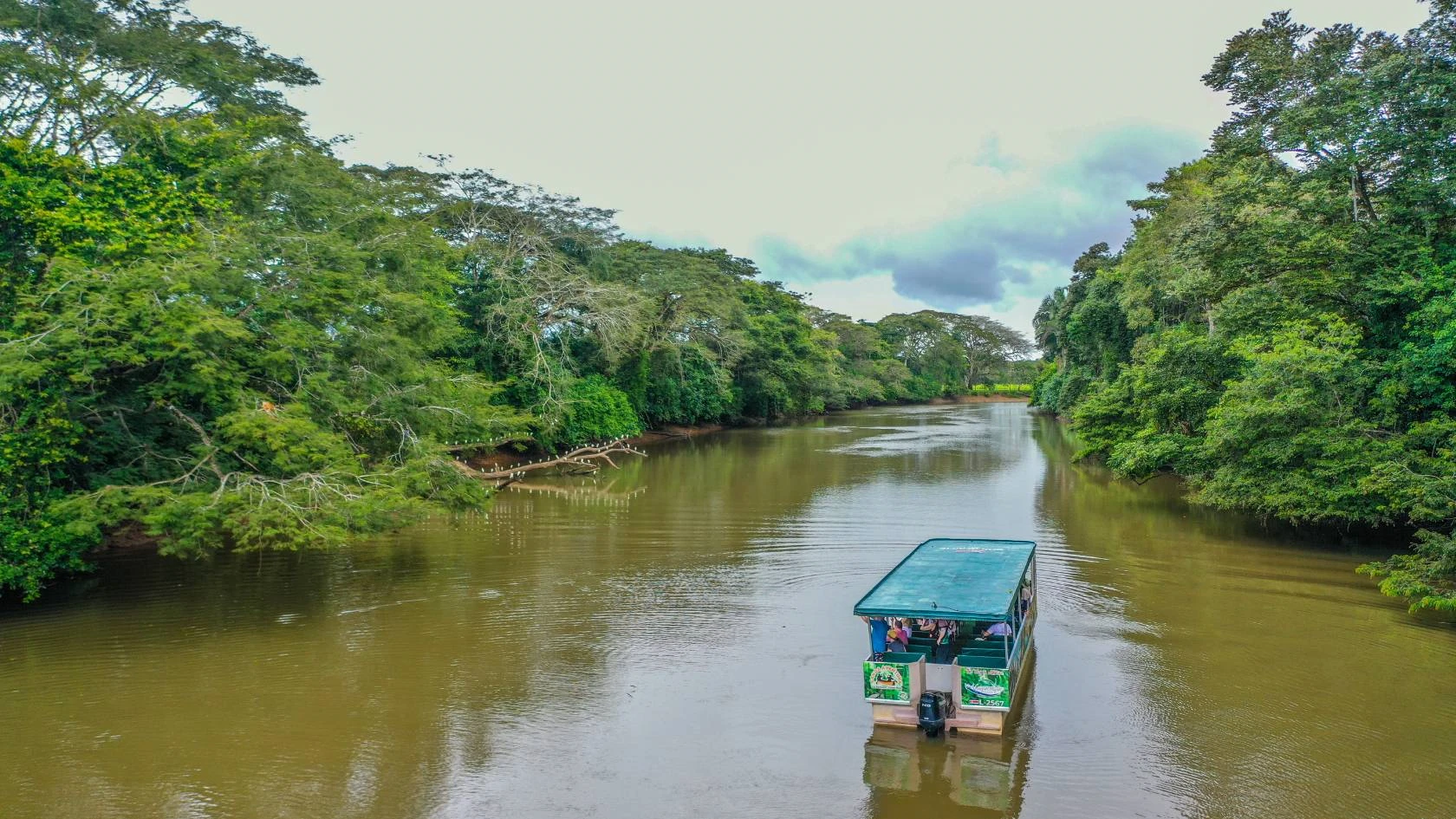
Guided boat excursions provide access to sections of the wetland that are difficult to explore on foot.
From the water, birdwatchers can examine riverside branches, floating vegetation, and open channels.
However, boats introduce their own challenges. Movement can affect binocular use and photography, while engine noise may interrupt observation.
A slower, bird-focused excursion can provide more time for identification than a general wildlife tour.
Notable Birds of Caño Negro Costa Rica
The birds of Caño Negro occupy several ecological groups. Learning where each group feeds is often more useful than memorizing a long species list.
Large Wading Birds
Large wetland birds are among the refuge’s main attractions.
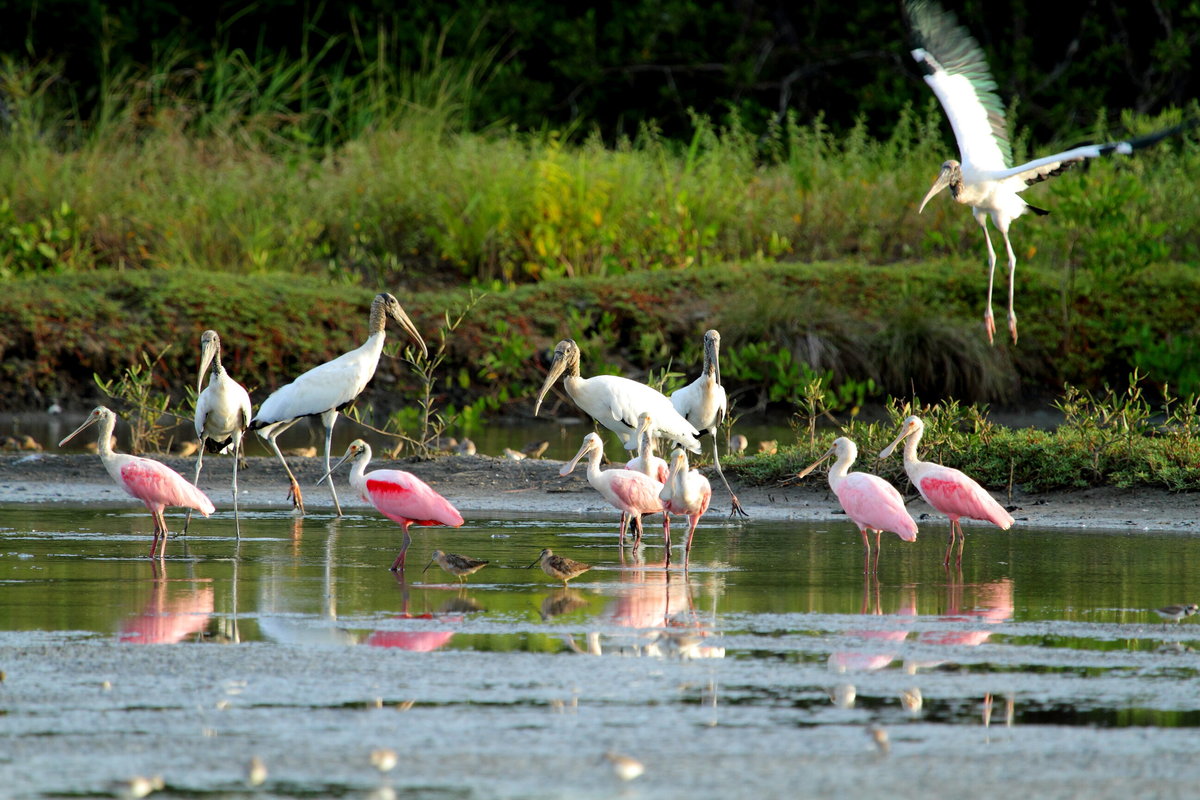
Herons and egrets search shallow water, while wood storks and roseate spoonbills use different feeding techniques.
The bare-throated tiger heron is another notable bird associated with waterways and wetland edges.
These species do not use every habitat in the same way. Water depth, vegetation, and prey availability influence where they appear.
For birdwatchers, watching feeding behavior can be as rewarding as recording a new species.
Herons and Other Wetland Specialists
Herons can be surprisingly difficult to identify when viewed briefly.
Size, bill shape, plumage, posture, and habitat provide useful clues.
Boat-billed herons, for example, are particularly distinctive because of their broad bills. However, their secretive behavior can make them difficult to observe.
Anhingas may perch with their wings spread after swimming, while northern jacanas use their long toes to move across floating vegetation.
These behaviors offer valuable identification clues even before plumage details become visible.
Raptors and Fish-Eating Birds
Wetland raptors add another dimension to birdwatching.
Ospreys are associated with fishing habitats, while snail kites specialize in aquatic snails.
Black-collared hawks are also associated with freshwater environments in parts of tropical America.
However, the occurrence and seasonal status of individual raptors should be checked against recent local records.
Some species may be present only occasionally or may use particular habitats within the wider region.
Kingfishers and Riverbank Birds
Kingfishers are well suited to river-based observation.
They often watch the water from exposed branches before diving toward prey.
Size, bill proportions, coloration, and calls can help distinguish species.
Because several kingfishers occur in Costa Rica, careful identification matters. A distant bird should not automatically be assigned to a particular species.
Binoculars and a patient guide are especially helpful when birds remain partly concealed.
The Jabiru: A Special Birding Interest
The jabiru is one of the most sought-after wetland birds in northern Costa Rica.
Its large body, long legs, and distinctive bill make it recognizable even at considerable distances.
Caño Negro and the surrounding northern wetlands are associated with the species. However, its presence in the region does not mean visitors will see one on a particular excursion.
Jabirus use extensive wetland habitats, and their movements depend on suitable feeding conditions.
For birdwatchers hoping to observe one, recent local records and knowledgeable guides are more useful than promises based on the calendar.
Breeding locations should also be treated sensitively. Avoid approaching nests or sharing precise locations that could encourage disturbance.
Resident Birds and Migratory Birds
Caño Negro supports both resident and migratory bird populations.
Resident species may use the wetlands throughout the year, although their local distribution can change with water levels.
Migratory species follow different schedules.
Some northern migrants arrive during autumn and remain for part of the winter. Others pass through during migration before continuing elsewhere.
Spring migration brings another period of movement.
As a result, September through April should not be treated as one continuous migration peak.
A birder targeting wintering waterbirds may choose different dates from someone interested in passage migrants.
Before traveling, review recent observations and the seasonal status of your target species.
Best Time for Caño Negro Birdwatching
There is no universally best month for Caño Negro birdwatching. The most suitable period depends on the birds you want to observe and the wetland conditions.
| Period | Habitat considerations | Birdwatching considerations |
|---|---|---|
| Relatively drier months, often December–April | Water levels may fall and expose shallow areas | Some wading birds may be easier to locate in suitable feeding habitats |
| Wetter months, broadly May–November | Flooded habitats expand and access conditions can change | Birds may spread across a larger area; rainfall can affect observation |
| Autumn migration | Migrants move through Central America on species-specific schedules | Recent records help identify which species are present |
| Northern winter | Some migratory species remain in the region | Useful for birders interested in wintering populations |
| Spring migration | Northbound movements occur at different times | Target species determine the most useful travel dates |
How Water Levels Affect Birdwatching
Seasonal hydrology is central to understanding Caño Negro.
When water recedes, shallow pools may provide feeding opportunities for certain wading birds.
Meanwhile, exposed riverbanks can make some species easier to observe.
Higher water levels create different conditions. Flooded vegetation may provide habitat for birds that use sheltered channels and wetland edges.
However, birds may become more dispersed.
Boat routes can also change with water conditions. Therefore, a route that was productive during one visit may offer different observations several months later.
For serious birdwatchers, flexibility is more useful than expecting identical conditions every year.
Boat-Based Birdwatching in Caño Negro
A specialized birding excursion differs from a general wildlife safari.
General tours may divide attention among monkeys, reptiles, birds, and other wildlife.
A bird-focused guide can spend more time identifying species, examining field marks, and discussing habitat use.
Private excursions may also offer greater flexibility for observation stops.
However, the boat, guide, and departure arrangements vary between operators.
Before booking, ask whether the excursion is designed for birdwatching and whether the guide has experience identifying local wetland species.
Also confirm seating, shade, life jackets, and the expected duration.
Is Early Morning the Best Time?
Early departures can offer comfortable temperatures and attractive photographic light.
Some birds may also be active during the cooler hours.
However, not every species follows the same daily pattern.
Certain raptors, for example, may become more visible later when conditions favor soaring.
The best departure time depends on your target birds, weather, and available routes.
Discuss those priorities with your guide instead of assuming sunrise is always ideal.
Where to Stay for Serious Birdwatching
Staying in La Fortuna
La Fortuna works well for travelers combining wetland birding with the forests around Arenal Volcano.
You can explore different habitats while keeping the same accommodation.
However, reaching Caño Negro requires a substantial road journey.
A standard day tour may also provide limited flexibility for extended birdwatching.
Staying Near Caño Negro or Los Chiles
Staying closer to the wetlands can reduce travel fatigue and provide more field time.
This may be useful for birders planning multiple excursions or searching for particular species.
Local accommodation options are more limited than in La Fortuna, so advance planning helps.
Confirm the location of your accommodation relative to your chosen boat departure point.
Birdwatching Equipment for Caño Negro
Good equipment improves observation, but expensive gear is not essential.
Binoculars: Both 8×42 and 10×42 binoculars can work well. Lower magnification often provides a wider field of view and easier handling. Higher magnification may help with distant birds, although boat movement can make steady viewing harder.
Spotting scopes: A scope may be useful from suitable land-based observation points. However, it is generally less practical on a moving boat.
Field guides and apps: Download identification resources and recent bird records before traveling. Mobile coverage may be inconsistent in rural areas.
Field preparation: Bring sun protection, lightweight long sleeves, insect repellent, drinking water, and rain protection. Keep electronics and notebooks in waterproof storage.
A small notebook or digital checklist is also useful for recording field marks, habitat, and behavior.
Bird Photography in Caño Negro
Caño Negro offers opportunities to photograph wetland birds from river level.
However, photographing birds from a boat requires preparation.
A telephoto lens helps when subjects remain distant. Nevertheless, a longer lens is not automatically better if boat movement makes it difficult to handle.
Use shutter speeds appropriate for the subject and available light. Continuous autofocus may help with moving birds.
For perched birds, patience and careful framing often matter more than taking many photographs.
Rain, reflections, and changing light can affect exposure. Therefore, keep a protective cover or dry bag nearby.
Avoid flash, nest disturbance, and requests for guides to approach birds too closely.
The bird’s welfare should always take priority over the photograph.
Caño Negro vs. Other Costa Rica Birding Destinations
Caño Negro complements several better-known birdwatching regions.
Monteverde: Cloud forests support a different community of birds. Travelers interested in montane species will find a contrasting experience.
Sarapiquí: Lowland rainforest birding emphasizes forest habitats, understory birds, and canopy activity.
Arenal: Forests and foothill habitats around the volcano provide opportunities to observe species associated with wooded environments.
Tortuguero: Caribbean rainforest, canals, and coastal habitats offer another form of water-based birdwatching.
Rather than ranking these destinations, experienced birdwatchers can combine them to explore different ecological communities.
A multi-habitat itinerary often provides a more varied experience than spending the entire trip in one landscape.
Planning a Bird-Focused Visit to Caño Negro
Start by identifying your main interests.
If you hope to observe particular wetland birds, review recent records and discuss realistic possibilities with a local guide.
Next, choose the excursion format.
A general wildlife tour may be sufficient for travelers who enjoy identifying birds alongside other animals.
However, serious birdwatchers may prefer a private or specialized outing with additional observation time.
Confirm the departure point, transportation, boat arrangements, and weather policy before booking.
If your schedule allows, consider more than one field session. Different routes and conditions may provide opportunities to observe different habitats.
Still, additional time never guarantees a rare sighting.
Responsible Birdwatching and Conservation
Wetland birds depend on habitats that can be sensitive to disturbance.
Maintain a respectful distance from feeding and resting birds. Never ask a boat operator to approach a nest or repeatedly follow an animal.
Avoid feeding wildlife and keep noise to a reasonable level.
Recorded bird calls should also be used cautiously. Repeated playback can disturb territorial or breeding birds.
Follow SINAC regulations and your guide’s instructions.
Responsible observation protects the habitat and helps maintain future birdwatching opportunities.
Who Should Prioritize Caño Negro Birdwatching?
Caño Negro is particularly appealing to birdwatchers interested in freshwater wetland species.
It also suits photographers seeking waterbird subjects and naturalists interested in seasonal habitat changes.
Travelers building a Costa Rica birding itinerary can use the refuge to complement forest-focused destinations.
However, birders interested exclusively in cloud forest species may prefer spending more time in montane habitats.
Likewise, visitors who enjoy long hiking routes should understand that many Caño Negro excursions are boat-based.
The best choice depends on your target species and preferred observation style.
Frequently Asked Questions About Caño Negro Birdwatching
Is Caño Negro good for birdwatching?
Yes. Caño Negro supports freshwater wetland habitats used by resident and migratory birds. Its waterways provide opportunities to observe wading birds, kingfishers, and other aquatic specialists. However, the species encountered depend on water levels, season, weather, and the particular route.
What birds can you see in Caño Negro?
Birdwatchers may encounter herons, egrets, anhingas, jacanas, kingfishers, and other wetland birds. Roseate spoonbills and larger wading birds are also associated with the region. Individual sightings vary, so recent local records are useful when planning around target species.
Can you see jabiru storks in Caño Negro?
Jabirus occur in the northern Costa Rican wetland region, including areas associated with Caño Negro. However, they should be treated as a special possibility rather than an expected sighting. Local knowledge, suitable habitat conditions, and recent records are important when searching for them.
What is the best month for birdwatching in Caño Negro?
No single month is best for every species. Lower water levels may favor observation of some wading birds, while other birds use flooded habitats. Migratory species also follow different schedules. Check recent observations and discuss target species with a knowledgeable guide.
Are there migratory birds in Caño Negro?
Yes. The wetlands support migratory birds as well as resident species. Some migrants spend part of the northern winter in the region, while others move through during autumn or spring. Their presence varies by species, so migration should not be treated as one continuous seasonal peak.
Do you need a specialized birding guide?
A specialized guide is not necessarily required for every visitor, but experienced birdwatchers may benefit from one. Bird-focused guides can help identify subtle field marks, recognize calls, and choose suitable habitats. Confirm the guide’s experience before booking.
Can you photograph birds from a boat?
Yes. Boat excursions can provide useful viewing angles for waterbirds and riverbank species. However, movement, rain, and changing light create challenges. A manageable telephoto lens, appropriate shutter speed, and waterproof protection can help. Always maintain respectful distances.
Is Caño Negro worth visiting from La Fortuna for birdwatching?
Yes, especially if freshwater wetland species are missing from your itinerary. However, the journey takes considerable time. Travelers with a strong interest in birdwatching may prefer a specialized excursion or an overnight stay closer to the refuge.
Final Thoughts: Why Caño Negro Birdwatching Matters
Caño Negro birdwatching is valuable because it introduces travelers to an ecosystem that differs from Costa Rica’s familiar rainforest and cloud forest destinations.
Its freshwater wetlands support birds with specialized feeding habits, while seasonal flooding continually changes the landscape.
For experienced birdwatchers, those changes are part of the attraction.
A successful visit depends on realistic expectations, careful planning, and an interest in observing birds within their natural habitats.
If your Costa Rica itinerary already includes forest birding, Caño Negro can add an important wetland perspective—one shaped by water levels, seasonal movements, and patient field observation.
Related Posts
Caño Negro vs Tortuguero: Which Wildlife Destination Should You Visit?
Caño Negro vs Tortuguero is a useful comparison for travelers planning…
Wildlife Conservation in Caño Negro
Wildlife Conservation in Caño Negro is one of the main reasons…
Is Caño Negro Worth Visiting? An Honest Visitor Guide
Is Caño Negro worth visiting? Yes, particularly if you enjoy wildlife, birdwatching, and exploring natural habitats at a relaxed pace. However, it is not the right excursion for every Costa Rica itinerary. Located in northern Costa Rica, Caño Negro Wildlife Refuge protects freshwater wetlands, lagoons, and seasonal floodplains. Instead of hiking to waterfalls or volcano viewpoints, visitors explore waterways by boat while looking for birds, reptiles, and monkeys. The experience requires patience. Wildlife sightings are unpredictable, and reaching the refuge from La Fortuna takes time. Still, for travelers interested in biodiversity, Caño Negro offers something quite different from the Arenal region. This guide explains what makes Caño Negro special, what to expect on a boat tour, and when the journey is worth the effort. What Is Caño Negro Wildlife Refuge? Caño Negro Wildlife Refuge is a protected wetland area in northern Alajuela Province, near Costa Rica's border with Nicaragua. The refuge lies within the Río Frío watershed and includes marshes, lagoons, rivers, and seasonal floodplains. Its changing water levels support a wide variety of aquatic wildlife. The National System of Conservation Areas (SINAC) manages the refuge. Caño Negro also holds international recognition under the Ramsar Convention, which identifies wetlands of global ecological importance. Unlike a permanent lake, parts of the wetland expand and contract as rainfall and river levels change. Consequently, the landscape and wildlife-viewing conditions vary throughout the year. Most travelers visit on guided boat excursions. These trips provide access to waterways where visitors can observe wildlife without extensive hiking.…