A Guide to Arenal’s Thermal Resorts, Natural Springs, Pricing, and What to Expect
Few experiences in Costa Rica rival sinking into naturally heated mineral water while mist rises through rainforest canopy and Arenal Volcano looms overhead. The hot springs around La Fortuna aren’t a theme-park gimmick — they’re fed by genuine geothermal activity from one of Central America’s most distinctive volcanic systems.
This guide covers the five best developed hot spring resorts in La Fortuna plus one free option, with honest notes on pricing, atmosphere, and who each one suits. If you’re still deciding between La Fortuna and Monteverde, read that first — hot springs are one of the clearest differentiators between the two destinations.
Why La Fortuna Has Hot Springs
La Fortuna sits at the base of Arenal Volcano, a stratovolcano that erupted almost continuously from 1968 to 2010 before entering a resting phase. The volcanic heat didn’t disappear with the eruptions — it remains underground. Rainwater percolates down through fractured volcanic rock, heats against the geothermal system, and resurfaces as mineral-rich thermal water along the volcano’s flanks.
These waters typically contain calcium, magnesium, and silica. The therapeutic claims are anecdotal rather than clinical, but the physical experience — sustained warmth, loosened muscles, jungle sounds in the dark — doesn’t need a medical endorsement to justify it. Most of the developed resorts line the highway between downtown La Fortuna and the national park entrance, 10 to 20 minutes from town by car.
Best Hot Springs in La Fortuna, Costa Rica
Tabacón Thermal Resort & Spa
Tabacón is the most celebrated thermal experience in La Fortuna — and the price reflects it. Day passes typically run $65–$85 for adults; guests staying at the Tabacón hotel have pool access included. Check current rates before booking, as they adjust seasonally.
What sets Tabacón apart from every other option in the area is that the thermal water flows in a natural river configuration through tropical gardens, rather than filling concrete pools. You move through the landscape with the current, passing under small waterfalls, sitting in carved river pools beneath old-growth trees. The pools vary in depth and temperature as you move upstream, and the entire property is dense with tropical plantings that make the experience feel genuinely immersive rather than constructed.
The adults-only Shangri-La section takes this further — quieter pools, a more focused atmosphere, access to the spa menu. It’s a meaningful upgrade if tranquility is the priority.
Tabacón is the right choice if you want a thermal experience that feels natural rather than engineered. It suits couples, wellness travelers, and solo visitors who find large resort complexes exhausting. Families with children are welcome in the main thermal gardens, and kids tend to enjoy the waterfall features. Book day passes at least a few days in advance during the dry season — afternoon slots fill up.
The Springs Resort & Spa
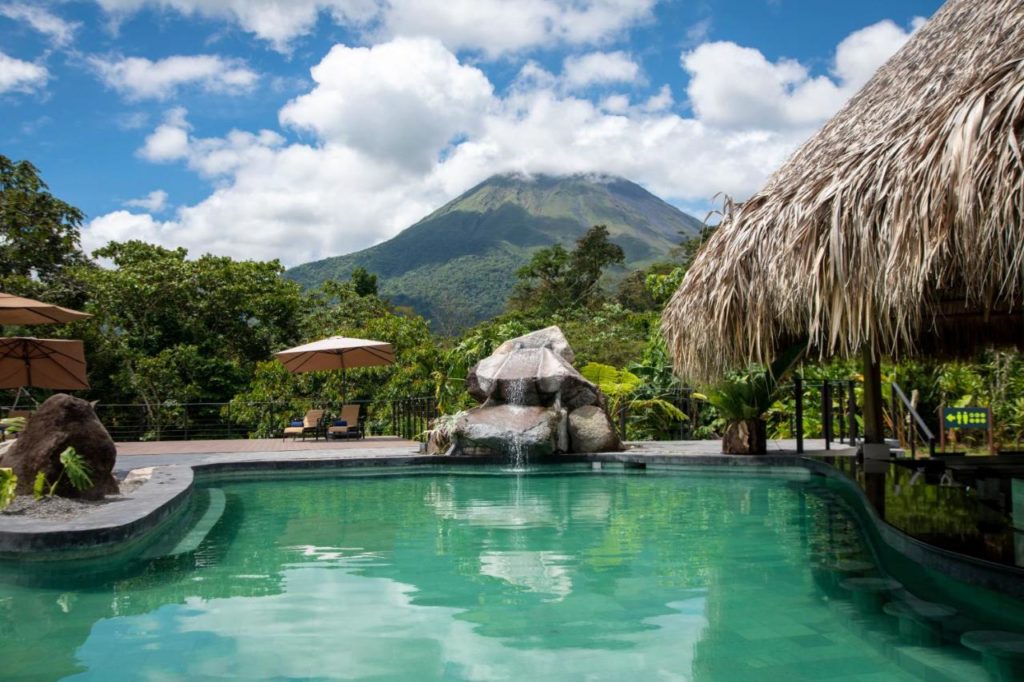
The Springs takes a different approach: scale and elevation. The pools cascade down a terraced hillside with some of the most dramatic Arenal Volcano views available from any thermal complex in the area. Day passes typically start around $75.
There are pools at a range of temperatures, a swim-up bar, and enough variety that a family with different age groups can each find something to do at the same time. The on-site wildlife sanctuary — home to big cats, primates, birds, and reptiles rescued from the illegal pet trade — makes the property genuinely worth exploring on foot, not just soaking in.
The Springs lacks the intimate, natural-river feel of Tabacón, but it compensates with panoramic views, variety, and the wildlife element. If you’re traveling with children who need more than passive soaking, this is the stronger option. Reserve in advance for holiday periods.
EcoTermales Fortuna
EcoTermales deliberately limits the number of guests per session — typically around 90 people — which makes it the quietest of the established resorts. Day passes run approximately $38–$45, and dinner package options are available that turn the visit into a full evening.
The pools are smaller and the property more contained than Tabacón or The Springs, but the experience is less hectic. There’s no swim-up bar, no water slides, and no soundtrack of competing sound systems. EcoTermales suits couples and travelers who find large hot-spring complexes more draining than restorative. It also tends to be easier to book on short notice during the shoulder season — but capacity limits mean it can sell out as quickly as the bigger resorts during peak holiday weeks. Reservations are still recommended.
Baldi Hot Springs
Baldi is the liveliest option in La Fortuna — and deliberately so. With more than 25 pools of varying temperatures, multiple water slides, bars, and restaurants spread across a sprawling complex, Baldi operates more like a thermal water park than a resort spa. Day passes typically start in the $28–$38 range, making it the most affordable of the major developed complexes.
Families with teenagers and travelers who want entertainment alongside relaxation generally enjoy it. The energy is high, the pools are crowded on weekends, and the atmosphere is celebratory rather than restorative. If you want quiet, Baldi is the wrong choice. If you want four hours of rotating between pools, drinks, and occasional water slide runs, it delivers efficiently.
Paradise Hot Springs
Paradise Hot Springs sits in a quieter middle ground: smaller and less expensive than Tabacón or The Springs (day passes typically $25–$35), but more polished and better maintained than you’d expect for the price. The pools are well-landscaped with clear sightlines toward the volcano, and the limited capacity prevents the congestion that affects the larger complexes during busy periods.
It’s a good option when EcoTermales is sold out, or when you want a solid natural-feeling experience without the flagship price tag. First-time visitors who haven’t yet developed a strong preference tend to leave satisfied.
Río Chollín — The Free Option
Near Tabacón, the Río Chollín is a naturally flowing thermal river accessible from the roadside at no charge. There are no changing facilities, no staff, and no amenities. The water is genuinely heated — it draws from the same geothermal system feeding the paid resorts upstream — and during the dry season it attracts budget travelers, backpackers, and locals in roughly equal measure.
The experience is raw: wade in, find a comfortable spot, soak alongside whoever else is there. Arrive in your swimsuit. Don’t leave valuables unattended.
During the green season, exercise real caution here. The river can rise quickly after heavy rain, and the current becomes dangerous when water levels are elevated. If the river looks higher than usual or the flow has increased, skip it that day.
Where to Stay Near the Hot Springs
The most practical dividing line in La Fortuna accommodation is whether your hotel has thermal water on-site. Properties like the Tabacón Thermal Resort, The Springs Resort, Nayara Springs, and Nayara Tented Camp give you access to pools multiple times per day — morning, afternoon, and evening — without needing transportation. If hot springs are the central reason you’re in La Fortuna, staying on the thermal corridor is worth the higher room rates.
For mid-range options with on-site thermal pools, Arenal Manoa Resort and Hotel El Silencio del Campo both offer smaller, quieter pool facilities at more moderate price points. If you’re staying downtown La Fortuna, you’ll need a taxi or shuttle to reach most thermal complexes — typically 10 to 20 minutes each way. Downtown works well if you’re prioritizing tour departures or restaurant access and treating hot springs as one activity among several rather than the centerpiece of your trip. See the full La Fortuna resort guide for hotel recommendations by budget and location.
What to Do Beyond the Hot Springs
Most visitors structure their days around a morning activity and an afternoon soak — the light and energy work in your favor that way. The main attractions within 20 to 30 minutes of the thermal corridor:
La Fortuna Waterfall is the most-visited single attraction in the area — a 75-meter cascade reached by a steep 500-step descent. The swim at the base is cold and forceful, which makes the afternoon hot spring soak feel particularly earned. Arenal Volcano National Park runs lava-field trails directly below the cone, with the clearest volcano views in the early morning before cloud cover builds. The Mistico Hanging Bridges loop takes about two hours and passes through primary rainforest with reliably good wildlife sightings. For something more active, adventure operators run white-water rafting on the Balsa River, zipline courses, and canyoning.
The 5-day La Fortuna itinerary sequences all of this into a planned schedule if you want a ready-made framework.
Seasonal Considerations
La Fortuna’s dry season runs December through April. Volcano views are clearest in the morning during these months, visitor numbers are highest, and day passes at the major resorts regularly sell out. Book reservations before you arrive, not the morning of.
The green season (May through November) brings afternoon rain, lush jungle surroundings, and meaningfully smaller crowds. Hot springs are arguably more atmospheric in the rainy season — thermal steam against jungle foliage at dusk is a different experience than a midday soak in full sun. September and October are the wettest months. The free Río Chollín should be avoided after sustained rain during this period.
Regardless of season, plan for Arenal Volcano to be cloud-covered more often than not. Views aren’t guaranteed at any time of year, and building your entire trip around clear volcano sightlines leads to disappointment. The hot springs experience doesn’t require a view to be worthwhile.
How to Choose the Right Hot Spring
The choice comes down to what you want the experience to feel like. Tabacón and EcoTermales are for travelers who want warmth, quiet, and a natural setting. The Springs is for families or groups where different people need different things simultaneously. Baldi is for travelers who want entertainment with their thermal water, at a lower price point. Paradise Hot Springs is a solid middle option — neither the best nor the most expensive, but consistently reliable.
If you’re on a tight budget and comfortable without facilities, Río Chollín delivers the same geothermal water as the paid resorts at no cost, with the trade-off that everything else — safety, cleanliness, ambiance — depends on the day.
Most travelers visiting La Fortuna for three or more nights end up going to hot springs more than once. Mixing Tabacón or EcoTermales for one evening with Baldi for an afternoon covers the full range of what the area offers.
Related La Fortuna Guides
- La Fortuna, Costa Rica: Everything You Need to Know
- Río Celeste vs La Fortuna Waterfall: Which Should You Visit?
- 5 Days in La Fortuna: The Perfect Arenal Itinerary
- Adventure Tours in La Fortuna: Ziplining, Rafting & Canyoning
- Birdwatching in Caño Negro Wildlife Refuge
Related Posts
Best Luxury Resorts in La Fortuna with Volcano Views
A Refined Guide to High-End Stays in Costa Rica’s Arenal…
Arenal Volcano vs Poás Volcano: Which Should You Visit?
Costa Rica has more than 60 volcanic formations. Still, for…
Adventure Tours in La Fortuna: Ziplining, Rafting & Canyoning
A Practical Guide to Costa Rica’s Arenal Adventure Capital La…