Choosing between Arenal Volcano and Poás Volcano depends on what you want to experience in Costa Rica. Both are active volcanic systems, but visiting them feels very different.
Arenal is known for its steep volcanic cone, rainforest trails, geothermal hot springs, and nearby attractions. Poás, meanwhile, is famous for its large summit crater and acidic lake.
The biggest difference is how visitors experience each volcano. At Arenal, you explore the surrounding landscape and admire the cone from a distance. At Poás, you may be able to look toward the active crater from an official viewpoint, depending on current restrictions.
Travel time also matters. Poás is generally more convenient for visitors staying near San José. Arenal is better suited to travelers planning several days around La Fortuna.
This Arenal Volcano vs Poás Volcano comparison explains the differences in scenery, hiking, accessibility, accommodation, weather, and volcanic safety.
Arenal Volcano: What Makes It Different?
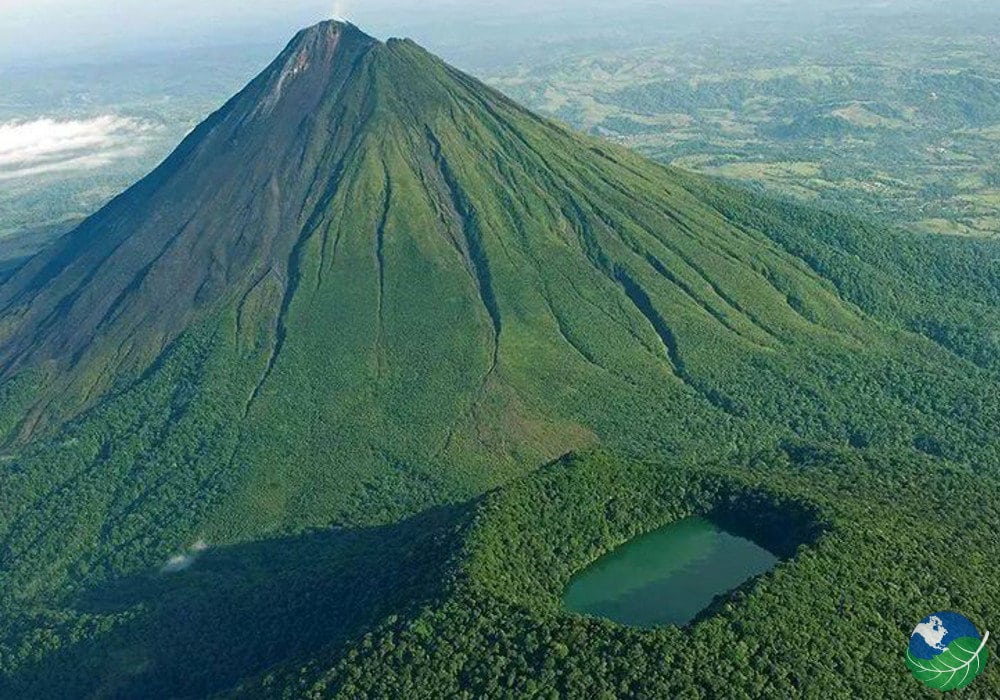
Arenal Volcano rises approximately 1,670 meters (5,479 feet) above sea level in northern Costa Rica.
Located near La Fortuna, it is a stratovolcano with a distinctive cone-shaped profile.
Arenal began a prolonged eruptive period in July 1968. Activity continued for decades before declining in 2010.
Although Arenal remains classified as an active volcano, visitors should not expect the lava flows once visible on its slopes.
Today, the surrounding region offers a wide range of activities.
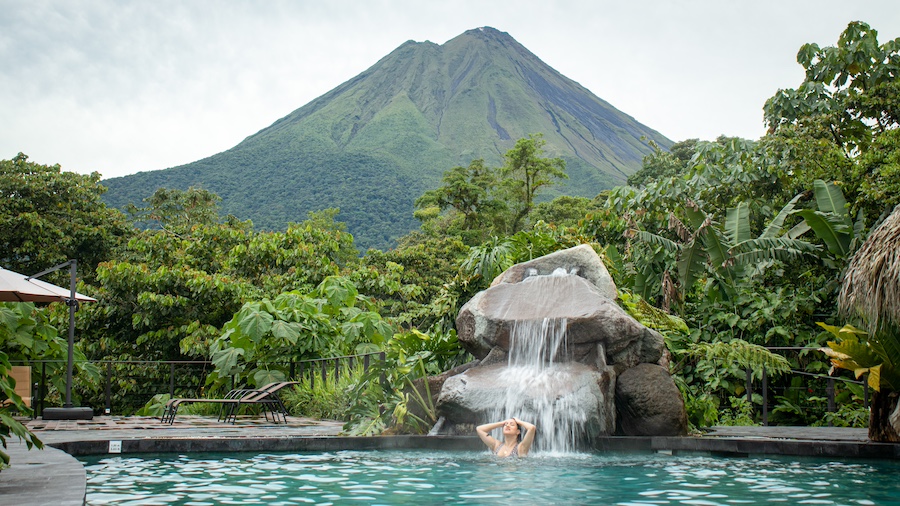
Travelers can explore Arenal Volcano National Park, visit rainforest reserves, enjoy geothermal hot springs, or spend time near Lake Arenal.
The volcano itself is usually viewed from surrounding trails, roads, hotels, and observation areas.
Climbing the active cone is prohibited.
For visitors interested in a multi-day nature vacation, Arenal offers considerably more than a single national park visit.
Poás Volcano: What Makes It Different?
Poás Volcano stands in Costa Rica’s Central Volcanic Mountain Range, north of the San José metropolitan area.
Its summit reaches approximately 2,708 meters (8,885 feet), making it substantially higher than Arenal.
Poás is known for its active crater, volcanic gases, and highly acidic crater lake.
The crater lake’s appearance changes with volcanic conditions. Its water may appear blue-green, gray, or partly obscured by steam.
Unlike Arenal, Poás has experienced more recent eruptive unrest, including significant activity in 2025.
These conditions can affect park access, visitor safety rules, and the availability of crater viewpoints.
When authorities permit entry, visitors may be able to approach an official observation area overlooking the crater.
However, access is not guaranteed. The park may close or operate under restrictions because of volcanic activity.
For travelers interested in geology, Poás offers a different experience from viewing Arenal’s exterior slopes.
Arenal Volcano vs Poás Volcano: Quick Comparison
| Category | Arenal Volcano | Poás Volcano |
|---|---|---|
| Location | Near La Fortuna, northern Costa Rica | Central Volcanic Mountain Range |
| Elevation | Approx. 1,670 m | Approx. 2,708 m |
| Main landscape | Steep volcanic cone | Large summit crater |
| Visitor experience | Forest trails and volcano views | Crater viewing when permitted |
| Volcanic activity | Quieter since 2010 | More recent eruptive unrest |
| Park access | Established visitor trails | Subject to volcanic restrictions |
| Hiking | Forest and older lava terrain | Limited routes depending on access |
| Climate | Warm and humid | Cooler and often windy |
| From San José | Longer journey | Generally closer |
| From Guanacaste Airport | Practical for northern itineraries | Longer cross-country journey |
| Nearby attractions | Hot springs, waterfalls, Lake Arenal | Coffee farms, Central Valley attractions |
| Accommodation | Wide range of resorts and lodges | Rural lodges and Central Valley hotels |
| Suggested visit | 2–4 nights | Short visit or day trip if open |
| Best for | Nature and multi-day activities | Crater geology and shorter itineraries |
Poás’s access rules can change quickly. Always confirm current conditions before making travel plans.
Cone vs Crater: Which Volcano Has Better Scenery?
The landscape is one of the clearest differences between Arenal and Poás.
Arenal Volcano: A Cone Above the Rainforest
Arenal has a steep volcanic cone surrounded by forest and open countryside.
From certain viewpoints, visitors can see older volcanic deposits and vegetation returning to previously affected areas.
Lake Arenal adds another perspective, with the volcano rising above the surrounding hills.
However, cloud cover often hides the summit.
For photographers, the appeal lies in the broader landscape rather than close access to the volcano’s crater.
Poás Volcano: Looking Toward an Active Crater
Poás offers a different geological setting.
When the park’s crater viewpoint is open, visitors can look toward the exposed volcanic crater.
Depending on current activity, they may observe the crater lake, volcanic gases, or steam.
However, these features are not always visible. Clouds and gas emissions can obscure the view.
Access to an official viewpoint also does not mean visitors can walk freely around the crater rim.
For geology enthusiasts, Poás can be especially interesting. However, the experience depends on current safety conditions.
Which Volcano Is Easier to Visit?
Accessibility can determine which destination makes more sense for your itinerary.
Visiting Poás from San José
Poás is generally easier to reach from San José, Alajuela, and Juan Santamaría International Airport.
Under normal road conditions, the drive from the Central Valley often takes around one to two hours, depending on the starting point.
However, mountain roads, traffic, fog, and weather can affect travel times.
More importantly, road access does not guarantee park entry.
Travelers must check current volcanic restrictions and official reservation requirements before visiting.
When access is permitted, Poás can fit into a shorter itinerary.
Visiting Arenal from San José or Guanacaste
Arenal requires a longer journey.
Travel from San José or Juan Santamaría International Airport commonly takes several hours. The exact time depends on the route and traffic.
Guanacaste Airport also provides access to La Fortuna, making Arenal practical for some northern Costa Rica itineraries.
However, the drive involves winding roads and changing weather conditions.
Because of the journey, Arenal is generally better suited to an overnight stay than a rushed day trip.
Spending two or three nights allows time for the national park and surrounding attractions.
Hiking at Arenal vs Poás Volcano
Both national parks offer volcanic landscapes, but their hiking experiences differ.
Hiking at Arenal Volcano National Park
Arenal Volcano National Park has established routes through forest and volcanic terrain.
Trails associated with the main visitor sector include Las Coladas and El Ceibo.
The Peninsula sector provides another area for exploring the landscape when officially accessible.
Visitors may encounter uneven ground, exposed rock, steps, and muddy sections.
These routes provide views of the volcano and surrounding vegetation, but they do not lead to the active summit.
Trail conditions can change after heavy rainfall.
For travelers who enjoy walking through different environments, Arenal generally offers more varied hiking opportunities.
Hiking at Poás Volcano National Park
Poás has historically offered a relatively short approach to its main crater viewpoint.
However, volcanic activity can affect which areas visitors may enter.
Access to the crater viewpoint, Botos Lagoon, and other trails must be confirmed through official park information.
Do not assume that all routes are open because the park appears on a map or booking website.
The higher elevation also brings cooler temperatures, wind, and frequent cloud cover.
For visitors who prefer limited walking, Poás may be appealing when the designated viewpoint is accessible.
However, current restrictions and individual mobility needs should guide the decision.
Which Volcano Has Better Nearby Attractions?
Arenal offers more activities within its surrounding tourism region.
Near La Fortuna, visitors can explore rainforest reserves, waterfalls, and hot springs. Poás, meanwhile, is surrounded by coffee-growing communities and attractions in the Central Valley.
Attractions Around Arenal Volcano
La Fortuna Waterfall is a popular excursion, although reaching the waterfall’s base involves a long staircase.
Mistico Arenal Hanging Bridges offers forest walks along established trails and suspension bridges.
Travelers can also visit thermal resorts, arrange wildlife tours, or explore Lake Arenal.
Adventure activities include ziplining, rafting, and guided excursions. However, these take place at separate locations and may require additional transportation.
For travelers spending several nights in the region, Arenal offers a wider variety of experiences.
Attractions Around Poás Volcano
The Poás region includes rural communities, coffee farms, and mountain scenery.
La Paz Waterfall Gardens is another attraction in the wider area. It operates separately from Poás Volcano National Park and has its own admission arrangements.
Visitors may also explore coffee-growing landscapes around Alajuela and the Central Valley.
However, these activities should not be confused with attractions inside the national park.
If Poás is closed, nearby attractions may provide alternatives, although their own access conditions should be checked.
Where to Stay: Arenal vs Poás Volcano
Accommodation is another important difference between the two destinations.
Staying Near Arenal Volcano
La Fortuna has a wide range of accommodation options.
Visitors can choose thermal resorts, boutique hotels, nature lodges, and family-friendly properties.
Nayara Springs offers adults-only luxury accommodation, while Tabacón Thermal Resort & Spa focuses on geothermal bathing experiences.
The Springs Resort & Spa provides another option for travelers interested in thermal pools and resort facilities.
Smaller lodges are also available around La Fortuna and El Castillo.
For travelers planning several activities, staying near Arenal can reduce daily travel time.
Staying Near Poás Volcano
Many visitors explore Poás while staying in San José, Alajuela, or nearby Central Valley communities.
The surrounding countryside also has rural lodges and boutique accommodation.
However, Poás is less associated with large thermal resort complexes than Arenal.
For a short visit, staying near the airport or within the Central Valley may be convenient.
If you want to explore coffee farms and mountain communities, a rural lodge could provide a different experience.
Weather and Visibility: Arenal vs Poás
Weather can affect both destinations, but their climates differ.
Poás sits at a higher elevation, where temperatures are generally cooler. Wind, fog, and rain can make conditions uncomfortable without suitable clothing.
Arenal is warmer and more humid. Its summit is frequently hidden by clouds, even during Costa Rica’s main tourism season.
Neither volcano offers guaranteed clear views in the morning.
For Poás, weather is only one consideration. Official access restrictions can prevent visits even when skies are clear.
For Arenal, staying several nights may provide more opportunities to see the cone under changing conditions.
Visitors should bring suitable clothing and avoid planning an entire trip around a single clear-weather window.
Volcanic Activity and Safety
Both Arenal and Poás are monitored by Costa Rican scientific authorities.
However, their recent volcanic histories differ.
Arenal’s prolonged eruptive phase ended in 2010. Although the volcano remains geologically active, it has not returned to the frequent lava-producing activity of earlier decades.
Poás has experienced more recent eruptions, including events reported in 2026. Volcanic gases, ash, and eruptive material can create hazards near the crater.
For this reason, Poás access can change with volcanic conditions.
The official SINAC website publishes visitor information and reservation procedures. However, a published schedule does not guarantee that every viewpoint or trail is accessible on a particular date.
Before visiting either park, check official announcements and follow ranger instructions.
For Poás, consult the latest information from SINAC, OVSICORI-UNA, and Costa Rica’s National Emergency Commission (CNE).
For Arenal, remain on authorized trails and never attempt to climb the volcanic cone.
Which Volcano Should You Visit?
The best choice depends on your travel priorities.
Choose Arenal if you want a multi-day nature vacation. The region offers rainforest trails, hot springs, waterfalls, and a broad range of accommodation.
Choose Poás if you’re staying near San José and want to see crater geology. This option is most practical when official access is permitted.
Families may appreciate Arenal’s range of activities. However, Poás can also suit a shorter outing when conditions allow.
Hiking enthusiasts will generally find more varied terrain around Arenal. Meanwhile, geology enthusiasts may prefer Poás’s exposed crater features.
For photography, the choice is more personal. Arenal offers views of a volcanic cone above forest and lake scenery. Poás provides a different perspective when its crater viewpoint is accessible.
Couples and wellness travelers may prefer Arenal because of its geothermal resorts and nature-focused accommodations.
Can You Visit Arenal and Poás Volcano on the Same Trip?
Yes. Both volcanoes can fit into a longer Costa Rica itinerary.
For example, travelers spending seven to ten days in the country could begin in the Central Valley.
If Poás is officially open, they could plan a visit before continuing toward La Fortuna.
Afterward, two or three nights around Arenal would allow time for hiking, hot springs, and nearby attractions.
However, Poás should not be treated as an effortless stop along every route to La Fortuna.
Mountain roads, traffic, park reservations, and volcanic restrictions can affect the schedule.
Travelers with limited time may find it more practical to choose one volcano.
Final Verdict: Arenal Volcano vs Poás Volcano
So, should you visit Arenal Volcano or Poás Volcano?
For travelers seeking several days of rainforest activities, hot springs, and scenic accommodation, Arenal is generally the stronger choice.
Its surrounding tourism region offers more opportunities to combine volcanic scenery with other experiences.
Poás is better suited to visitors interested in crater geology or planning a shorter excursion from the Central Valley.
However, Poás’s recent volcanic activity makes current park access especially important.
Neither destination guarantees clear views, and both require visitors to respect official safety restrictions.
Ultimately, the Arenal Volcano vs Poás Volcano decision depends on your location, available time, interests, and current conditions.
If your itinerary allows, visiting both offers two different perspectives on Costa Rica’s volcanic landscapes.
Related Posts
Is Arenal Volcano Active? Eruption History & Visitor Safety
Is Arenal Volcano active? Yes. Arenal remains classified as an active volcano, although its prolonged eruptive period ended in 2010. The frequent lava flows and explosive displays that once attracted visitors to northern Costa Rica are no longer part of the usual travel experience. However, an active volcano does not need to erupt continuously. Arenal still has the potential for future eruptions, which makes scientific monitoring and visitor restrictions important. For travelers planning a trip to La Fortuna, the distinction matters. You can explore volcanic landscapes, walk through regenerating forests, and enjoy the region's hot springs without expecting to see flowing lava. But is Arenal Volcano safe to visit? Authorized tourist areas are established destinations, provided visitors follow current regulations and official advisories. No volcanic environment is completely risk-free. This guide explains Arenal's eruption history, what its current classification means, how scientists monitor the volcano, and what travelers should know before visiting. Arenal Volcano: Location and Geological Overview Arenal Volcano stands near La Fortuna in northern Costa Rica, approximately 1,670 meters (5,479 feet) above sea level. It is a stratovolcano, a type of volcano built through repeated eruptions that deposit layers of lava, ash, and other volcanic material. These deposits gradually create the steep-sided shape associated with Arenal. The volcano rises above a landscape of tropical forest, rural communities, and Lake Arenal. Its surrounding protected areas include Arenal Volcano National Park.…
Best Hotels with Arenal Volcano Views
Choosing a hotel with a view of Arenal Volcano can make a stay in La Fortuna especially rewarding. On clear days, the volcano rises above the surrounding rainforest, creating one of Costa Rica's most recognizable landscapes. However, not every hotel offers the same view. Some properties have open terraces facing the volcano, while others provide glimpses through tropical gardens. Even within one resort, room orientation can make a difference. Weather is another important factor. Clouds frequently cover Arenal's summit, so no hotel can promise an unobstructed view throughout your stay. This guide compares the best hotels with Arenal Volcano views, explains their locations, and offers practical advice for booking the right room. Where Are the Best Arenal Volcano View Hotels Located? Arenal Volcano stands near La Fortuna in northern Costa Rica. It reaches approximately 1,670 meters (5,479 feet) above sea level. The volcano experienced a long eruptive period beginning in 1968. Its main eruptive activity ended in 2010, so visitors should not expect to see flowing lava. Today, the surrounding region includes rainforest reserves, thermal resorts, Lake Arenal, and Arenal Volcano National Park. Hotels are spread across several areas, each offering a different experience.…

Best Hot Springs in La Fortuna, Costa Rica
Finding the best hot springs in La Fortuna depends on how you…