Choosing between Arenal Volcano vs Poás Volcano comes down to the kind of trip you want in Costa Rica. Arenal offers rainforest trails, hot springs, waterfalls, and a distinctive volcanic cone near La Fortuna. Poás, meanwhile, offers the possibility of looking into an active volcanic crater from an official observation area.
For travelers planning several days of outdoor activities, Arenal is generally the better choice. However, Poás is more convenient for visitors staying near San José or Alajuela who want a shorter volcano excursion.
There is another important difference. Poás has experienced recent eruptions, including activity in 2026, so national park access and safety procedures can change. Arenal has been much quieter since its prolonged eruptive period ended in 2010.
This comparison covers scenery, hiking, transportation, accommodation, weather, nearby attractions, and volcanic safety to help you choose the right destination.
Arenal Volcano: What Makes It Different?
Arenal Volcano rises approximately 1,670 meters (5,479 feet) above sea level in northern Costa Rica.
Located near La Fortuna, this stratovolcano is recognizable for its steep, cone-shaped profile. Forests, older lava deposits, and open countryside surround its slopes.
Arenal entered a prolonged eruptive period on July 29, 1968. For decades, eruptions and lava flows shaped the surrounding landscape. However, the sustained eruptive activity ended in 2010.
Today, Arenal remains an active volcanic system, but visitors should not expect regular lava flows or nighttime displays.
Instead, the region attracts travelers through its combination of volcanic scenery and outdoor activities.
Arenal Volcano National Park has authorized trails through forest and older volcanic terrain. Nearby, visitors can explore Lake Arenal, rainforest reserves, and geothermal hot springs.
The volcano itself is viewed from designated trails, roads, hotels, and observation areas. Climbing the active cone is prohibited.
As a result, Arenal works especially well as a destination for travelers who want to spend two or three nights exploring the La Fortuna region.
Poás Volcano: What Makes It Different?
Poás Volcano sits in Costa Rica’s Central Volcanic Mountain Range, north of the San José metropolitan area.
SINAC lists its elevation at approximately 2,708 meters (8,885 feet), although geological references use slightly different summit measurements.
Unlike Arenal, Poás is best known for its large summit crater.
The crater contains a highly acidic lake whose appearance changes with volcanic activity, water conditions, and visibility. At times, steam or volcanic gases obscure much of the crater.
Poás also has a more recent eruptive history. Significant unrest occurred in 2025, followed by additional eruptive activity in 2026.
Consequently, authorities may restrict visitor numbers, close trails, modify safety procedures, or temporarily suspend access.
When the national park permits entry, visitors can approach designated observation areas overlooking the crater. However, they cannot explore the crater rim freely.
Poás is particularly appealing to travelers interested in geology and volcanic processes.
Its proximity to Alajuela and San José also makes it a practical option for a shorter excursion, provided the park is operating.
Arenal Volcano vs Poás Volcano: Quick Comparison
| Category | Arenal Volcano | Poás Volcano |
|---|---|---|
| Location | Near La Fortuna | North of San José |
| Elevation | About 1,670 m | About 2,708 m (SINAC) |
| Main landscape | Volcanic cone | Active summit crater |
| Visitor experience | Hiking and volcano views | Crater viewing when permitted |
| Recent eruptions | Last recorded in 2010 | Eruptive activity in 2026 |
| Hiking | Forest and older lava terrain | Restricted designated routes |
| Climate | Warm and humid | Cooler and often windy |
| From San José | Longer journey | Generally closer |
| Nearby attractions | Hot springs, waterfalls, lake | Coffee farms, Central Valley |
| Accommodation | Resorts and nature lodges | Rural lodges and city hotels |
| Suggested stay | 2–4 nights | Day trip if accessible |
| Best for | Multi-day nature trips | Crater geology and short visits |
Both volcanoes offer worthwhile experiences, but they serve different travel priorities.
Arenal provides more opportunities to combine volcanic scenery with several days of activities. Poás offers a more focused geological visit when safety conditions permit.
Cone vs Crater: Which Volcano Has Better Scenery?
The most noticeable difference between Arenal and Poás is their appearance.
Arenal Volcano: A Cone Above the Rainforest
Arenal’s steep cone dominates the surrounding landscape.
From certain viewpoints, visitors can photograph the volcano above forest, open fields, and older volcanic deposits.
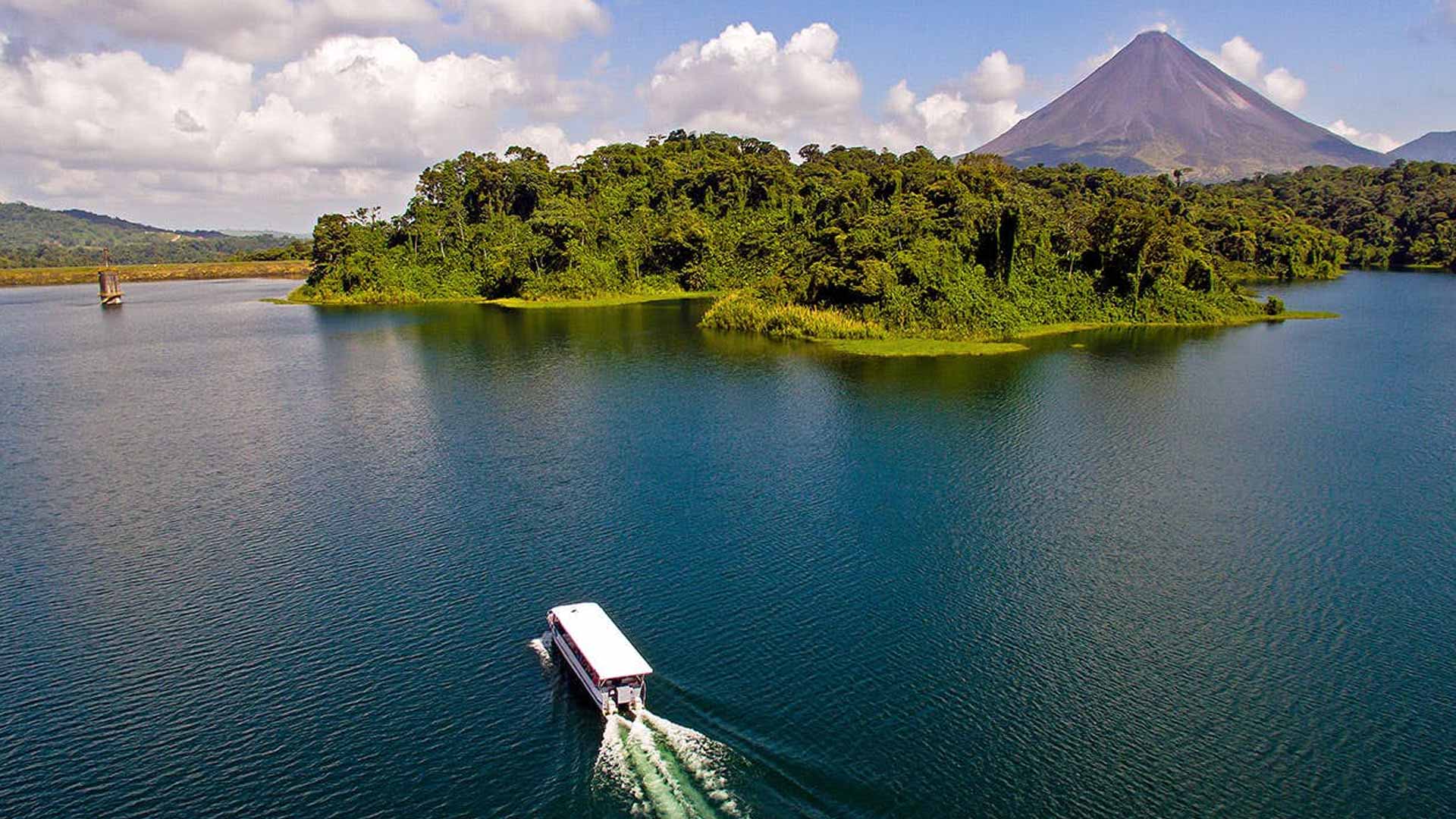
Lake Arenal provides another perspective, with water and hills creating a wider landscape.
However, clouds frequently cover the summit. Even on sunny days in La Fortuna, the upper slopes may remain hidden.
For photographers who enjoy mountain scenery, Arenal offers several composition options.
Poás Volcano: Looking Into an Active Crater
Poás provides a different view.
When the crater observation area is accessible, visitors may see the exposed crater walls, acidic lake, and volcanic gases.
These features offer a closer look at an active volcanic environment.
Nevertheless, clouds, steam, and gas emissions can obstruct the view. Furthermore, volcanic restrictions may limit how long visitors can remain at an observation point.
For travelers especially interested in crater geology, Poás may be more compelling than Arenal.
However, Arenal generally provides more varied landscape photography opportunities.
Which Volcano Is Easier to Visit?
Transportation is an important factor when deciding between Arenal Volcano or Poás Volcano.
Visiting Poás from San José or Alajuela
Poás is generally easier to reach from San José, Alajuela, and Juan Santamaría International Airport (SJO).
Under normal conditions, the journey from parts of the Central Valley can take approximately one to two hours. However, the starting point, traffic, mountain roads, and weather affect travel time.
The drive passes through higher-elevation countryside, where fog and rain can reduce visibility.
More importantly, reaching the entrance does not guarantee admission.
Visitors should check current park announcements, reservation availability, and safety requirements before traveling.
Visiting Arenal from San José or Guanacaste
Arenal requires a longer journey from the Central Valley.
Travelers usually head toward La Fortuna, using a rental car, private transfer, shared shuttle, or another arranged transportation service.
The drive takes several hours, depending on the departure point and route.
Guanacaste Airport (LIR), near Liberia, is another practical arrival option for travelers planning to explore northern Costa Rica.
However, driving conditions can include winding roads, rain, and reduced visibility.
Because the journey is longer, staying overnight near La Fortuna is usually more convenient than attempting a rushed day trip.
Hiking at Arenal vs Poás Volcano
Both national parks feature volcanic landscapes, but the hiking experiences differ considerably.
Hiking at Arenal Volcano National Park
Arenal Volcano National Park offers authorized trails through forest and older volcanic terrain.
In the main visitor sector, Las Coladas and El Ceibo are established routes.
Visitors can observe vegetation, volcanic rocks, and sections of the landscape affected by previous eruptions.
However, conditions vary. Some paths have uneven surfaces, exposed rocks, or muddy sections after rainfall.
The park also has a Peninsula sector, although travelers should confirm current access before visiting.
Importantly, none of these authorized routes permits climbing the active cone.
Beyond the national park, private reserves around La Fortuna offer additional walking opportunities.
Therefore, Arenal is generally the stronger choice for travelers who want varied hiking experiences.
Hiking at Poás Volcano National Park
Poás has traditionally offered a relatively short approach to its main crater viewpoint.
However, recent volcanic activity has affected access to different areas.
Following increased activity in August 2026, authorities introduced stricter visitor procedures and limited access to designated routes.
The main crater viewpoint and Sombrilla de Pobre trail were among the areas authorized under those measures. Meanwhile, access to Laguna Botos has been restricted.
Because conditions can change, visitors should confirm which routes are currently available through SINAC.
Poás may suit travelers who prefer less walking, provided the designated viewpoint is accessible.
Nevertheless, it is not a substitute for Arenal’s broader hiking opportunities.
Which Volcano Has Better Nearby Attractions?
Arenal offers more activities within its surrounding tourism region.
Poás, meanwhile, works well alongside attractions in the Central Valley.
Attractions Around Arenal Volcano
La Fortuna has developed into a major base for outdoor activities.
Visitors can explore La Fortuna Waterfall, where a long staircase leads toward the waterfall’s base.
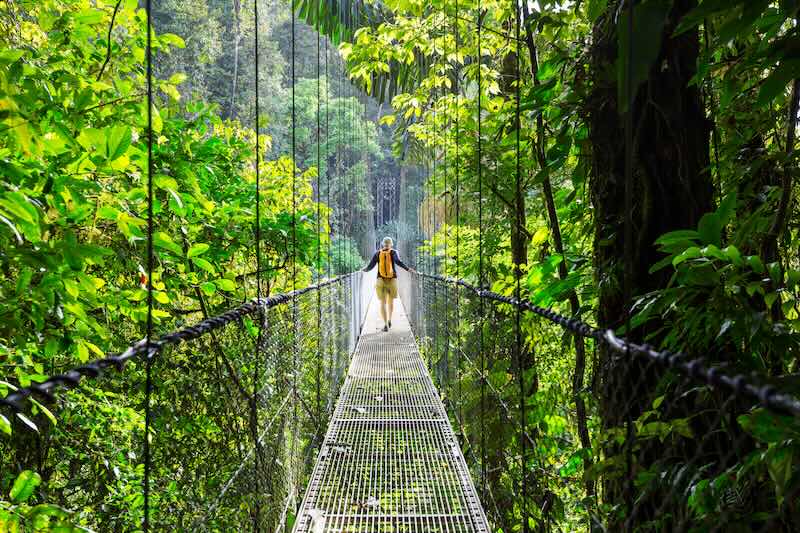
Mistico Arenal Hanging Bridges Park provides rainforest trails and suspension bridges.
The region also has geothermal resorts, wildlife tours, ziplining, rafting, and guided excursions.
Additionally, hot springs near La Fortuna offer a relaxing way to spend an afternoon or evening.
These attractions operate separately from Arenal Volcano National Park and generally require their own admission or reservations.
For a multi-day trip, this variety is one of Arenal’s main advantages.
Attractions Around Poás Volcano
The Poás region includes mountain communities, coffee-growing landscapes, and rural scenery.
Visitors can explore coffee farms around Alajuela or plan additional activities in the Central Valley.
La Paz Waterfall Gardens is another attraction in the wider region. However, it operates separately from Poás Volcano National Park and charges its own admission.
These alternatives are useful when planning a broader Central Valley itinerary.
If Poás closes because of volcanic activity, nearby attractions may still be accessible. Nevertheless, travelers should check road conditions and each property’s operating status.
Where to Stay: Arenal vs Poás Volcano
Accommodation can influence the overall experience.
Staying Near Arenal Volcano
La Fortuna offers hotels for different budgets and travel styles.
Downtown accommodation provides convenient access to restaurants and services. Meanwhile, properties along Route 142 and around El Castillo offer more rural surroundings.
Travelers can choose boutique hotels, nature lodges, family-friendly resorts, and luxury thermal properties.
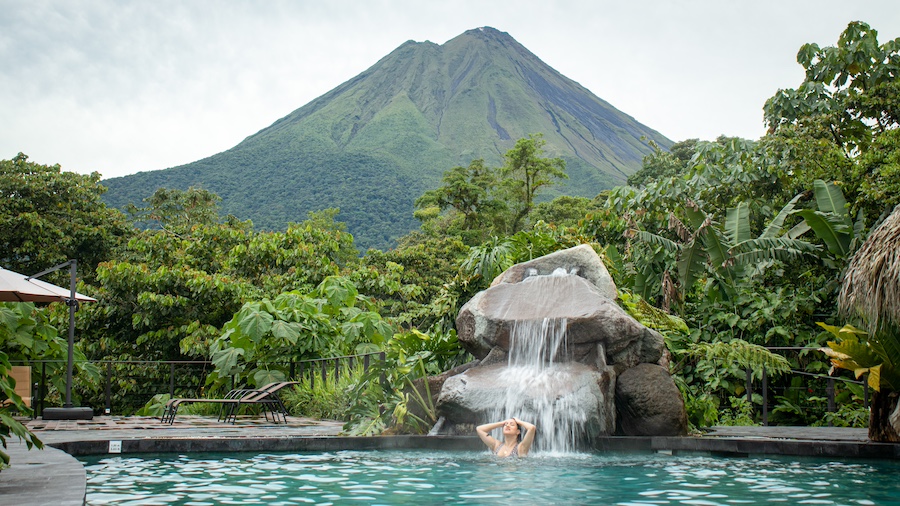
Nayara Springs offers adults-only luxury accommodation, while Tabacón Thermal Resort & Spa focuses on geothermal bathing.
The Springs Resort & Spa is another option for visitors interested in resort facilities and views toward Arenal.
However, not every room faces the volcano. Before booking, confirm the view available from your selected accommodation category.
Staying near La Fortuna also reduces the need for repeated long journeys between attractions.
Staying Near Poás Volcano
Many travelers visit Poás while staying in San José or Alajuela.
Hotels near Juan Santamaría International Airport can be convenient for visitors arriving or departing through SJO.
Alternatively, rural lodges in the surrounding mountains offer a quieter setting.
Unlike La Fortuna, the Poás region is not primarily known for large geothermal resort complexes.
Therefore, visitors usually choose accommodation based on proximity to the Central Valley, coffee-growing areas, or their wider travel plans.
Weather and Visibility: Arenal vs Poás
Weather affects both destinations, although their climates differ.
Arenal is warmer and more humid. Rainfall occurs throughout the year, and clouds frequently gather around the summit.
As a result, even visitors traveling during Costa Rica’s main dry-season months may encounter limited visibility.
Poás sits at a higher elevation, so conditions are generally cooler. Wind, fog, and rain can make the crater area feel cold.
Although mornings sometimes offer favorable viewing conditions, neither volcano guarantees clear skies at a particular hour.
For Poás, volcanic safety restrictions are an additional consideration. Even clear weather does not guarantee access.
Travelers should check the Instituto Meteorológico Nacional for weather information and bring appropriate clothing.
For Arenal, spending several nights in the region creates more opportunities to see the mountain under changing conditions.
Volcanic Activity and Safety
Both Arenal and Poás are active volcanic systems monitored by Costa Rican scientific authorities.
However, their recent eruptive histories are different.
Arenal’s prolonged eruptive phase ended in 2010. Although it remains geologically active, the regular lava-producing activity that once attracted visitors has not resumed.
Therefore, visitors should focus on authorized hiking trails and observation areas rather than expecting visible eruptions.
Poás has experienced more recent activity.
Eruptive events occurred during 2025, and additional eruptions were reported in 2026.
In August 2026, increased activity led authorities to introduce additional safety measures at Poás Volcano National Park. These included reduced visitor capacity, mandatory protective helmets in authorized areas, and limits on time spent at the crater viewpoint.
Because volcanic conditions can change, those arrangements should not be treated as permanent.
Before visiting Poás, consult SINAC, OVSICORI-UNA, and the National Emergency Commission.
Follow ranger instructions, respect barriers, and never enter closed areas.
For either volcano, official restrictions take priority over travel itineraries or previously published visitor information.
Which Volcano Should You Visit?
The better choice depends on your interests, travel schedule, and location.
Choose Arenal Volcano if:
- You want two or more days of nature activities.
- You enjoy rainforest hiking and wildlife excursions.
- You want to visit geothermal hot springs.
- You prefer a destination with several attractions.
- You are planning a family vacation or wellness trip.
- You want to explore Lake Arenal and La Fortuna.
Choose Poás Volcano if:
- You are staying near San José or Alajuela.
- You want to observe an active volcanic crater.
- You have limited time.
- You are interested in geology.
- You prefer a shorter national park visit.
- Official visitor access is available.
Families may appreciate Arenal’s wider selection of activities. However, Poás can also suit a shorter family excursion when current access and individual mobility needs allow.
For photographers, Arenal offers mountain, forest, and lake scenery. Poás offers a different perspective through its exposed crater.
Neither option is universally better.
Can You Visit Arenal and Poás Volcano on the Same Trip?
Yes. Both volcanoes can fit into a longer Costa Rica itinerary.
For example, travelers spending seven to ten days in the country could begin with one or two nights in the Central Valley.
If Poás is officially accessible, they could visit the national park before continuing toward La Fortuna.
Afterward, two or three nights near Arenal would allow time for national park hiking, hot springs, and nearby attractions.
However, Poás is not necessarily a convenient stop along every route to La Fortuna.
Mountain roads, traffic, reservation requirements, and volcanic restrictions can affect the schedule.
Therefore, plan the destinations as separate experiences rather than assuming both can fit comfortably into one travel day.
For travelers with limited time, choosing one volcano may provide a more relaxed trip.
Frequently Asked Questions
Is Arenal Volcano Better Than Poás Volcano?
Arenal is generally better for a multi-day nature vacation because the La Fortuna region offers hiking, hot springs, waterfalls, and other activities. Poás may be better for travelers who want to see an active crater during a shorter Central Valley excursion.
Which Volcano Is Closer to San José?
Poás Volcano is generally closer to San José and Juan Santamaría International Airport. Arenal requires a longer journey toward La Fortuna.
Can You See Lava at Arenal Volcano?
Visitors should not expect visible lava flows at Arenal. Its prolonged eruptive period ended in 2010, and regular lava-producing activity has not resumed.
Can You See the Crater at Poás Volcano?
Yes, when the official crater viewpoint is open and visibility permits. However, volcanic activity, clouds, and gas emissions can limit the experience.
Is Poás Volcano Open to Visitors?
Poás has operated under special safety restrictions following increased activity in 2026. However, opening status can change quickly. Confirm current access and reservation availability through SINAC before traveling.
Which Volcano Is Better for Hiking?
Arenal generally offers more varied hiking through forest and older volcanic terrain. Poás has more limited designated routes, and access can change because of volcanic conditions.
Which Volcano Is Better for Families?
Arenal is often more practical for families planning several days of activities. Poás can suit families interested in a shorter geological excursion, provided the park is accessible and current restrictions meet their needs.
Can You Visit Arenal and Poás in One Day?
Although traveling between the regions is possible, visiting both national parks in one day is generally impractical. Travel time, park schedules, reservations, and possible volcanic restrictions make separate days a better choice.
Final Verdict: Arenal Volcano vs Poás Volcano
For most travelers planning several days in northern Costa Rica, Arenal is the stronger choice.
The La Fortuna region combines volcanic scenery with rainforest trails, hot springs, waterfalls, and a broad selection of accommodation.
Poás is better suited to travelers who want to observe an active crater or plan a shorter excursion from the Central Valley.
However, recent volcanic activity makes current access restrictions especially important.
Neither volcano guarantees clear views, and both require visitors to follow official safety instructions.
Ultimately, the Arenal Volcano vs Poás Volcano decision depends on your available time, interests, arrival airport, and travel priorities.
If your itinerary allows, visiting both provides two distinct perspectives on Costa Rica’s volcanic landscapes.
Related Posts
Arenal Volcano and Lake Arenal: How They Are Connected
Arenal Volcano and Lake Arenal share one of northern Costa Rica's…
Best Hotels with Arenal Volcano Views in Costa Rica
Choosing a hotel with a view of Arenal Volcano can make a stay in La Fortuna especially rewarding. On clear days, the volcano rises above the surrounding rainforest, creating one of Costa Rica's most recognizable landscapes. However, not every hotel offers the same view. Some properties have open terraces facing the volcano, while others provide glimpses through tropical gardens. Even within one resort, room orientation can make a difference. Weather is another important factor. Clouds frequently cover Arenal's summit, so no hotel can promise an unobstructed view throughout your stay. This guide compares the best hotels with Arenal Volcano views, explains their locations, and offers practical advice for booking the right room. Where Are the Best Arenal Volcano View Hotels Located? Arenal Volcano stands near La Fortuna in northern Costa Rica. It reaches approximately 1,670 meters (5,479 feet) above sea level. The volcano experienced a long eruptive period beginning in 1968. Its main eruptive activity ended in 2010, so visitors should not expect to see flowing lava. Today, the surrounding region includes rainforest reserves, thermal resorts, Lake Arenal, and Arenal Volcano National Park.…
Hiking in Arenal Volcano National Park
Hiking in Arenal Volcano National Park is one of the most…